

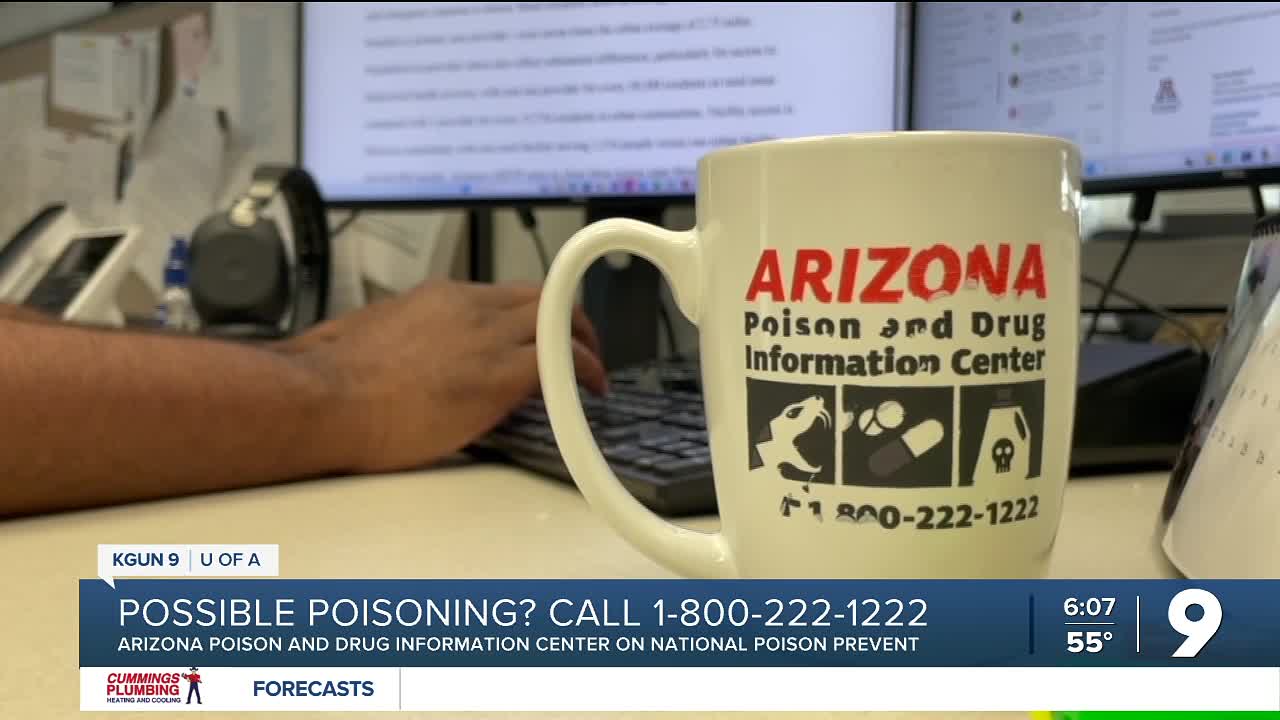


TUCSON, Ariz. — IN ARIZONA, WHEN SOMEONE SAYS PICK YOU POSION, YOU’VE GOT SEVERAL OPTIONS: FROM SCORPIONS TO RATTLESNAKES, TO EVERYDAY ITEMS INSIDE YOUR HOME…
In Arizona, when someone says, 'pick your poison,' you've got a few choices. From the poisonous sonoran desert toad to the venomous diamondback rattlesnake.
While the team at Arizona Poison and Drug Information center says they get most of their calls about snakes and scorpions, another—often forgotten about—category of killers is inside nearly every home.
"The dose makes a poison," said Poison Center Director Steve Dudley. "Everything is a poison."
Every year, trained pharmacists at the Arizona Poison and Drug Information Center take around 20,000 calls from the public.
On their walls, the center employees keep some of the offending "poisons," which is anything from Four Loko cans, at-home pain pills and Zyn cans.
“We get calls on literally everything whether it’s drug overdoses—accidental or intentional—rattlesnake bites, scorpion stings, metal poisoning,” Dudley said. "You name it, we’ve seen it.”
Not all of those calls come from concerned friends or parents— though those make up about 60% of the center's caseload and often prevent a possible hospital visit.
The remaining 40% comes from healthcare professionals for patients already in their care.
“Things that we see every day or week, may be the first time your doctor has seen this in their career, so they’re calling us to make sure they’ve got their ’t’s crossed and their ‘i’s dotted," Dudley said.
He adds that the department's work is making a difference.
“When Doctors call our center and consult us, we save about 9,000$ in hospital charges per visit and we shorten their hospital stay by a day on average,“ he said.
That means hospital staff can free up space and time for other emergencies.
In the past few years, Dudley says he's noticed that private calls for information have gone down as search engines and AI usage have risen, which isn't necessarily a good thing.
“As we all know, you can’t believe everything you see on the internet, and with AI hallucinations, that’s only getting worse,” he said.
While calls from hospitals and healthcare workers have risen recently.
“When someone overdoses," he says, "it can be a life or death situation and how you handle that is critically important. It lets us know that this is still a serious issue.”
To prevent any potential poisonings in your house, Dudley says to "[use] things like lock boxes for your medication, don’t store your chemicals under the sink" and never be afraid to call for help when needed.
“What we don’t want is for people to think that ifs they call us, that they’re going to get in trouble or we’ll report it, and take a bad situation—their child got into something they need help for— and make it worse," he said.
For poison emergencies or to get information on any found pills or other substances, call Arizona Poison and Drug Information Center's 24/7 free line at 1-800-222-1222.

