

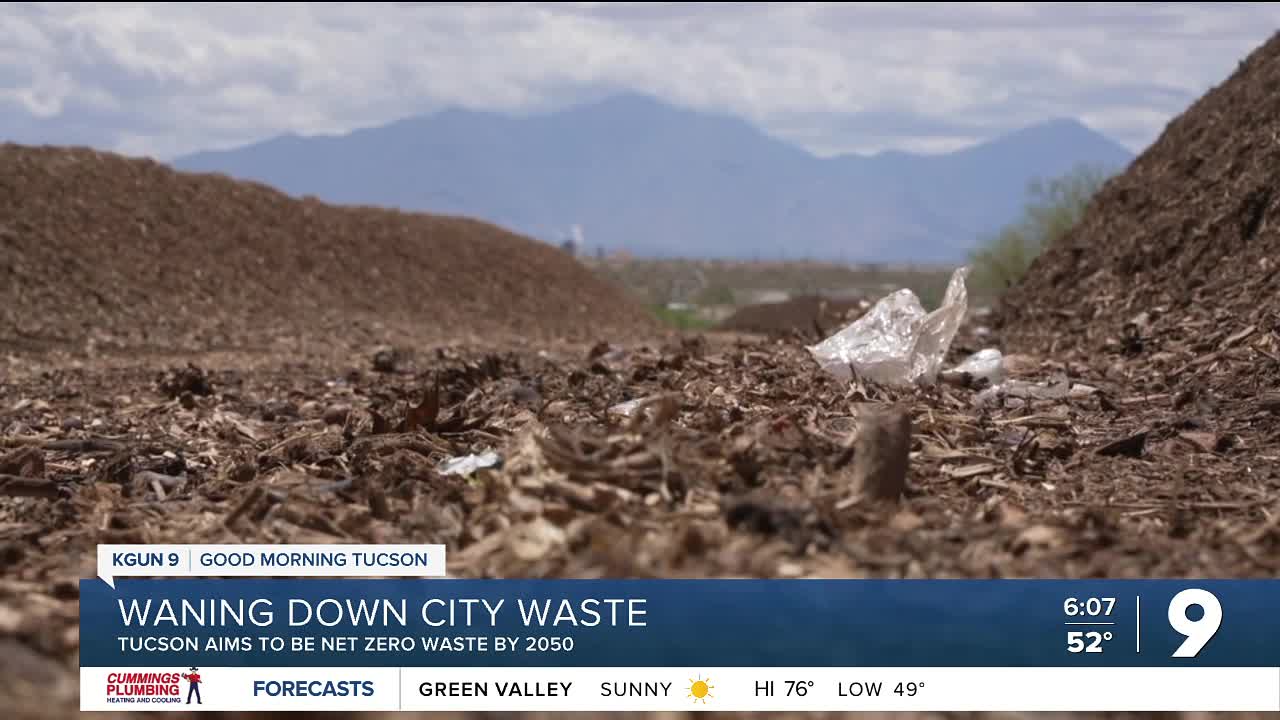


TUCSON — The City of Tucson aims to achieve carbon neutrality within the next four years, with a goal of reducing landfill waste by 50% by 2030.
This is part of Tucson’s Resilient Together climate plan, passed in 2020 when city leaders declared a climate emergency, committing to becoming a net-zero waste city by 2050.
One of the efforts to reach that goal is something every Tucsonan can participate in: transforming their household trash into compost. In July 2021, Tucson Environmental Services Department started their FoodCycle program, asking local government, businesses and private citizens to include composting in their daily routines.
The Department Principal Planner Lisa Rotello says hundreds of households have joined the program in the past few years, even some who weren’t diehard compost fans before.
“It’s such a tedious and smelly proposition,” said Alfredo Araiza. “In years past, you’d see these barrels and people would throw stuff in there, and it’d be surrounded by flies, and it wasn’t for us.”
However, he says Tucson’s FoodCycle at Home program converted him.
“It’s very simple,” he said. “All you’ve got to do is put stuff you’re going to throw away and put it in another container.”
Araiza keeps his compost in the city-provided FoodCycle bin in his freezer, which he says helps keep the smell minimal and the flies nonexistent.
He and his wife drop their bin off once or twice a week when walking their dogs, so the program hasn’t changed their daily routine.
“The response has just been overwhelmingly positive,” said Rotello. When the department was looking for ways to cut down on landfill waste, community outreach kept leading back to compost since, Rotello says, over 50% of landfill waste is organic material.
But Arizona isn’t like the coastal climates of Seattle or New England, meaning some items labeled as biodegradable won’t break down in the dry air, so the program offers training for their growing number of participants.
Rotello says it’s working. Since January 2024, the FoodCycle at Home program has diverted 800 tons of food waste and 4,700 tons of plant waste from the landfill.
Instead, that waste goes to a different area of the Los Reales Sustainability Campus, where the food and green waste are combined into 10x4x200-foot-long piles called wind rows.
Once a week, environmental services turns the wind rows, adding air and water into the composting piles, which sit at about 140 or 150 degrees for 12 to 16 weeks to kill any bacteria.
That compost is then sifted and ends up back in city community gardens, public schools or backyard planters instead of staying in the landfill.
“I think it’s not too much to ask to keep the landfill from getting overrun,” Araiza said. “Even though we think we have unlimited space, we really don’t.”
That’s why the Environmental Services Department sees organic waste diversion as just the first step. They’re also working with scrap metal and hazardous chemicals and eyeing ways to divert furniture and mattresses.

