

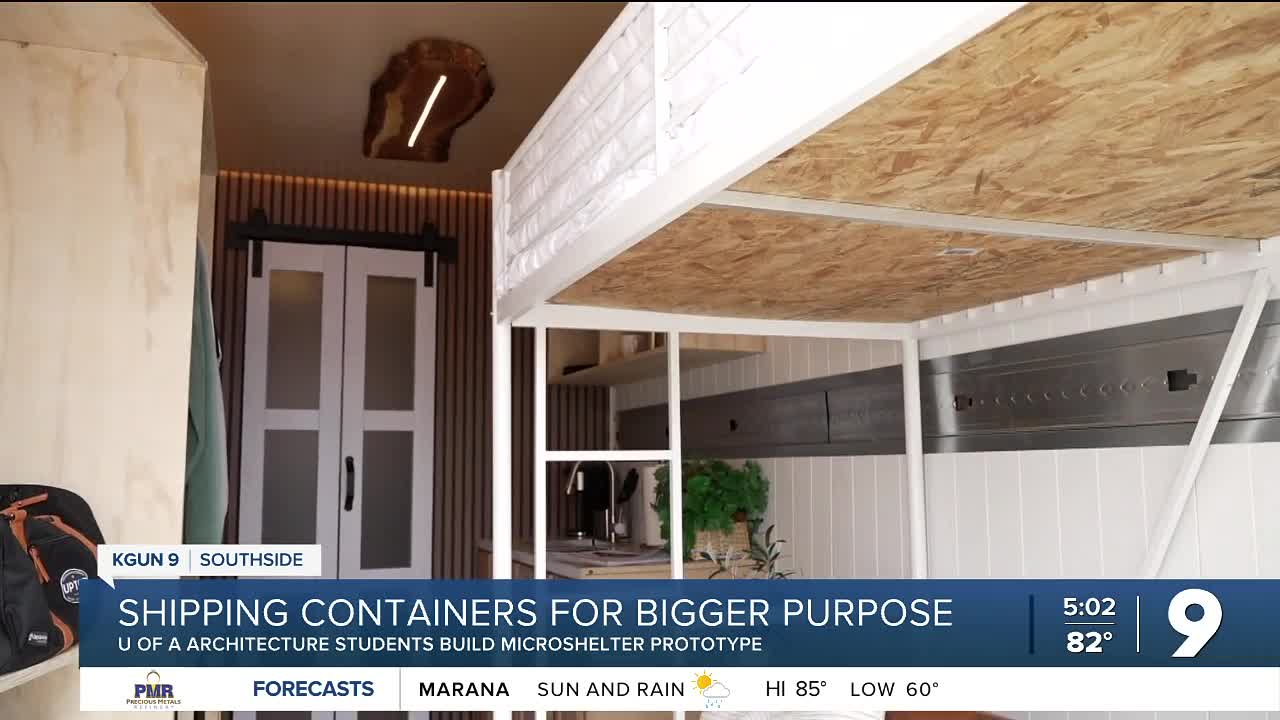


TUCSON, Ariz. (KGUN) — University of Arizona architecture students are taking their classroom skills into the community through a hands-on capstone project aimed at addressing housing instability in Tucson.
The senior students are in the the Community Design & Action (CDA) Capstone studio at the U of A. The studio partnered with Apostolic Deliverance Ministry to design and build a prototype microshelter using a 40-foot shipping container. Inside is a fully designed living space complete with a lofted bed, kitchen, storage and a couch.
Associate Professor of Practice Teresa Rosano in the School of Architecture, CAPLA, led the project and says the design represents much more than just the build itself.
"They are learning about the process of working with clients, real site constraints and working with each other in a collaborative studio," Rosano said.
Students created the design in early April and spent two weeks building the prototype inside a shipping container.
Dayton Bay, an architecture student, tells me one of the biggest challenges was turning a narrow metal space into something welcoming and functional.
"People that come into these situations a lot of times have a lot of belongings with them. So, we wanted to provide enough space for them to be able to have everything out and for display. A full kitchen, a full bathroom. So, it truly is everything that somebody would need to survive," Bay said.
Bay says the shipping container they used had been sitting unused near the border.
"We met with Dan Ranieri from La Frontera and Beau Phillips from Boxes of Hope. Basically, we partnered with them to kind of create this vision of creating this prototype using these shipping containers that are down along the border," said Bay. "There's an excess amount of them that are just sitting there. So we were like, what better way than to kind of use these containers to provide housing?"
The prototype is designed as a studio-style unit, but additional designs could accommodate couples or small families. Rosano says the project is part of a much larger vision in collaboration with the ministry.
"Now, we are designing their entire campus, which includes a church, food distribution, and also transitional housing," Rosano said.
Another architecture student, Ryan Blake, says the future campus could include between 30 to 50 housing units, along with gathering areas, outdoor fitness spaces and additional support services. Blake adds that the goal is to help create a space of dignity for people.
"I think just the littlest thing, having the roof over your head, having your own space to store your things, to, sleep at night, to cook your food is really the goal of what we wanted to do," Blake said.
The total cost of the project was just over $7,700. Future additions like insulation and plumbing would bring the total cost of completion to just over $23,000.
"The big thing is looking at this as a starting point for what can be done. It was just us six students that did this project, and we think that hopefully this is a step forward to what can be done in the Tucson community and what good things people can do with what they have," said Blake.
On Saturday, May 2, at 10 a.m., the CDA studio, along with Apostolic Deliverance Ministry, will present the campus site design to the public at the ministry, 1975 E. 36th St.
This story was reported on-air by a journalist and has been converted to this platform with the assistance of AI. Our editorial team verifies all reporting on all platforms for fairness and accuracy.
——
Jacqueline Aguilar is a multimedia journalist at KGUN 9. Born and raised in Yuma, AZ., she is no stranger to the unforgiving Arizona heat. Now this U of A wildcat is excited to be back in Tucson and is looking forward to involving herself in the community. Share your story ideas with Jacqueline by emailing jacqueline.aguilar@kgun9.com or connecting on Facebook, Instagram or X.


