

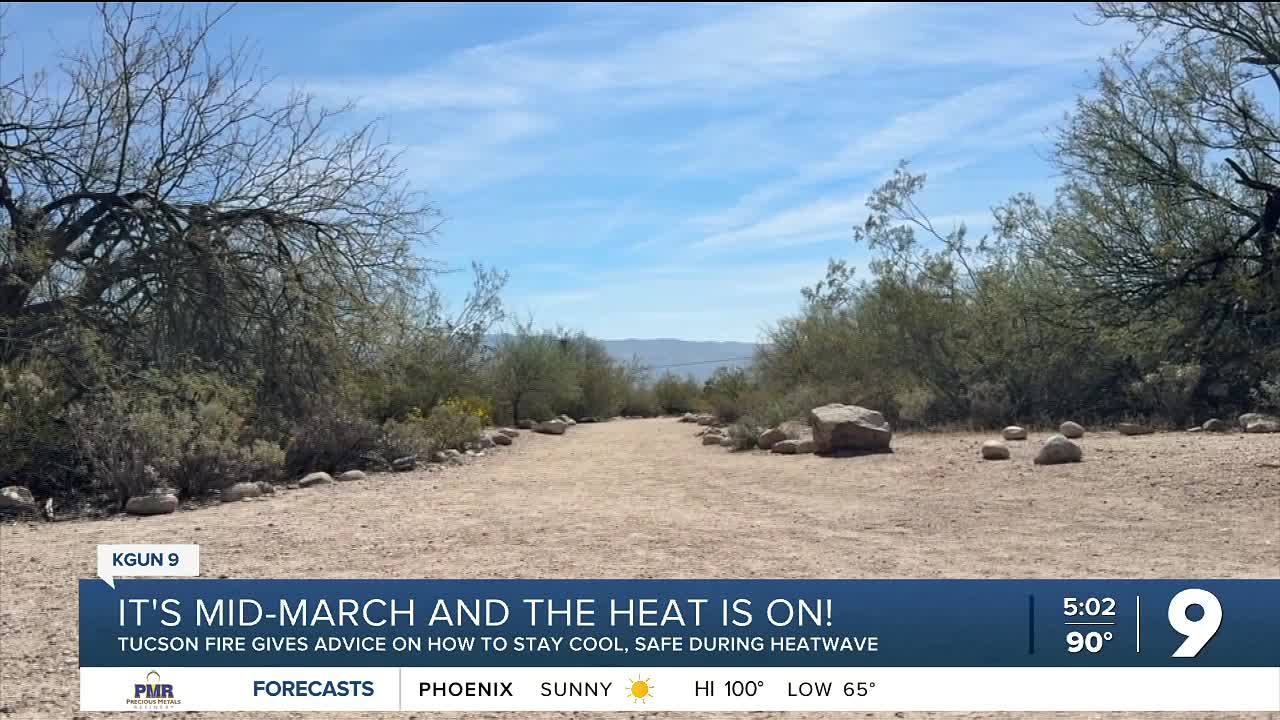


TUCSON, Ariz. (KGUN) — Emergency crews responded to a distressed hiker Tuesday in Sabino Canyon as unseasonably high temperatures settled over Southern Arizona, prompting officials to warn residents and outdoor enthusiasts about the dangers of early-season heat.
Deputies with the Pima County Sheriff’s Department and crews from the Rincon Valley Fire District were called to the popular recreation area earlier in the day. Authorities did not release details about the hiker’s condition, but the response comes as forecasters predict temperatures could challenge daily records this week.
Even experienced hikers say the heat is already noticeable.
“It was warm, definitely warm,” said Kathy Daly, who frequently hikes in Sabino Canyon but has been adjusting her routine to avoid peak temperatures.
“I often go with another group and they don’t leave until 7 p.m. on Friday,” Daly added.
Fire officials say those types of adjustments can make a critical difference. Capt. Casey Johnson of the Tucson Fire Department said crews are preparing for a potential uptick in heat-related emergencies as more people head outdoors.
“There’s a lot of homeless individuals who are out there that are being exposed to these extreme temperatures,” Johnson said. “There’s a lot of individuals who have planned hiking trips, or have sporting events with their kids that they’re out at.”
Southern Arizona is no stranger to extreme heat, but early-season spikes can catch people off guard. According to the National Weather Service, temperatures above 90 degrees in March are uncommon but not unprecedented in the Tucson area.
Related: Tucson heatwave? Don’t sweat it, here’s where to cool off
Johnson urged residents to plan outdoor activities during cooler parts of the day and to prioritize hydration and sun protection.
“If you’re gonna plan your outside activities, try and do it early in the morning or later in the evening when the temperatures are a little bit cooler,” he said. “As far as sun protection, we always recommend sunscreen and sun shirts, something that’s lightweight and breathable, something to protect you from the sun.”
He also warned hikers to recognize symptoms of heat exhaustion and heatstroke, including confusion, dizziness, nausea and blurred vision.
“If you feel you can’t keep going or make it back to your car or a cool space, find some shade,” Johnson said. “If you have some water, being able to cool yourself off a bit is good. Stay hydrated and wait until cooler temperatures come, so you are able to make it back.”
----
STAY IN TOUCH WITH US ANYTIME, ANYWHERE


