

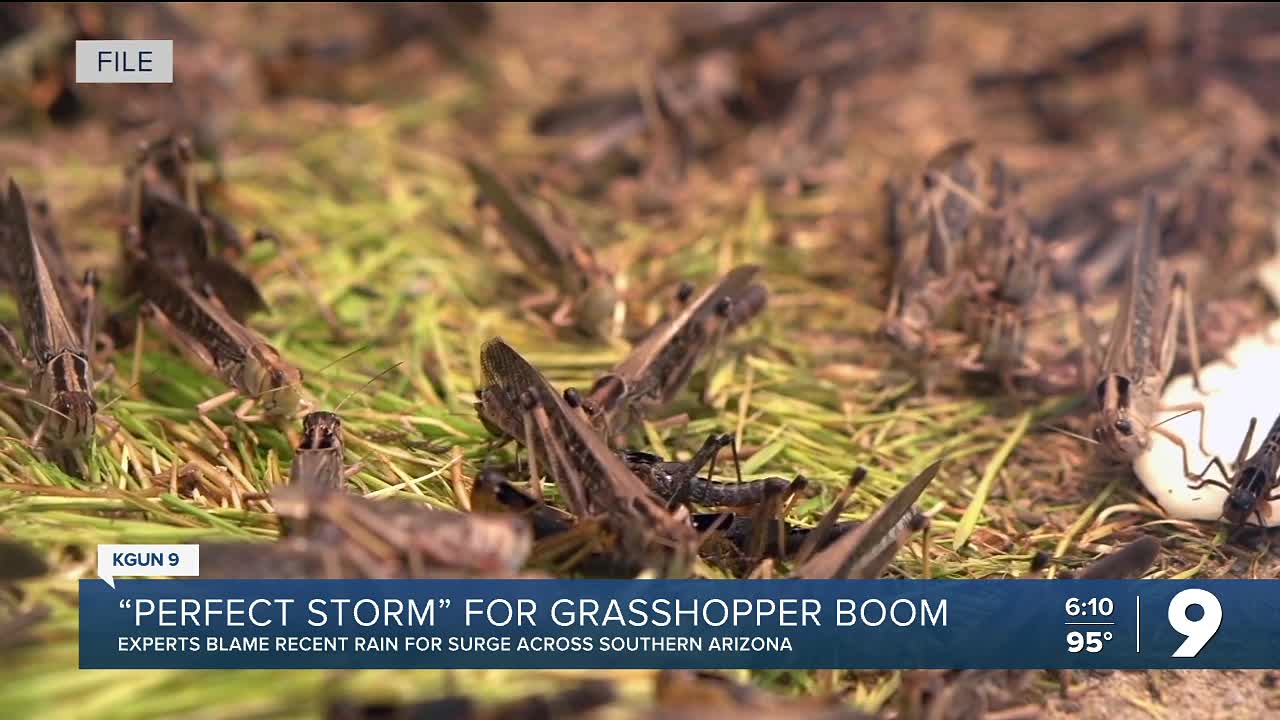


TUCSON, Ariz. (KGUN) — An unseasonable stretch of heat combined with scattered rainfall has helped drive a noticeable surge in grasshopper activity across parts of Southern Arizona, with residents reporting swarms in neighborhoods, parks and even inside buildings.
Behind the KGUN 9 studios and in washes throughout midtown Tucson, grasshoppers can be seen hopping through dry grass and brush in the midday sun — part of what experts say is a population boom linked to favorable environmental conditions.
University of Arizona student Luis Anguro said the sudden influx has been difficult to ignore.
“I’m terrified of them, I know that they don’t do anything,” Anguro said. “I know that they won’t hurt me, but just the sound of them next to my ear is terrifying!”
Anguro added the insects have become nearly unavoidable in recent days.
“There’s a lot of them, even inside of buildings. You will see them just crawling,” he said.
According to Goggy Davidowitz, a professor of entomology at the University of Arizona, the spike in grasshopper numbers is the result of what he described as a “perfect storm” of weather patterns.
“We had this sprinkling of rains or rain events, the scattering of rain events that is such that there’s a lot of forage out there, there’s a lot of food for them to eat,” Davidowitz said.
The insects currently being seen in large numbers are primarily pallid-winged grasshoppers, a common desert species. While their presence can be startling, Davidowitz said they typically pose little threat to home gardens or landscaping.
“They will maybe nibble on what’s in your garden, but not in any numbers that will do real damage,” he said.
Grasshopper populations in the Sonoran Desert often fluctuate based on rainfall and temperature patterns. Wet winters or early summer storms can boost vegetation growth, providing ideal feeding conditions for developing insects.
Davidowitz expects the current generation to die off within about two weeks, but warned that another surge could occur later in the year depending on monsoon activity.
“In September, we’re gonna have a huge generation — a huge abundance — if the monsoon rains are decent monsoon rains,” he said.
For now, experts recommend residents limit outdoor lighting at night, seal gaps around doors and windows, and keep yards trimmed to reduce grasshopper activity near homes.
——
Eddie Celaya is a multimedia journalist at KGUN 9. Born in Tucson and raised in the Phoenix area, Eddie is a life-long Arizonan and graduate of the University of Arizona who loves the desert and mountains and hates the cold. Previously, Eddie worked in print media at the Arizona Daily Star. Share your story ideas with Eddie at edward.celaya@kgun9.com, or by connecting on Facebook or Instagram.

----
STAY IN TOUCH WITH US ANYTIME, ANYWHERE


