

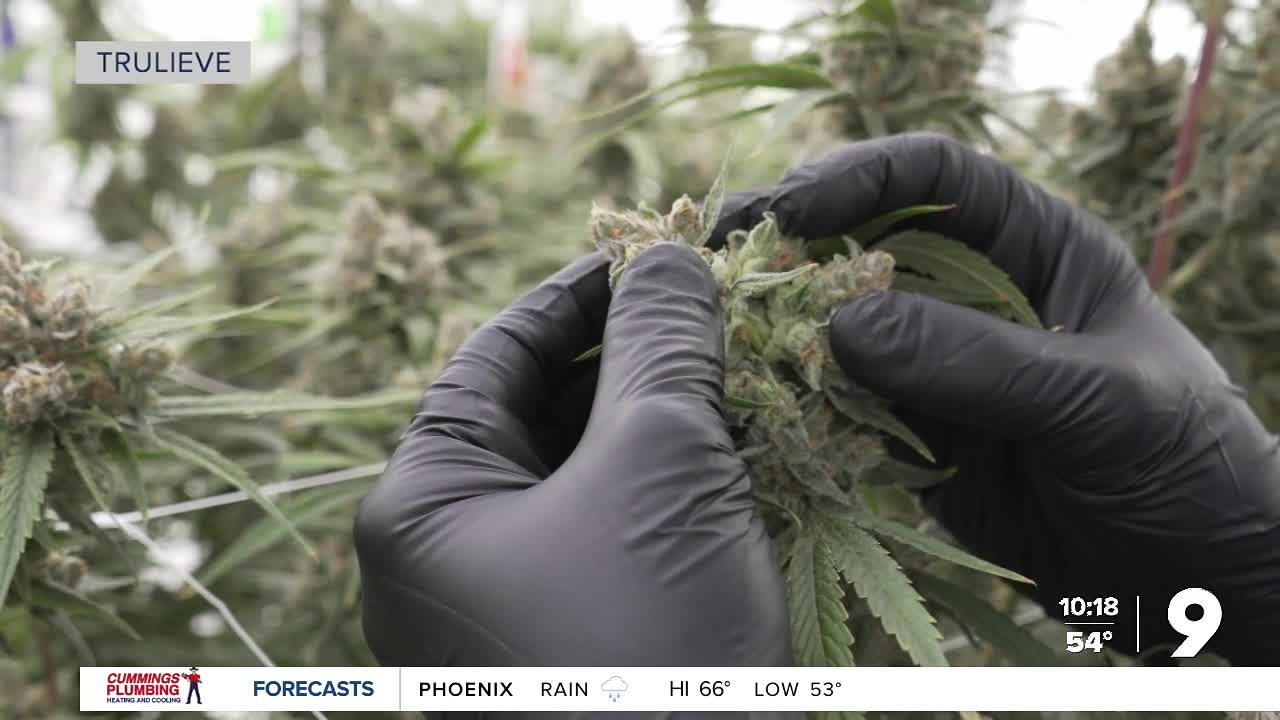


TUCSON, Ariz. (KGUN) — Five years after Arizona opened the door to legal recreational marijuana sales, the state’s cannabis landscape looks dramatically different — for consumers, businesses and the broader community.
On Jan. 22, 2021, Arizona dispensaries made their first legal recreational marijuana sales following voter approval of Proposition 207 the previous November. At the time, locations like Trulieve in midtown Tucson were among the first to serve adult-use customers, marking a major shift after decades of prohibition.
“It’s so different to be able to walk freely around with it you know?” said Bob Cloonan, a D2 Dispensaries customer.
Arizona already had a medical marijuana program before recreational sales began, but the scale of access changed almost overnight.
“We basically went from only being able to see a few hundred thousand people who had medical marijuana cards, to anyone 21 and over who lives in Arizona or was visiting,” said Moe Asnani, a partner at D2 Dispensaries.
That expanded access translated into significant revenue. Under state law, recreational marijuana is subject to a 16% excise tax in addition to standard sales taxes. According to state figures, marijuana sales have generated hundreds of millions of dollars since legalization.
“The thing is, the program in Arizona has generated $700 million dollars in tax revenue,” said Teresa Kish, executive director of retail operations for Trulieve.
Those tax dollars are earmarked for community colleges, police and fire departments and other state agencies, while sales tax revenue flows directly to cities and counties.
Beyond revenue, legalization also brought criminal justice changes. Proposition 207 allows people with certain low-level marijuana-related offenses to seek expungement.
“They can go and actually apply to have them expunged and removed from their record, which we never had in Arizona,” said Laura Bianchi, an attorney with Bianchi and Brandt. “So very helpful for folks… getting jobs.”
Still, the recreational program has its critics. Some medical marijuana advocates argue that the expansion of adult-use sales has come at the expense of patients who helped push for earlier reforms.
“Medical patients, veterans, other folks who helped change the laws originally, have now been left in the dust,” said Dr. Sue Sisley, chief medical officer at the Scottsdale Research Institute. “The medical program barely exists now.”
Industry leaders say that shift mirrors trends seen nationwide as recreational markets grow.
“I think traditionally when you open it up to anyone that’s 21 and up, you’re going to see a rise of ‘I don’t know if I want to get a medical card, it cost money,’” Kish said.
As Arizona marks five years of legal recreational marijuana sales, supporters say the state is still in the early stages of a long transition.
“It’s really nice to see them legalize it,” Cloonan said. “I wonder what’s next.”
——
Eddie Celaya is a multimedia journalist at KGUN 9. Born in Tucson and raised in the Phoenix area, Eddie is a life-long Arizonan and graduate of the University of Arizona who loves the desert and mountains and hates the cold. Previously, Eddie worked in print media at the Arizona Daily Star. Share your story ideas with Eddie at edward.celaya@kgun9.com, or by connecting on Facebook or Instagram.

----
STAY IN TOUCH WITH US ANYTIME, ANYWHERE


