

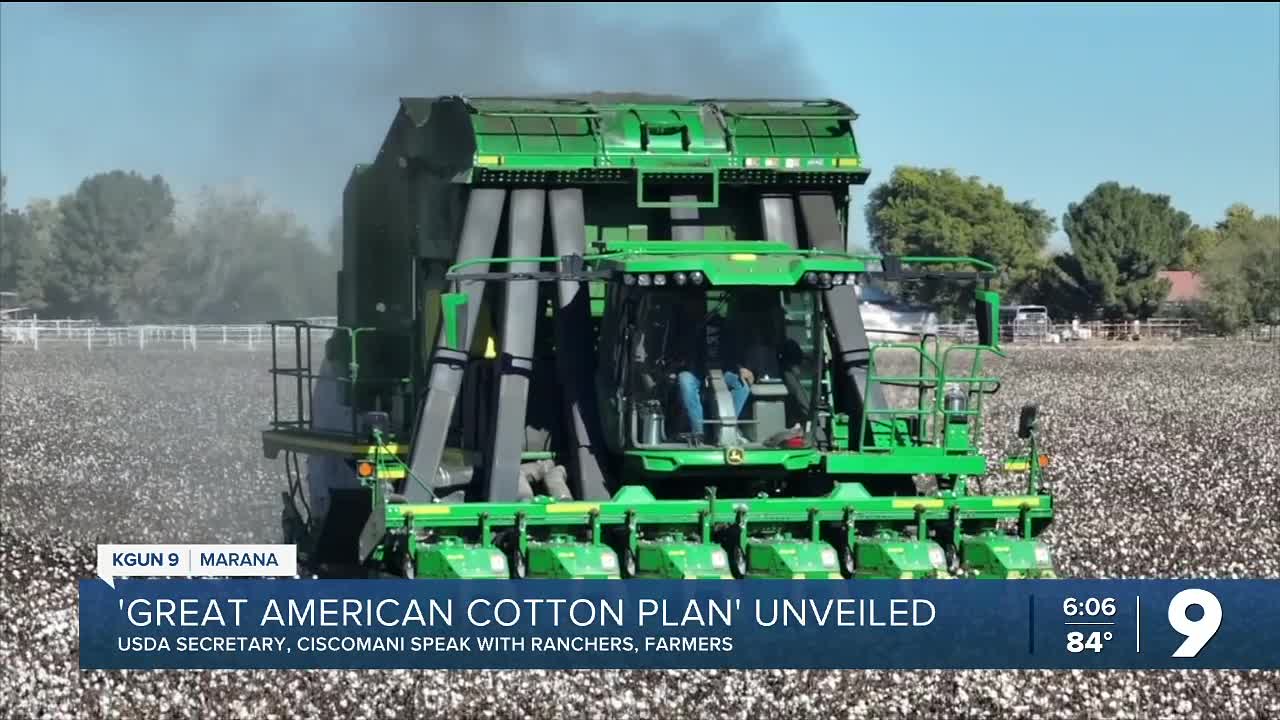


MARANA, Ariz. (KGUN) — Federal officials, lawmakers and local agricultural leaders gathered in Marana on Thursday to discuss the future of the American cotton industry and announce a new federal effort aimed at boosting cotton production, exports and domestic sales.
U.S. Secretary of Agriculture Brooke Rollins visited southern Arizona to meet with farmers and ranchers and unveil what officials are calling the “Great American Cotton Plan,” a national initiative focused on expanding export opportunities and encouraging Americans to purchase cotton-based products.
“We are improving the cotton trade worldwide,” Rollins said during the event. “We are finally opening up new global markets for American cotton and revitalizing export finance opportunities.”
The meeting highlighted southern Arizona’s long-standing role in cotton production. Arizona farmers planted about 120,000 acres of upland cotton in 2024, according to the U.S. Department of Agriculture, with Pinal and Pima counties remaining key contributors to the state’s agricultural economy. Cotton has been grown in Arizona for more than a century and remains one of the state’s most valuable field crops.
Speakers at Thursday’s gathering emphasized growing international competition and the economic pressures facing American producers.
“We’ve lost the lead on being the top producer of cotton in the world, the top exporter of cotton in the world,” said Rep. Juan Ciscomani, whose congressional district includes much of southern Arizona. “We were passed by Brazil recently, so we need to regain that position.”
According to USDA trade data, Brazil surpassed the United States in cotton exports in recent years as global demand shifted and production costs increased for American growers.
Local farmers said tariffs and rising operational expenses have added further strain to an already difficult market. Marana Mayor Jon Post, who also grows cotton, said producers continue to feel the impact of higher equipment and supply costs.
“The retaliatory tariffs are real, they are tough,” Post said. “When you’re buying products that are only built in China and the prices are doubled and tripled … it makes it difficult.”
Rollins said new international trade agreements and export partnerships could help ease some of those challenges for growers.
“I believe that these markets that are opening up are going to solve in large part, a lot of challenges the farmers and the farm economy have faced, especially in the last five years,” she said.
Water availability also emerged as a major topic during the meeting, particularly ongoing negotiations surrounding the Colorado River, which supplies water to much of Arizona agriculture.
“We’ve been very clear, and we have an open line of communication with the administration about this,” Ciscomani said. “We have to work with the Upper Basin States, and the Lower Basin States have to work together.”
In addition to export initiatives, the Great American Cotton Plan will include campaigns promoting cotton products over synthetic fiber alternatives, according to USDA officials.
——
Eddie Celaya is a multimedia journalist at KGUN 9. Born in Tucson and raised in the Phoenix area, Eddie is a life-long Arizonan and graduate of the University of Arizona who loves the desert and mountains and hates the cold. Previously, Eddie worked in print media at the Arizona Daily Star. Share your story ideas with Eddie at edward.celaya@kgun9.com, or by connecting on Facebook or Instagram.

----
STAY IN TOUCH WITH US ANYTIME, ANYWHERE


