



CATALINA FOOTHILLS, Ariz. (KGUN) — Over 7 million American over 65 years old are living with Alzheimer's disease— a condition affecting the function and memory of its host.
Researchers at Banner Medical are working to lower that number, researching treatment and prevention methods to change the outcome for patients and their families.
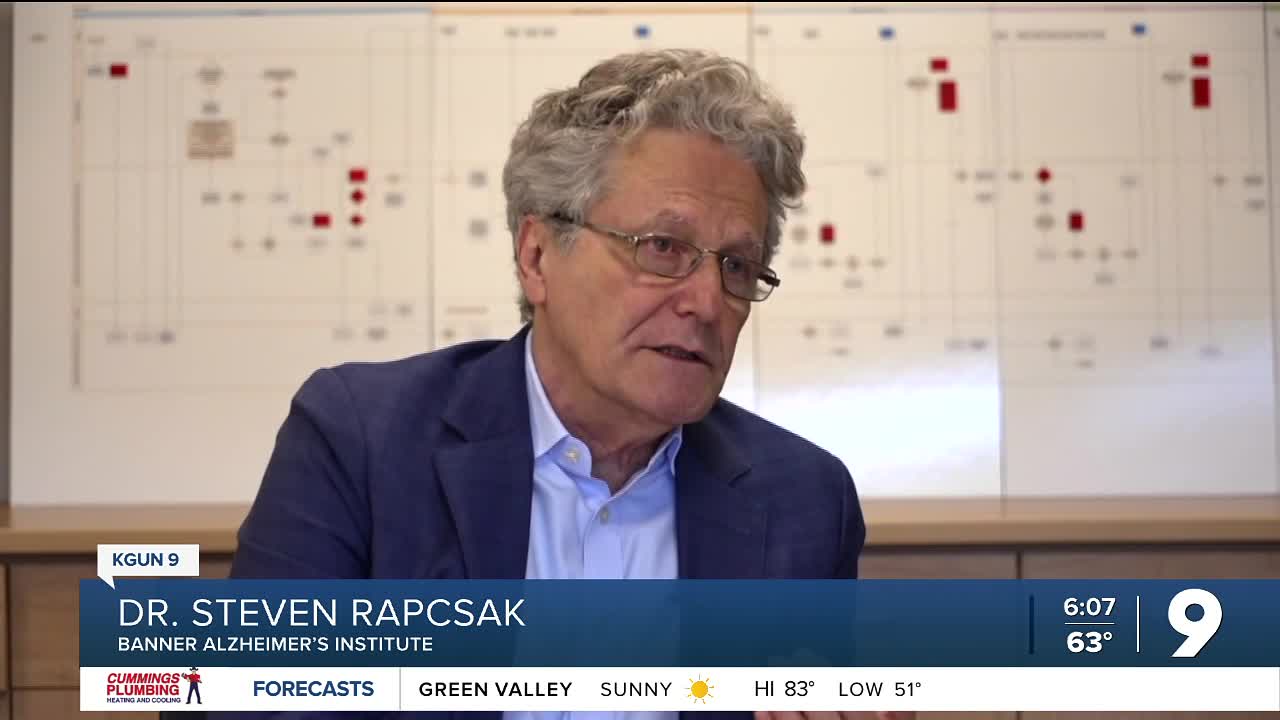
Dr. Steven Rapcsak, who has been searching for a cure for Alzheimer's disease for about 30 years, said the field has transformed dramatically since he began his research.
"In those days, we had to rely primarily on our clinical impressions. There weren't too many tests we could do to prove someone had Alzheimer's," Rapcsak said.
"Now we have tests that are very accurate in diagnosing disease. So the whole field has changed as a result of that," he said.
The new testing capabilities are allowing researchers to shift their focus toward prevention rather than just treatment. Rapcsak called this transition one of the most exciting moments of his career.
"In science, you always want to be as certain as you can be. Of course, it has implications telling somebody that the person has Alzheimer's disease. You want to be as certain as you can," he said.
With improved diagnostic certainty and an aging population, the number of people diagnosed with the once often misdiagnosed disease is expected to grow significantly. The Alzheimer's Association estimates that by 2060, 13.8 million Americans 65 and older will be diagnosed with Alzheimer's unless a cure is found.
"Right now we're treating individuals who already have memory loss, but the idea would be to prevent that memory loss from occurring in the first place. We're not there yet, but we can make a big difference in people's lives," Rapcsak said.
Currently, there are drugs that can extend patients' lives and improve quality of life, but researchers like Rapcsak continue searching for a cure.
"We all want to solve the mystery," he said.
While the cause of Alzheimer's isn't fully known yet, Rapcsak said there are ways to at least delay the onset. Most involve basic healthy living practices like eating right, exercising and doing cognitive exercises like crosswords or Sudokus.
The Walk to End Alzheimer's will take place at 9:30 a.m. this Saturday at Reid Park for those wanting to show support for the cause.
This story was reported on-air by a journalist and has been converted to this platform with the assistance of AI. Our editorial team verifies all reporting on all platforms for fairness and accuracy.
——
Alex Dowd is a multimedia journalist at KGUN 9, where her work combines her two favorite hobbies: talking to new people and learning about the community around her. Her goal is to eventually meet every single person in Tucson. Share your story ideas with Alex via email, alex.dowd@kgun9.com, or connecting on Instagram or X.


