

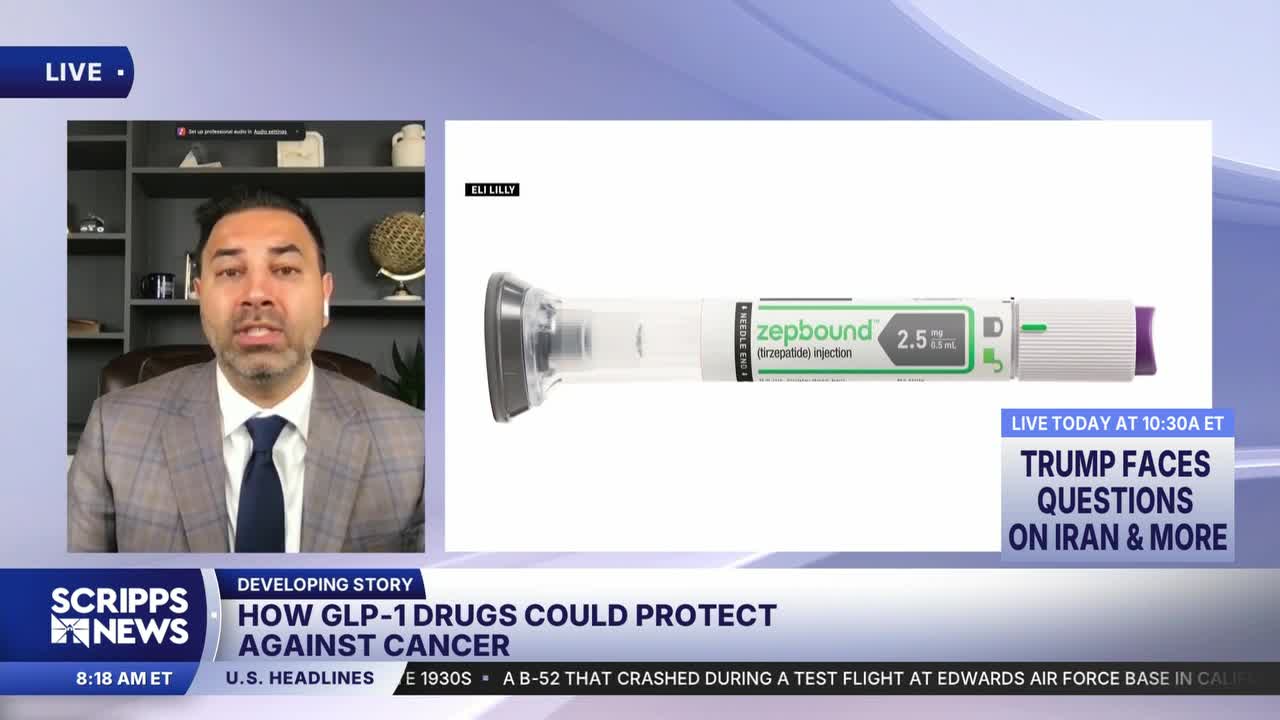


New research suggests GLP-1 drugs — best known as weight loss and diabetes medications — may also reduce the risk of developing certain cancers.
RELATED STORY | Scientists say GLP-1s improved male testosterone levels and sperm count
Multiple studies have found that people who take GLP-1 drugs may have a lower risk of developing cancer. Other studies suggest the drugs may also slow cancer progression, potentially reducing the risk of a patient reaching an advanced stage.
The findings span several cancer types, including breast, colon, pancreatic, and liver cancer.
Scripps News medical contributor Dr. Omer Awan said the results are promising, but come with an important caveat.
"These studies show that GLP-1 drugs are associated with reduced cancer risk, not necessarily that these drugs prevent cancer," Awan said.
Researchers believe the benefit may stem from two factors. Obesity is directly linked to at least 13 cancers, so weight loss alone could lower risk. But GLP-1 drugs also have anti-inflammatory properties, and inflammation can damage DNA in cells, potentially producing tumors.
Awan said more research is needed before drawing firm conclusions.
RELATED STORY | Without lifestyle changes, doctor says weight loss from GLP-1 drugs won’t last
"We need a lot more studies, a lot more data to be more definitive about what the association or the cause is," Awan said.
The current findings are based on observational studies, which can identify correlations but cannot prove cause and effect. Randomized controlled trials — longer, more rigorous studies that isolate specific variables — would be required to confirm whether GLP-1 drugs directly prevent cancer.
The research also adds to a broader shift in how the medical community views obesity. The World Health Organization now classifies it as a chronic medical condition, recognizing metabolic and genetic factors that can predispose individuals to the disease.
GLP-1 drugs, which began as diabetes treatments, have since shown benefits for heart disease, stroke, sleep apnea, and now potentially cancer.
