

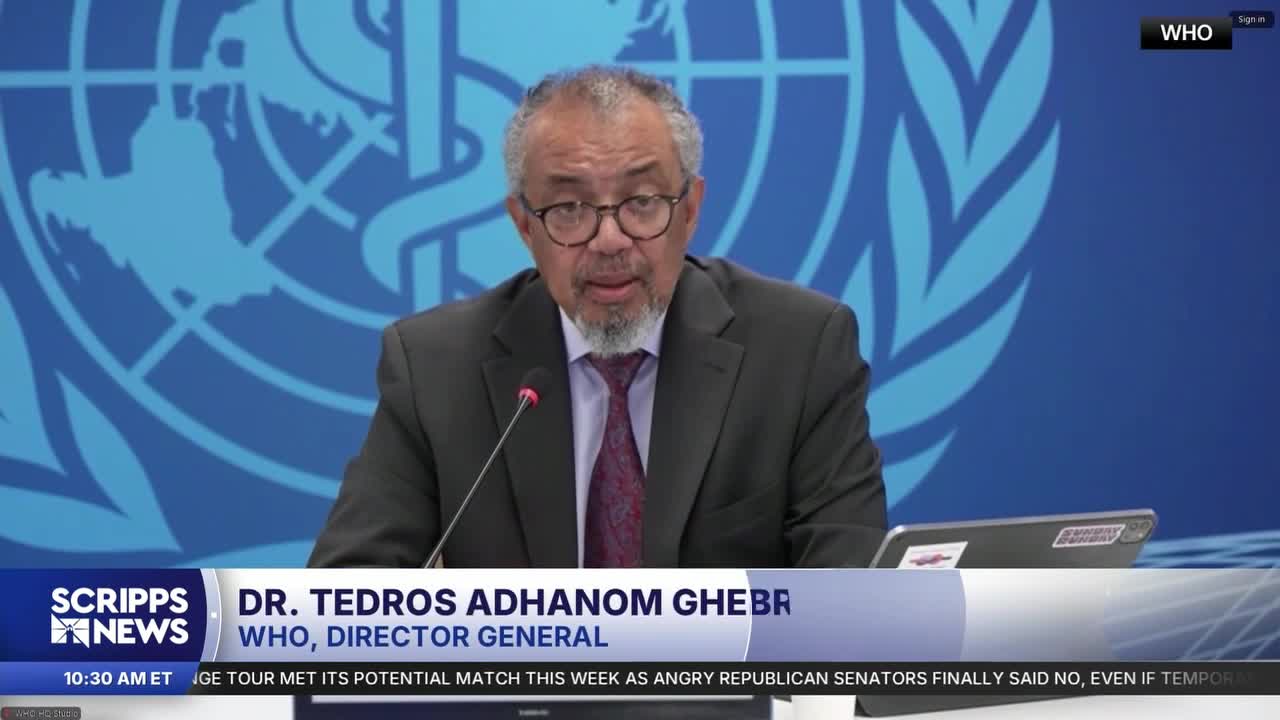


The World Health Organization chief said Friday that the Ebola outbreak in Congo is spreading rapidly and now poses a “very high” risk there, as a lack of medical resources and anger among the population hamper the response in a vulnerable and conflict-ridden region.
WHO Director-General Tedros Adhanom Ghebreyesus said the risk of global spread remains low, but that the U.N. health agency was revising upward its assessment of the risk within Congo from its previous categorization of “high.”
RELATED STORY | Dulles becomes sole entry point for US travelers from Ebola-stricken countries
The WHO chief noted that 82 cases have been confirmed in Congo, with seven confirmed deaths, though he said the outbreak is believed to be “much larger.” He said there are now almost 750 suspected cases and 177 suspected deaths.
Supplies were being rushed to Ituri province in the northeastern corner of the country, where the illness has been spreading for weeks in areas were many people have been displaced by armed conflict.
Frontline medical staff have struggled with a lack of resources and, in some cases, pushback due to what has been characterized as misinformation or situations where medical policy has clashed with local customs such as burial rites.
Response clashes with local customs
On Thursday, an Ebola treatment center in Rwampara was set on fire by youths who were angered when they were blocked from retrieving the body of a friend who apparently had died of Ebola, according to witnesses and police.
Bodies of Ebola victims can be highly contagious, and medical authorities are trying to control burials whenever possible.
Julienne Lusenge, president of Women’s Solidarity for Inclusive Peace and Development, a local aid group, said the population’s anger is mostly due to misinformation.
“We have lived through years and years of conflict and hardship so rumors spread easily,” she said.
She said some churches have told their large congregations that the outbreak is fake and that divine protection makes medical care unnecessary.
RELATED STORY | American doctor arrives in Czech Republic after treating Ebola patients in Uganda
Aid is being flown in, but frontline staff lacks resources
The United Nations said Friday it released $60 million from its Central Emergency Response Fund to accelerate the response in Congo and in the region.
The U.S. has pledged $23 million in funding to bolster the response in Congo and Uganda, and said it would also fund the establishment of up to 50 Ebola treatment clinics in the affected regions.
But Ugandan authorities said Thursday on X they were not aware of any treatment center being set up by the U.S.
Lusenge said her group’s small hospital near the Ituri provincial capital of Bunia lacks basic protective equipment as health workers struggle to respond to the outbreak.
Patients showing symptoms are first examined at the hospital before being referred to a larger treatment center, exposing nurses and doctors to possible infection, she said.
“We have made requests to different partners, but we have not yet really received anything,” Lusenge said. “We only have hand sanitizer and a few masks for the nurses, but we need much more than that.”
The outbreak is bigger than official figures show, WHO says
Both the WHO and Africa Centers for Disease Control and Prevention believe the outbreak is larger than the cases detected so far.
“I expect the number of cases to increase as surveillance becomes more and more rigorous," Africa CDP Director-General Jean Kaseya said.
The region's already-weak health infrastructure and surveillance capacity has been further weakened by international aid cuts, experts say.
Armed conflict in the region further complicates efforts to handle the crisis. There are over 920,000 internally displaced people in Ituri Province, according to the U.N.
Local leaders said an attack by militants linked to the Islamic State group killed at least 17 people on Tuesday in Alima, a village in Ituri.
“The outbreak can still be contained but the window for action is narrow,” Gabriela Arenas from the International Federation of Red Cross and Red Crescent Societies said on Friday. “What happens in the coming days in homes, in communities and across borders will matter enormously.”
