



TUCSON, Ariz. (KGUN) — At the University of Arizona, success on the field doesn’t always guarantee success off it. For many Pacific Islander student-athletes, the transition to college can come with deep homesickness, isolation and uncertainty about life beyond sports. One Sahuarita woman is working to change that.
Affectionately known as “Auntie Benjie,” Benjaline Medlock has spent years advising Polynesian athletes at the University of Arizona.
Through that work, she began to notice a troubling pattern: while many of these athletes arrived physically prepared to compete at a high level, some struggled mentally and emotionally, and ultimately left school before finishing their degrees.
“I started seeing that a lot of our young men and women were coming to college,” Medlock said. “And if they weren’t the number one or the number two, almost a shoo-in into the next level for their sport, they would leave.”
Medlock said conversations with colleagues helped her realize the challenges often started away from the spotlight.
Many Pacific Islander athletes come from tight-knit, multigenerational families and suddenly find themselves far from home, surrounded by people who don’t look like them or share their cultural background.
“They were physically fit, they were training well,” Medlock said. “But the mental part of it — they were homesick, they were lonely, nobody looked like them, or very few looked like them.”
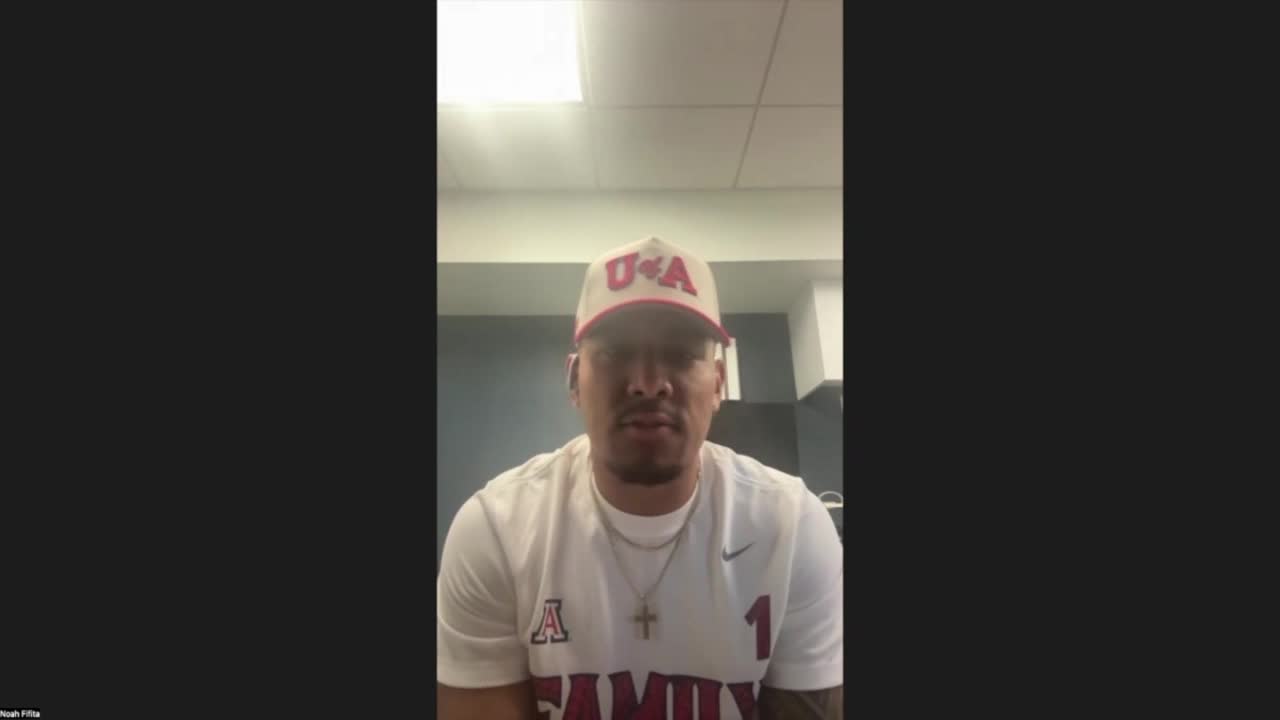
University of Arizona quarterback Noah Fifita says that experience is common among Pacific Islander students.
“I grew up at my grandfather’s house, big family guy,” Fifita said. “So when I left, it felt like something was missing. And I think that’s normal for a lot of Pacific Islander kids.”
As Medlock began inviting players to dinner, checking in with families and simply listening, her role naturally grew. Athletes started calling her “Auntie Benjie,” a title that reflects both respect and family within Polynesian culture.
“And it just kept growing,” she said. “We’d invite them to dinner, just talking to them, listening to them, talking to their parents, hearing their experiences.”
Those relationships eventually led Medlock to launch the Le Nu’u Legacy Foundation, a nonprofit focused on the holistic development of Pacific Islander student-athletes.
She worked the UA’s Jim Grossman to develop a program that would help these student athletes with the specific issues facing them. The organization helps students build comprehensive plans that address financial literacy, mental wellness, cultural identity and long-term career goals.
“Every student that wanted our help, that came with Le Nu’u, would leave college not just with their degree,” Medlock said, “but with a comprehensive development plan.”
Among other issues, the program hopes to provide sound financial advice for Pacific Islander students, who Benjie says have a higher chance of going bankrupt after going pro due to cultural expectations of extreme generosity and family concern.
When she began studying the issue, Benjie says the average lifespan of NFL money for a Polynesian athlete was about two years.
“No matter how much money they signed for, money just wasn’t lasting,” she said. “Either they don’t have the knowledge or skills. They don’t know how to use money to make money, so they can take care of more people. But I always hear this: ‘I’m going to buy my mom a house.’”
She says the workshops can focus on money protection, health and wellness. But the most important she says, is what Grossman dubbed “the I am narrative,” which relates to students figuring out what they want out of life beyond football.
For athletes like Fifita, the impact goes beyond academics or athletics.
“When you leave home for the first time, you feel like a disconnect because your family is so far away,” he said. “You lose your identity to some standpoint, so Auntie Benjie is just kind of the one who welcomed all of us.”
Medlock believes reconnecting students with their identities can help them discover what they ultimately want to become.
“We think if they really dug deep about who they really are,” she said, “they can figure out, like, what do I really want to do?”
The foundation is currently working with urgency to complete development plans for five seniors — four football players and one volleyball player — with graduations coming as early as January.
Le Nu’u Legacy has also begun intake with most of the Pacific Islander football players at UA and a handful at other schools, with the goal of supporting students throughout their entire college journey.
Looking ahead to early 2025, the nonprofit plans to launch its first formal programs, including Hale Hālāwai quarterly cultural gatherings, an eight-week workshop series focused on financial literacy, personal branding, leadership, and wellness, and a Hawaii-based service learning trip.
Medlock says interest from the Pacific Islander community and UA athletics has been strong, even as the organization navigates the challenges of its startup phase.
More information about Benjaline Medlock and the Le Nu’u Legacy Foundation can be found at the organization’s website.
——
Joel Foster is a multimedia journalist at KGUN 9 who previously worked as an English teacher in both Boston and the Tucson area. Joel has experience working with web, print and video in the tech, finance, nonprofit and the public sectors. In his off-time, you might catch Joel taking part in Tucson's local comedy scene. Share your story ideas with Joel at joel.foster@kgun9.com, or by connecting on Facebook, Instagram or X.


