

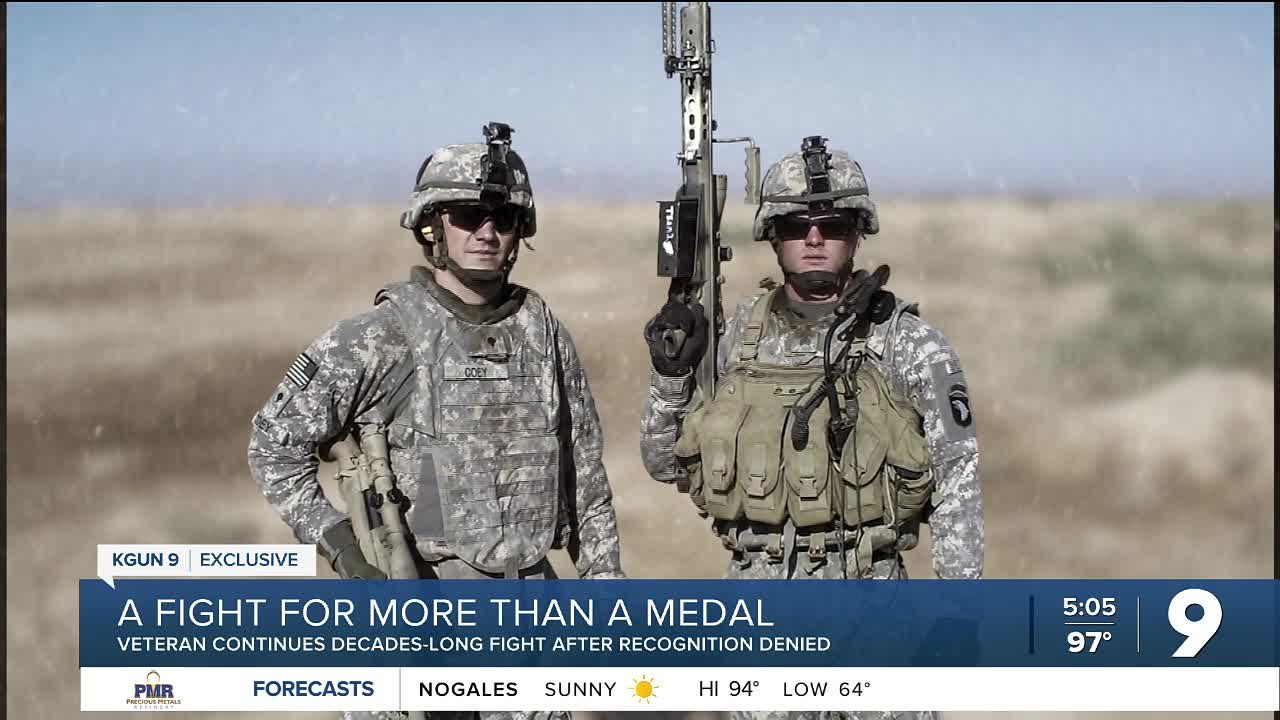



TUCSON, Ariz. (KGUN 9) — Casey Alexander was serving as a sniper in Iraq when a Christmas Eve explosion in 2007 changed the course of his life. Now, 20 years later, he is still fighting for recognition of the injuries he says that blast caused, and his wife says the battle has never really ended for their family.
"Like when people say, what do you want to do with your life, I can honestly say I already did it. Like I've accomplished it. For the longest time, that's all I wanted to do is be a sniper in the United States Army," Alexander said.
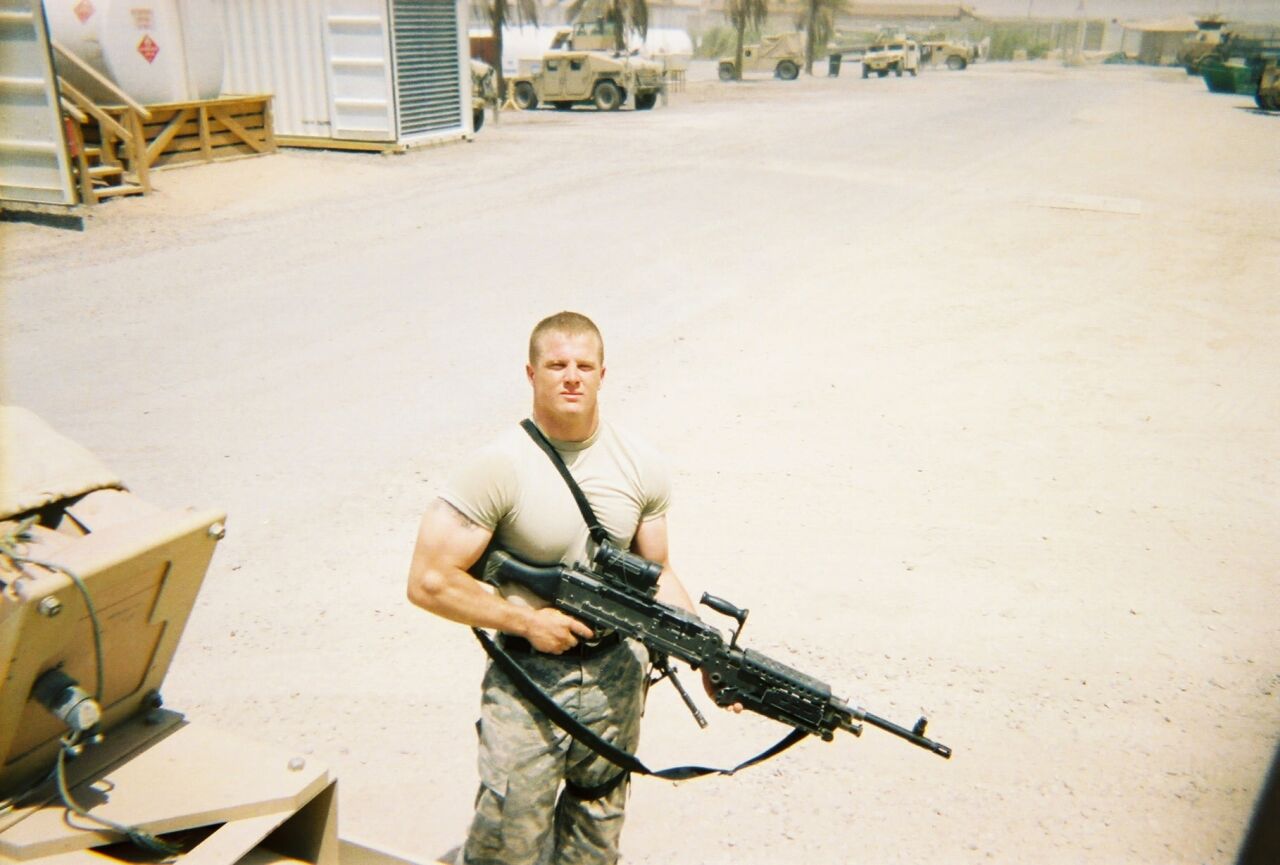
Today, Alexander's days are filled with coaching, teaching and raising a family with his wife, Melissa. The Tucson natives, who met in elementary school and reconnected in college, married just before his first deployment.

But on Christmas Eve 2007, Alexander was deployed with his Army unit in Iraq when a routine mission turned into a fight to survive.

"All I remember is seeing fire," Alexander said.
The blast was powerful enough that Alexander says he remembers very little beyond the flames. As for who survived the explosion:
"All of us. Like in that vehicle, everybody. And it should have been none of us," Alexander said.

Alexander says there was little time to recover after the explosion.
"Unless you're bleeding, don't waste our time," Alexander said.
He says the men were seen by a medic, given ibuprofen and told not to go to sleep. The next day, he was back on duty.

As years passed, Alexander says symptoms he couldn't ignore began to surface.
"If I was gonna say, it's TBI," Alexander said.
A traumatic brain injury. Paperwork later showed doctors determined Alexander was suffering from conditions related to PTSD and TBI, ultimately leading to his medical retirement from the Army.
He would then request a Purple Heart medal tied to the Christmas Eve explosion but was denied.
"The only document we didn't have was the medical card," Alexander said.
Alexander says a medic named Michael Gilman evaluated the men after the blast, and a record from Gilman could have supported his case.
"If I would've got one from Mike Gilman, it should have worked," Alexander said.
But Gilman can no longer provide that documentation.

"He ended up taking his life," Alexander said.
Melissa Alexander says watching her husband navigate the denials has been difficult and that the fight for the Purple Heart is about more than a medal.
"When the wounds are not visible, so you can't see them, they're a little bit harder to like put your finger on it. But the wounds that he has are very real and he's sacrificed a lot," she said.
Those invisible wounds have had lasting physical consequences. Melissa Alexander says her husband deals with joint issues, migraines, hearing loss and back pain, and that his leg will give out randomly.

"It's not just the physical things that he goes through. There's also the emotional pieces of war, which he manages very well," Melissa Alexander said.
She says Casey has a therapist he relies on, and that support from Major Saunders and Mike Dyer through the VA has been critical to the family getting through the medical retirement process.
"I feel like it's such a tedious process that I think a lot of people probably give up. If we didn't have that support, we may not have actually made it through the process," Melissa Alexander said.
Gilman was not the only man connected to that explosion Alexander would later lose. Fellow sniper John McCutchen served alongside him the night of the blast.

"He was a brother," Alexander said.
Alexander says McCutchen also applied for a Purple Heart tied to the explosion and faced repeated denials.
"He just kept getting the runaround, kept getting denied," Alexander said.

Alexander says he believes the denials pushed McCutchen to a breaking point.
"I just remember him saying I'd be better off dead. My kids will benefit better," Alexander said.
He says McCutchen later took his own life.

Melissa Alexander says mental health remains a critical concern for veterans and their families.
"Mental health is very important. He shared that a few of his friends have unfortunately taken their lives. Just getting the help that people need. Not being afraid to ask for help," Melissa Alexander said.
Alexander says receiving the Purple Heart is more than recognizing his own service.
"It would represent fighting for McCutchen, who fought for it for himself," Alexander said.
The fight has caught the attention of local veterans, who voiced their concerns to Congressman Juan Ciscomani, hoping legislation might succeed where years of paperwork had not.

"They put their life on the line. They got this injury through their service, and now they can't be recognized because of some rules, some bureaucratic rules in Washington that are old, that are outdated, and that are wrong and not science-based," Rep. Ciscomani said. "I am confident that we can fix this either through rulemaking or legislation, whichever way it is that we're trying to find out what the best approach here is. I am on this and I won't stop until we get this done."

Whether those efforts will bring change remains to be seen. For Alexander, the medal represents something far greater than recognition.
Alexander says he hopes sharing his story brings awareness to the struggles veterans face and encourages others not to give up.
"I'd like to see it happen just so I can take it to McCutchen's wife," Casey Alexander said.
If you or someone you know is having thoughts of suicide, you can call the 24/7 Suicide and Crisis Lifeline by dialing 988.
The National Alliance on Mental Illness Southern Arizona is a local non-profit that offers resources for those in need. The organization offers support groups and education classes.


