

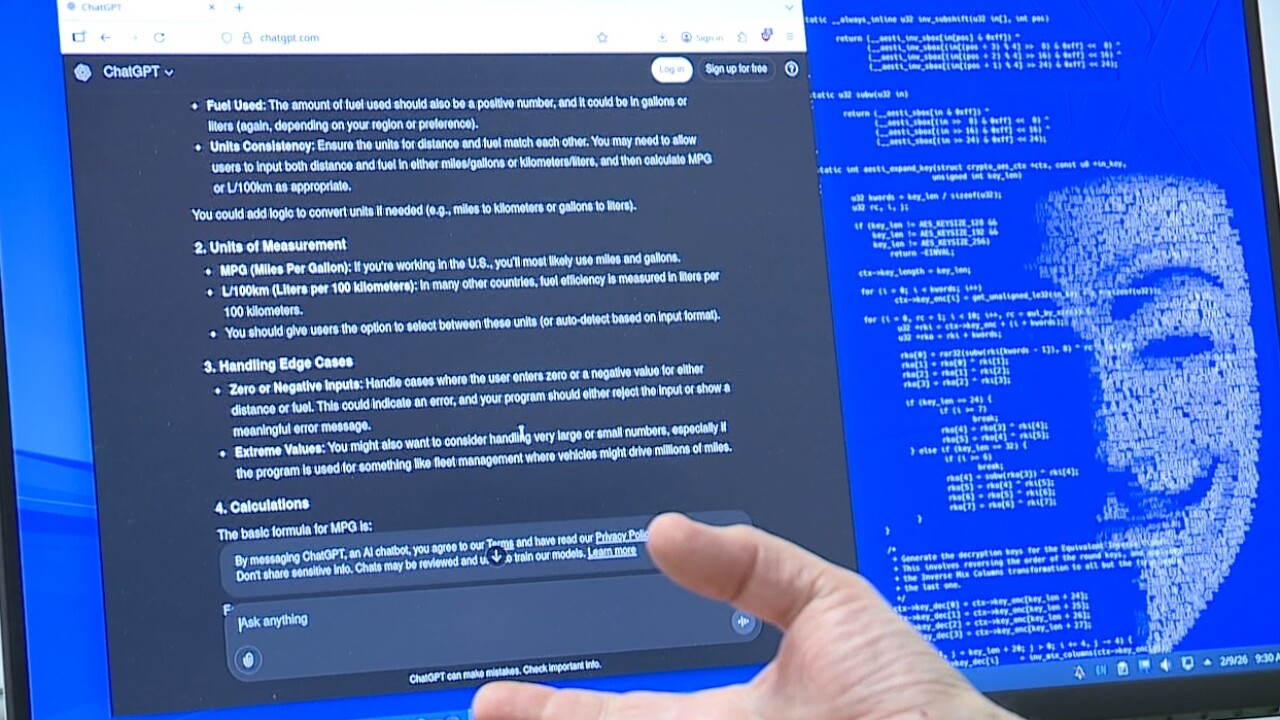


TUCSON, Ariz. — As artificial intelligence starts to touch just about every industry, Pima Community College is making sure students are getting prepared to use it. The college doesn't seem to be afraid of taking the next leap into the digital age of AI, and they're helping to pave the way for other schools.
"We're at a stage where the AI is not in a position to truly replace individuals, at least in most cases," said Roger Hurwitz, an instructor in computer information systems at Pima. "It's really a form of empowerment, but turning your back on it, I think, is unwise."
Hurwitz teaches programming and coding classes, and works AI right in, teaching students how to utilize it, but it goes beyond that.
"Both in terms of the what we provide the students to help enable them and then also taking advantage of AI as instructors," Hurwitz explained.
Instead of making students reread their notes after class for example, Hurwitz uses AI to turn his lessons into podcasts that students can listen to. Listening to it, it just sounded like a casual conversation between two people.
"Speaking of brain power, Roger made a huge defense of flowcharts. And look, I get it. drawing boxes and arrows, it feels a bit remedial," one AI host says.
"It does it feels like grade school," the other replies.
Hurwitz says sometimes it's a work in progress, so he still listens through before he shares it with his students.
"I'm gonna go back and tell it 'Well, maybe instead of referring to me as Roger you can refer to me as Professor Hurwitz' - you know a little more professional," he explained, laughing. "In some ways I think it's more engaging than listening to my lecture directly."
Pima recently formed an AI advisory committee, which led to the roll out of AI tools and training for the teachers. Now, professors can use AI for things like lesson planning, or to catch students using AI to fully write papers or do their homework.
This semester, they've been rolling out access to a suite of AI tools for students, letting them potentially translate lessons into other languages, check their grammar in assignments, or get feedback on their work.
So as AI becomes more intertwined in our lives, Hurwitz says it's important to embrace it.
"I think it's essential," he said. "Completely different context, but I think this applies across the board, it isn't AI that's going to put radiologists out of business. It's radiologists who know how to use AI who will put radiologists who don't know how to use AI out of business."
That's why Pima now plans to start offering AI literacy classes in the future, to help students learn how to spot and understand AI, while also incorporating more AI into general instruction, so no matter what students are studying, they'll learn how to incorporate artificial intelligence into their field.
"Whatever you're doing, AI is going to be a big part of it, in some sense," Hurwitz said. "So let's see if we can help you know what you need to know to take advantage of this, rather than be taken advantage of."
This story is part of the KGUN 9 special, AI Jobs of the Future. You can watch the full special by clicking here.
Claire Graham is an anchor and reporter for Good Morning Tucson on KGUN 9. She grew up in Tucson and graduated from the University of Arizona with a degree in musical theatre. Claire spent a decade in Washington state, but she's thrilled to be back home in the beautiful southwest with her husband, two young sons and two rescued dogs. Share your story ideas and important issues with Claire by emailing claire.graham@kgun9.com or by connecting on Facebook and X.


