

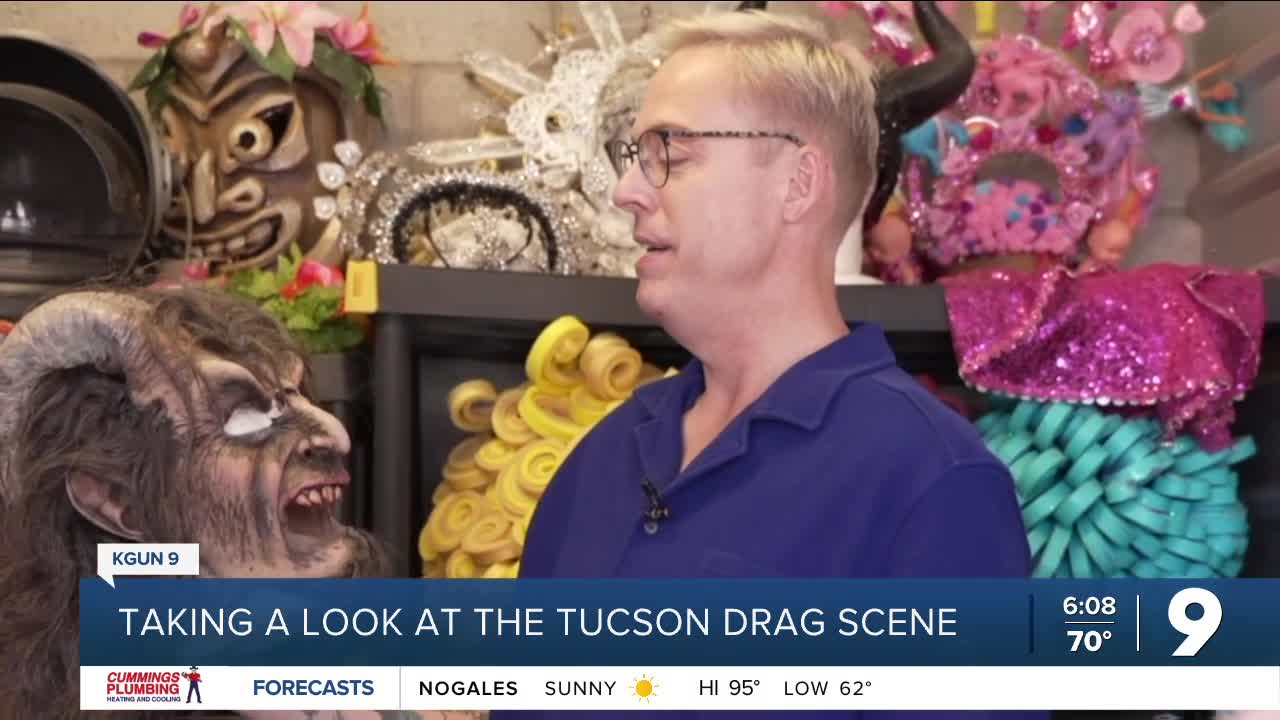


TUCSON, Ariz. — There are millions of different ways to do drag, and you can find a taste of almost every type here in Southern Arizona.
“I have the luxury now of traveling the world doing drag,” said Tucson-based drag queen Tempest DuJour. “I always say that the queens in Arizona, and specifically Tucson and Phoenix, are as good as anyone I’ve ever seen in the world.”
From queens like Tempest who lean into the campy, slightly controversial side, to performers like Tucson’s longest-performing drag queen Lucinda Holliday—who prefers a more comedic take on the art—and queens like Vera DelMar, who brings back classy vintage flair.
However, the now-vibrant drag scene wasn’t always out of the closet. Lucinda Holliday says before you could find drag performances at brunches, fundraisers or 5k fun runs, performances were kept inside gay bars.
Holliday has been on stage since the late 1980s, and for decades he and his partner have made crowns, pins and other jewelry for drag performers and their pageants with ‘Made for a Queen’ Jewelry.
He’s watched the drag scene change around him.
“It actually became much more visible because of RuPaul,” Holliday said. “And now with RuPaul’s Drag Race, it’s everywhere, and we’re widely accepted.”
RuPaul’s Drag Race, a reality TV show drag pageant starting searching for “America’s next drag superstar” in 2009 on Logo TV. The show has since earned millions of views and several Emmy awards over 18 seasons.
Tucson-based Patrick Holt—known as queen Tempest DuJour — was featured in Season 7 of the series, showcasing her costume-designer background.
“We’re the only art form that does our own hair, does our own makeup, does our own costumes, choreographs, makes our own mixed songs, presents ourselves by ourselves,” Holt said. “We’re a self-contained unit. No other art form I know does that.”
Nearly every aspect of that art form is changing from the concepts and costumes to the performances themselves. As drag has grown in popularity, the show has also raised expectations in drama and pomp.
That’s something Vera DelMar noticed here in Tucson. As the city’s oldest performing drag queen, DelMar says she prefers to stay performing upright.
“Some of the younger ones do a lot of the acrobatics,” she said. “You know, the somersaults and the death drops. If I did a death drop, they’d have to call 911 to come get me up.”
But evolution and pushing performance is necessary to keep the art alive.
“It has to [stay alive] because politically our world is so different,” Holt said. “We have to continue to be aware of what’s going on around us and be a part of that or be a respite from that.”
While DelMar says, “[drag has] been around since time immemorial, and I don’t think it’s ever going to go away.”

