

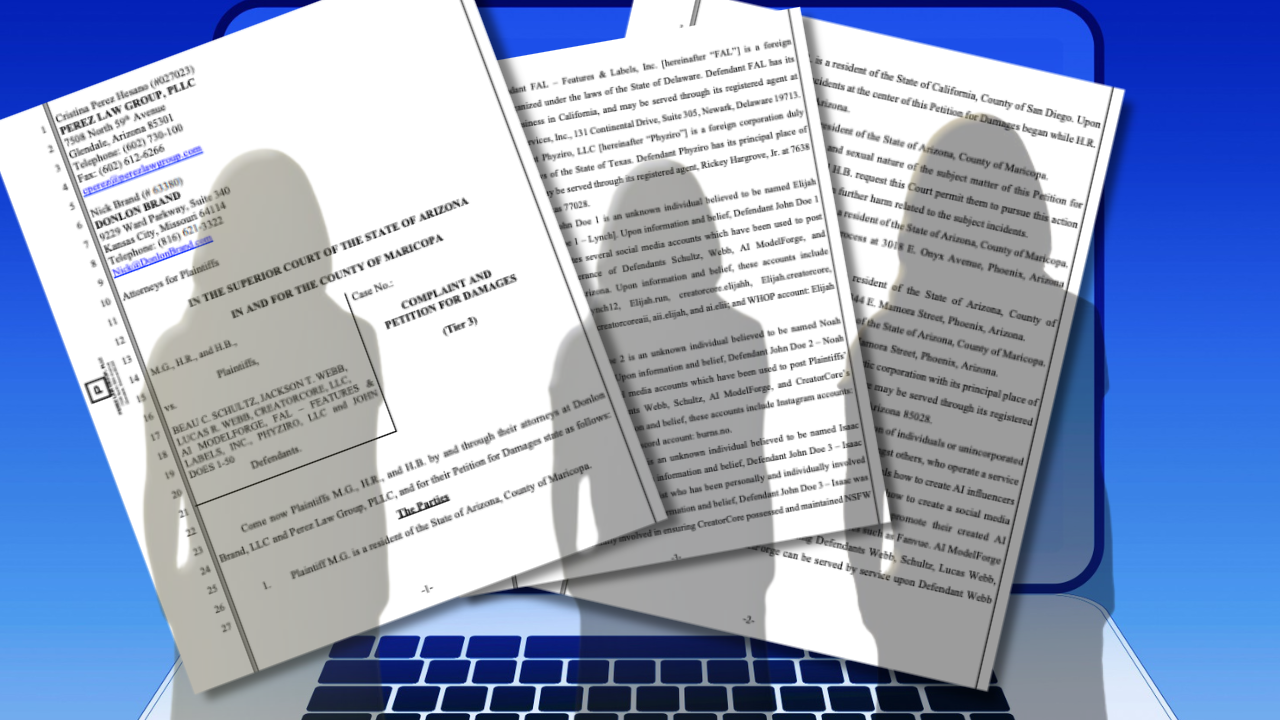

A lawsuit has been brought by three young women, suing under pseudonyms, who say that their social media photos were taken without permission and used to create highly realistic AI images depicting them in sexualized and pornographic content.
They claim this was done by a network of people and companies centered around Arizona-based defendants — Beau Schultz, Jackson Webb, Lucas Webb — and their businesses, including CreatorCore and AI ModelForge.
According to the complaint, these defendants built a business model that scraped images of real women from platforms like Instagram, generated AI replicas of them, and monetized those replicas through social media traffic and subscription pornography sites.
The plaintiffs allege that the defendants not only profited directly from these AI-generated likenesses but also expanded the scheme by selling “Blueprints” and subscriptions that taught thousands of others how to replicate the process.
Through AI ModelForge and the CreatorCore platform, subscribers were allegedly instructed and enabled to create nude and sexually explicit images and videos of unsuspecting women using generative AI tools with minimal safeguards. The complaint claims that millions of images and videos were generated, millions of views were obtained on social media, and substantial revenue was earned, all without the consent or knowledge of the women whose likenesses were used.
The lawsuit also names third-party defendants, including an AI infrastructure provider and a payment processor.
The plaintiffs allege the infrastructure provider supplied generative AI models lacking protections against nonconsensual sexual content, and that the payment processor knowingly agreed to process payments for this high-risk, NSFW AI business after numerous mainstream payment processors refused. The plaintiffs argue that without these services, the scheme could not have continued at scale.
Overall, the complaint characterizes the defendants’ conduct as a deliberate, profit-driven enterprise built on the exploitation of real women’s identities, causing severe emotional distress, reputational harm, and loss of autonomy.
The plaintiffs seek damages and other relief under various tort theories, asserting that the defendants knew their actions were unethical and unlawful but continued because the business was lucrative.

