

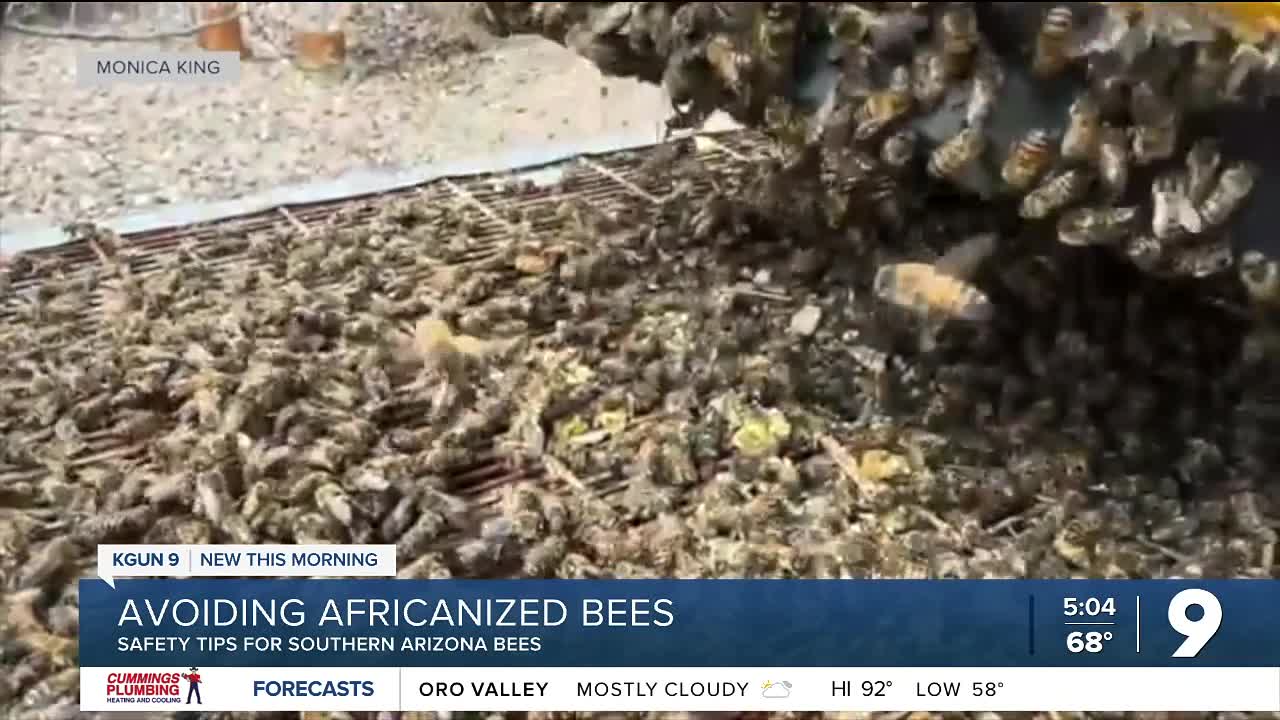


TUCSON, Ariz. — You may have heard them called “killer bees” or “Brazilian bees.” Africanized honeybees, while invasive, are an integral part of Arizona’s food production.
Native pollinators like bats, butterflies and over a thousand native bee species can help spread native plants, but for out-of-state plants like alfalfa hay and citrus.
Third-generation beekeeper Monica King specializes in Africanized bees. She keeps and tames her own colonies and helps remove Africanized colonies from other homes and yards.
“Now,” she said. “That is what most of our wild or feral population of honey bees are: Africanized genetic honeybees.”
Africanized bees began as a science experiment in Brazil when geneticist Dr. Warwick Kerr crossed Italian honeybees with African genetics. The experimental bees escaped and slowly made their way North to Southern Arizona.
While not outwardly aggressive, King says the Africanized bee colonies are more defensive than the European ones.
“They don’t seek you out,” she said. “They don’t just got, ‘oh, there’s a human over there, I’m going to go attack.”
While other colonies may send a few dozen worker bees to defend a hive, Africanized bee colonies will send out thousands, usually to protect a zone up to 200 yards from their hive.
King says 50 bee stings are enough to put the average adult in cardiac arrest.
“It’s just like finding a rattlesnake in your yard or running into a pack of dogs,” she said. “It’s dangerous. So, unless they’re kept by a beekeeper and they’re known European genetics, they’re potentially killer bees.”
In the hands of a beekeeper, Africanized colonies can be returned to European ones by replacing the colony queen.
“The new queen lays an egg, the egg emerges in 21 days, so literally in a two to three month time period, this entire colony switches out genetics,” King said.
Those bees are still able to pollinate and produce honey all the same. They’re just a little less territorial.
Still, the majority of feral or wild bees encountered in southern Arizona are Africanized, so King says to be observant when you’re running large machinery like a lawn mower or headed out on a hike.
Notice bee flight patterns and watch where they’re coming from. Bees can fit through openings as small as a pencil eraser and set up their hives inside of almost anything, from a hole in a saguaro or an overturned terracotta pot.
Bee colonies are unpredictable, so while they may be fine one day, another day, a random presence, sound or vibration could set them off.

