



TUCSON, Ariz. — Can fixing human beings be a job for robots?
While we aren't quite at the level of the Emergency Medical Hologram from Star Trek or Baymax from Big Hero Six, artificial intelligence is still making a difference in the medical field.
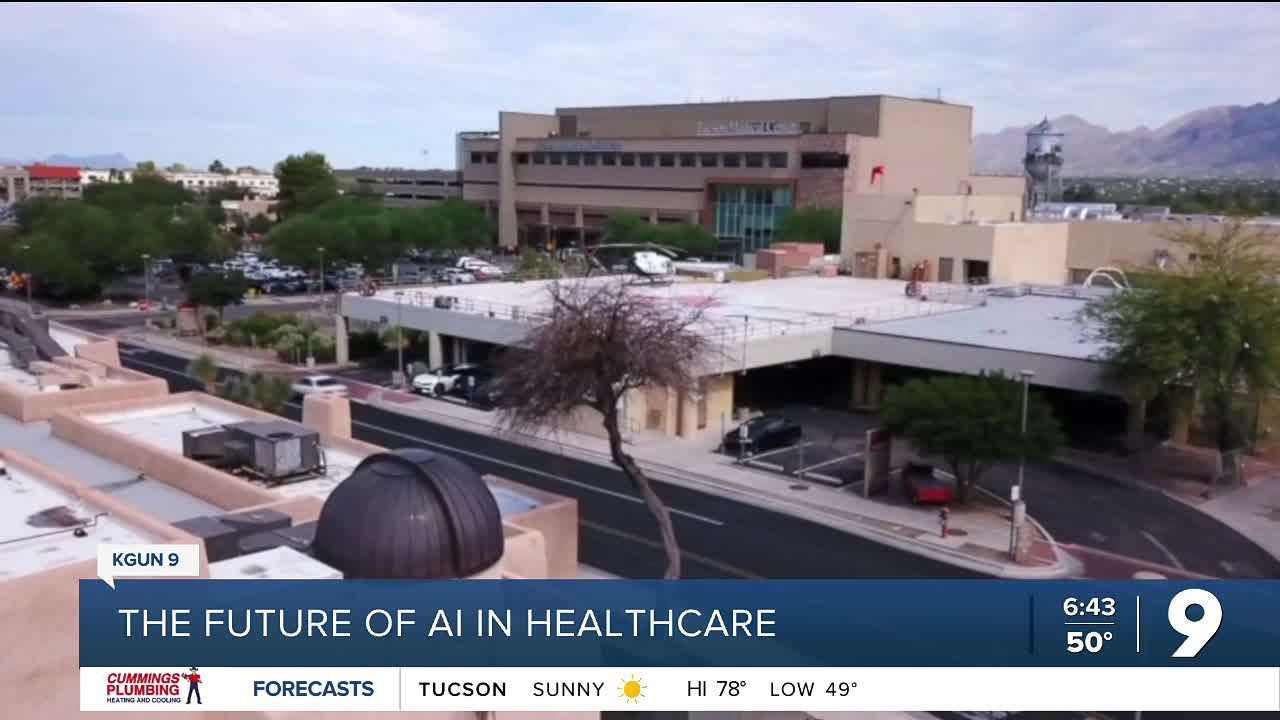
In Arizona, Tucson Medical Center says it has AI in its corner, literally.
“I like to think of A-I as a way that allows us to be our best selves as clinicians," said Dr. Josh Lee. He's the Senior Vice President of Tucson Medical Center and a practicing physician.
He says the TMC introduced artificial intelligence to their facilities around 2023, taking on three major roles in their practice: assistive, agentic and analytic.
“A great example is the way we help our clinicians at the bedside,” Lee said about their assistive AI.
Doctors and nurses use assistive AI in the form of an app on their phone. The app listens to conversations between patients and practitioners, adding relevant information to the patient's medical chart.
It's been a huge help for professionals like nurse practitioner Natalie Norem. She helped bring the tool to TMC.
“We have a lot of burnout in the medical world," Norem said. "We don’t have enough nurses. We don’t have enough doctors. This is especially important in primary care.”
Especially in the coming years. Federal data shows that Arizona will likely face a shortage in primary care providers over the next decade. Norem says attributes that shortage—partially—to burnout but says this AI tool could help.
“Having the technology assist me with it has just made my interactions with the patients better," Norem said, adding it cut her charting time in half and upped her patient satisfaction scores.
With repeated use, she says it's improved "like lightning speed.”
TMC's agentic AI takes a more behind-the-curtain approach, allowing doctors to focus on care.
“We use [agentic AI] mostly right now in our revenue cycle space," Lee said. "It’ll go and do a number of processes like pull an authorization without a human having to do it.”
Analytic AI is where Lee is expecting the most growth in the medical field's future.
“We try to save lives as fast as we can, and so AI helps us more rapidly identify those patients at the highest risk," he said.
The analytic AI technology works with large data sets from many years or multiple hospitals. This year, Lee says TMC is trying a new analytic tool that pulls information from staff reports and patient characteristics to help shorten patient stays in the hospital.
“Every winter, we have an over-filled hospital, people waiting in the emergency room who desperately need our care," Lee said. "Getting them through safely, efficiently, and effectively is really top of mind to all of us.”
However, no matter how much the technology improves and seeps into the medical field, Lee says human intelligence will remain in every AI interaction.
Especially since we're far from the days of robots like those in science fiction.
“I don’t think anybody’s coming for our jobs with an A-I nurse practitioner robot," Norem said. "At least not now.”

