

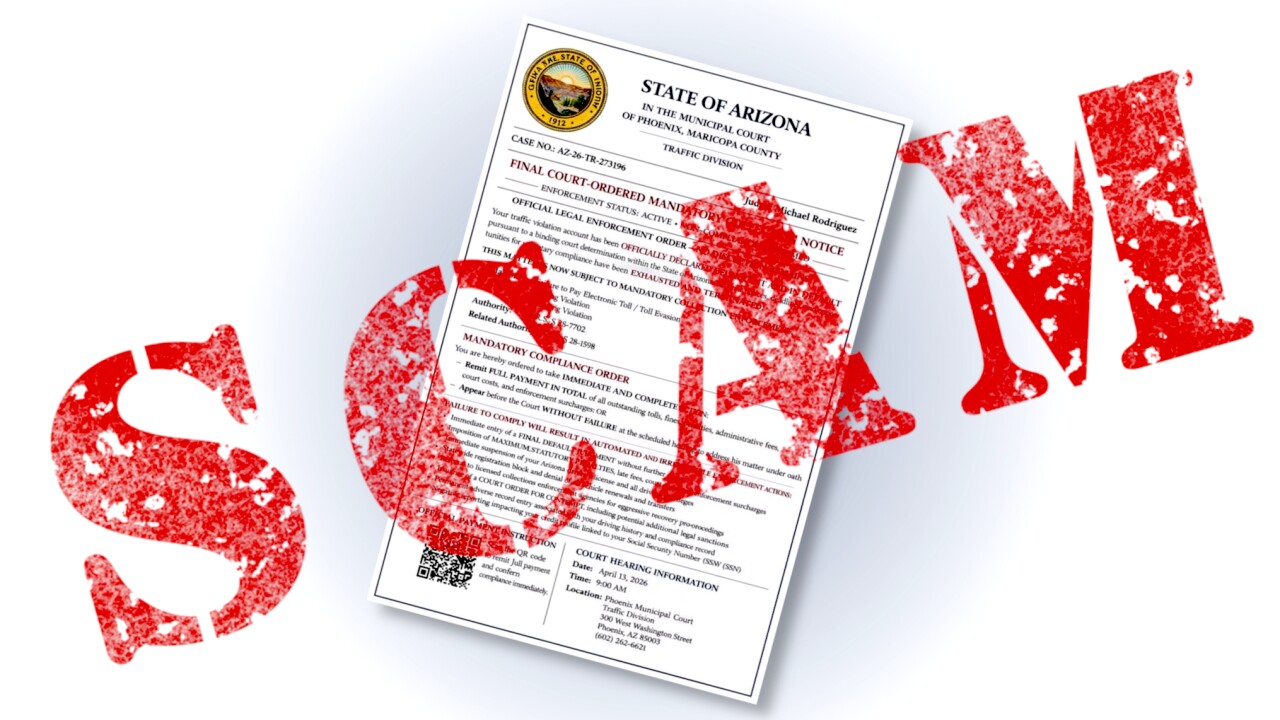


The warning signs are unmistakable: urgent language demanding immediate action, threats of license suspension, and pressure for instant payment - all hallmarks that Arizona officials say are red flags for scams. A sophisticated new traffic ticket scam uses fake court documents that look remarkably official, complete with government seals and legal terminology, like the example shown below. (Note: We placed the red 'X' over the QR code to invalidate it.)

The Cochise County Sheriff's Office just released an alert warning drivers: "Don't become a victim to this scam!" This document shown here, labeled a “Final Court-Ordered Mandatory Collection Notice” from a Phoenix municipal court, contains all the red flags.
The language can be disarming, and with the advancements of AI, there has been an escalating wave of sophisticated traffic ticket scams, including fake court documents that closely mimic official government communications. This latest scam involves fraudulent documents that appear to come from legitimate Arizona courts, complete with official-looking seals, case numbers, and detailed legal language threatening immediate enforcement action for unpaid traffic violations.
How the Scam Works
These fake notices claim recipients owe money for various traffic violations including electronic toll evasion, parking violations, and speeding tickets. The documents threaten severe consequences including license suspension, vehicle impoundment, and even jail time if immediate payment isn't made.
The scammers include QR codes that supposedly allow for "convenient" payment, directing victims to fraudulent websites designed to steal personal and financial information.
Official Warnings from Arizona Authorities
The Arizona Department of Transportation (ADOT) has issued multiple warnings about these scams, emphasizing a crucial fact: ADOT does not collect unpaid traffic tickets and will never text or contact residents demanding payment.
"For the record: ADOT is not involved in collecting for unpaid traffic tickets. We will not text you seeking payment for anything," ADOT stated in an official warning on its site.
Related: ADOT warns of new text scam demanding fake traffic ticket payments
Arizona Attorney General Kris Mayes has also issued stern warnings about the increasing sophistication of these scams. "If you get a text from the 'Arizona Ministry of Communications,' ignore and delete it," Mayes said, referring to one of the fake agencies scammers have created. "And you can always report text scams to my office or to the FTC."
Red Flags to Watch For
ADOT and law enforcement officials have identified several clear warning signs:
1. Fake Agency Names: Scammers often claim to be from non-existent entities like the "Arizona Ministry of Communications" or "Arizona Department of Motor Vehicles." Arizona actually uses "Motor Vehicle Division" (MVD), not DMV.
2. Factual Errors: The scams often reference toll violations, but Arizona doesn't have toll roads. Some mention fake legal codes that don't exist in Arizona law.
3. Urgent Payment Demands: Legitimate government communications don't demand immediate payment through text messages or QR codes.
4. Suspicious Links: Even when URLs contain "azdot.gov," they often redirect to fraudulent domains ending in .wang, .xyz, or .top.
Also Read: How to make Robocalls almost vanish in 2026
What to Do If You Receive a Scam
Arizona officials recommend these steps:
- Don't click any links in suspicious messages.
- Don't provide personal information or payment details.
- Delete the message immediately.
- Report the scam to the Arizona Attorney General's Office or forward texts to 7726 (SPAM).
- Verify any legitimate concerns by visiting azmvdnow.gov.
If you've already clicked a link or provided information, contact your bank immediately and file a complaint with the Arizona Attorney General's Office.
Drivers with genuine concerns about traffic violations can check their official Motor Vehicle Division account at azmvdnow.gov or visit an MVD office in person. Government agencies emphasize they will never use text messaging as the primary method for official communications about legal matters.
The Federal Trade Commission and Arizona Attorney General's Office continue to track these scams and urge residents to remain vigilant as scammers become increasingly sophisticated in their attempts to steal personal and financial information.

