

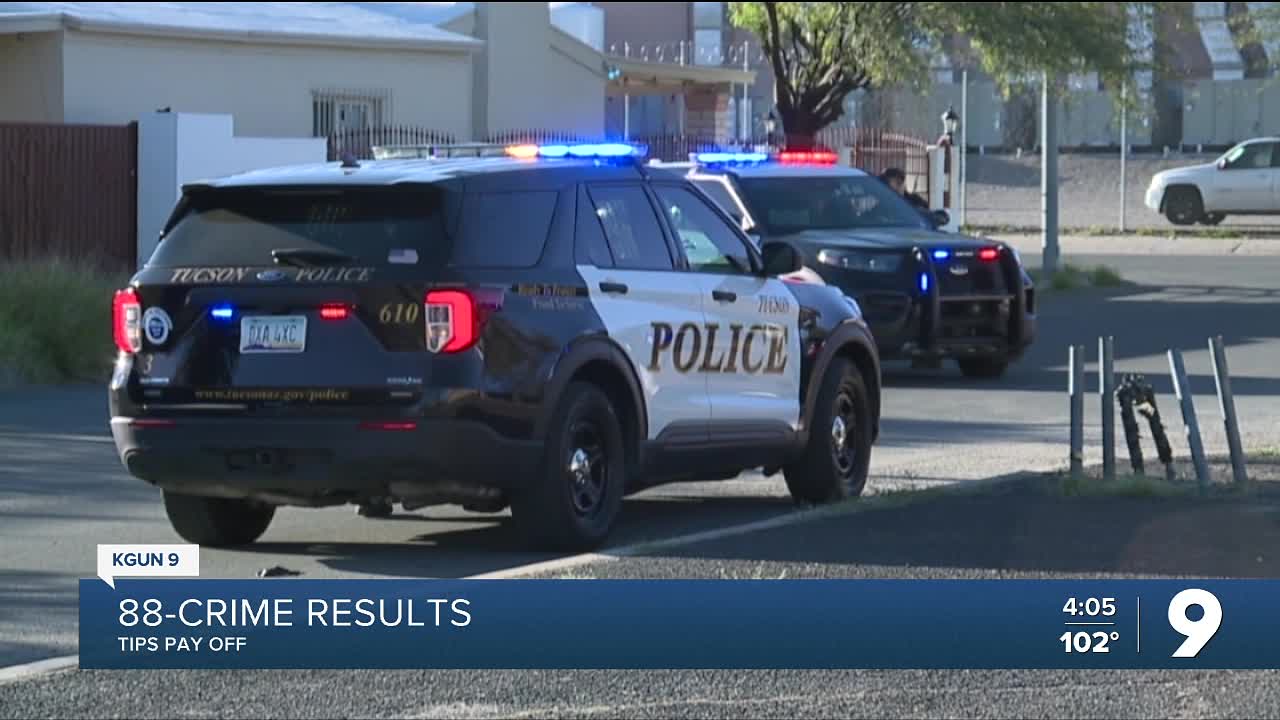


TUCSON, Ariz. (KGUN) — 88-Crime, the local crime reporting tipline says it has real results you can measure in the number of crimes tipsters helped solve.
A fair number of people in this jail—and in prison—are there because someone picked up a phone and left an anonymous tip. Now we have a better idea of how many tips turned into arrests.
When an arrest happens it’s often because someone was a bridge between the shadowy world of the criminal—and the world of law enforcement.
The 88-Crime website says “Crime doesn’t pay but we do.” Here’s a better idea of how that worked out in practice.
88-Crime says from last June up to now, tips led to 83 arrests and cleared 104 cases—and helped recover more than 38 thousand dollars in stolen property, more than 40 thousand dollars on illegal drugs, and nine guns.
Cases included homicides, human smuggling, and drug dealing.
Over 24 years in law enforcement, James Allerton worked with tips from 88-Crime. Now as a civilian, he leads the program.
“There's often times that people will want to report a crime, but for whatever reason they have fear of doing so, and 88-Crime gives them an anonymous way to do so without fear of retaliation, without fear that they'll be somehow stigmatized. They can let us know what happened, and we can send that right along to law enforcement.”
He says last year the program paid tipsters more than $55,000 dollars in rewards for tips that led to arrests. That money comes from private donations.
As much as money, the tips depend on a promise—-a promise to keep the tipster anonymous.
James Allerton says when he was an investigator he saw how well 88-Crime keeps that promise.
“I've worked 88-Crime tips before and I never knew and was never able to discover from those tips who it was that gave us the tip, who it was that gave the information.”
88-Crime is equipped to take tips by phone and on-line 24 hours a day but it is not for when there is an emergency that requires immediate help. That’s a call for 911.

