

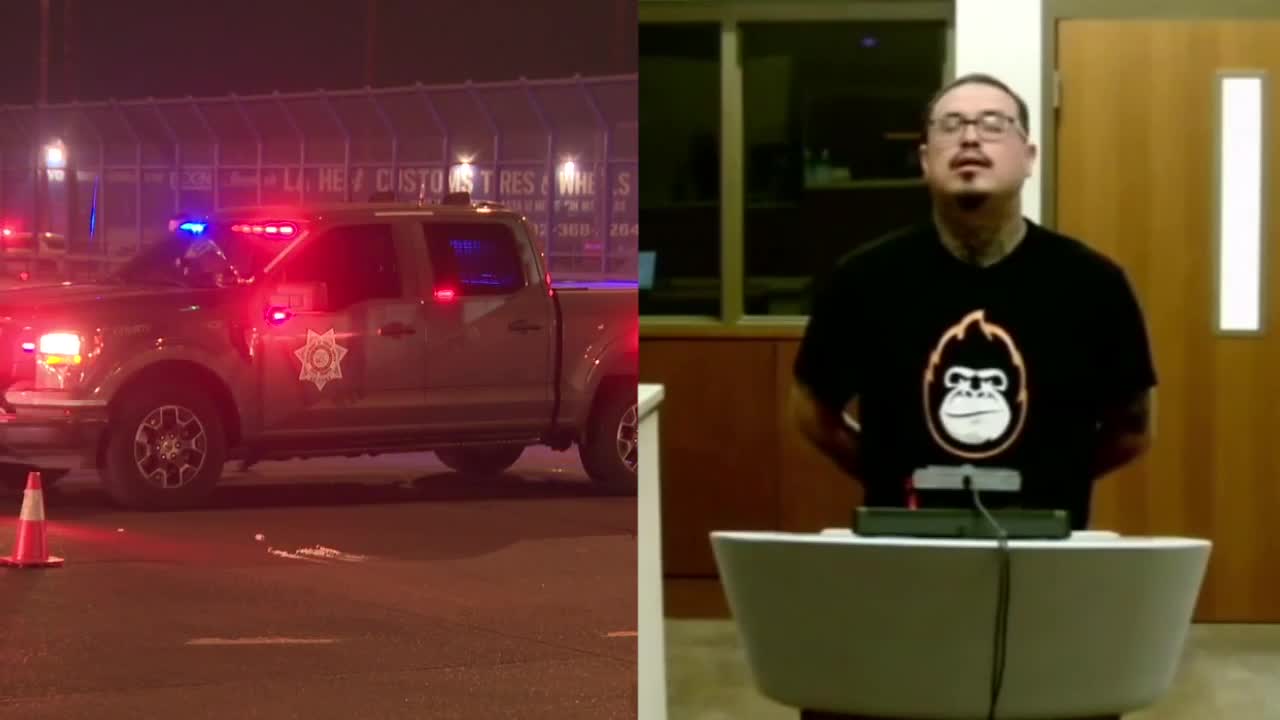


PHOENIX — A Maricopa County judge released a DUI suspect after determining he could not find probable cause in the case because the arresting officer's report was generated with the assistance of an artificial intelligence tool.
Anthony Edward Rene Quidera, who was arrested on Oct. 29, 2026, on charges of DUI, exceeding the posted speed limit by more than 20 mph, and possession of an open container in a vehicle.
According to court records, the arrest occurred on eastbound Interstate 10 after a DPS trooper observed a vehicle traveling at over 100 mph in a 65 mph zone near 79th Avenue.
The trooper's probable cause statement, filed as part of the arrest paperwork, included the following disclosure at the end of the narrative: "THIS REPORT WAS GENERATED WITH ASSISTANCE FROM TRULEO AI. THE CONTENT REFLECTS THE OFFICER'S OWN OBSERVATIONS AND RECOLLECTIONS. ALL FACTS AND STATEMENTS ARE BASED SOLELY ON THE OFFICER'S ACCOUNT."
That disclosure became the basis for Maricopa County Superior Court Commissioner Daniel Fenzel's decision to release Quidera.
In the release order, Fenzel wrote that "without further information regarding the nature and extent to which a generative AI authored or contributed the narrative given that all alleged facts and statements were 'based' on the affiant officer's original account which was not included," the court was "unable to meaningfully weigh whether the factual allegations made in the narrative (e.g., officer's observations, signature of affiant officer) were authored, whether in whole or in part, by a generative AI."
As a result, Fenzel wrote, "the Court is unable to determine probable cause at this time."
According to the arrest narrative, the trooper observed Quidera's Dodge Charger traveling at over 100 mph, failing to maintain its lane, and driving on the left median shoulder. After a traffic stop, the trooper reported smelling alcohol on Quidera's breath, observing bloodshot, red, and watery eyes, and administering a Horizontal Gaze Nystagmus test in which Quidera showed six out of six cues. Quidera allegedly declined to take a preliminary breath test. The trooper also reported finding several open containers on the passenger floorboard during a vehicle inventory.
Despite those documented observations, the judge found the AI disclosure created an unresolvable question about the authorship and reliability of the narrative, making it impossible to establish probable cause.
As more law enforcement agencies turn to AI tools to assist officers with report writing, the ruling raises new legal questions about how AI-generated or AI-assisted police reports may hold up in court.
In October, ABC15 reported on Phoenix PD's trial program with Axon's Draft One AI report writing software.
In September, an appeals court threw out a 10-year sentence in a road rage shooting after determining an AI victim impact statement influenced the sentence.
The Arizona Supreme Court has declined to ban judges from using AI but has "asked the Arizona Steering Committee on Artificial Intelligence and the Courts to recommend any rules or administrative orders needed to provide judicial officers with clear, workable standards for the responsible use of emerging AI technologies and ensure that the judiciary maintains the public’s trust that AI has not replaced human decision-making. The Court asked the Committee to send a status report by March 1, 2027."
Maricopa County Justice Court records show after his release, Quidera was eventually charged and scheduled to be arraigned on November 12th.
