



TUCSON, Ariz. (KGUN) — Concerns about the Project Blue data center have hinged on how much electricity and water it will use. KGUN9 has obtained water well permits for the site that reveal more about how much water developers expect to have available.
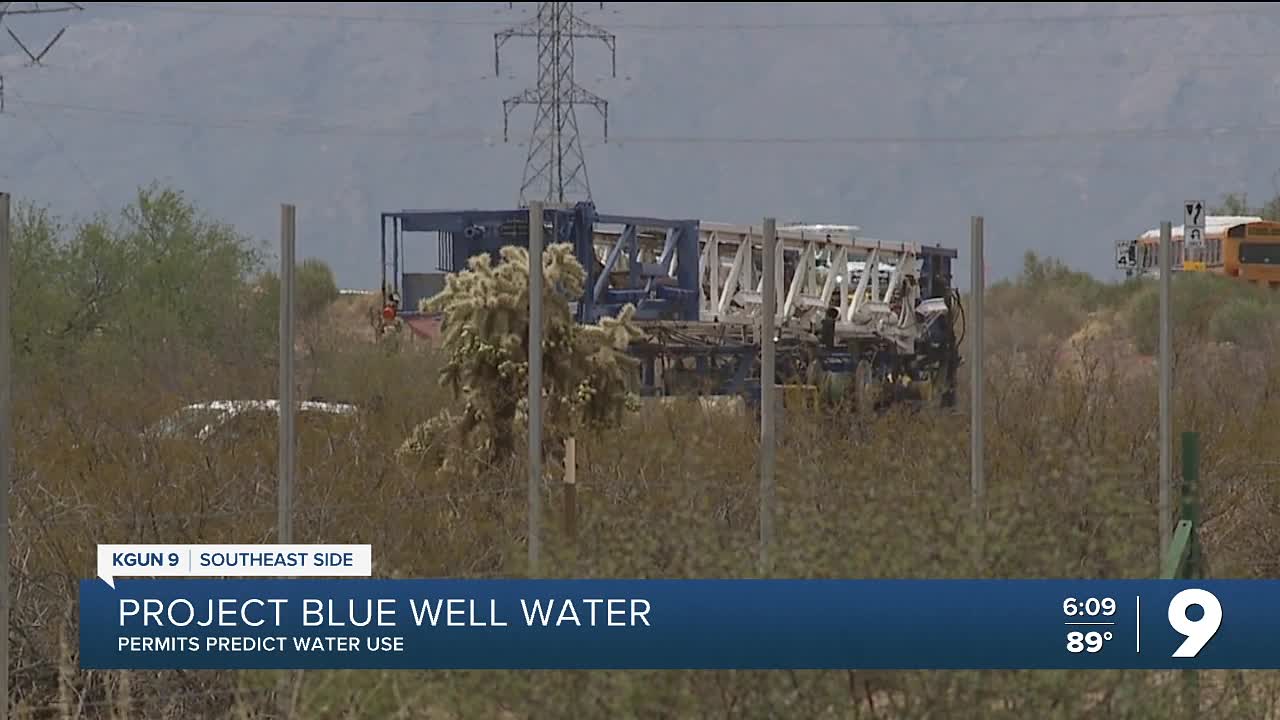
At the Project Blue construction site they are clearly making the preparations to begin to drill wells to supply water to this location. So we’ve been looking into some of the documents associated with the permits and what they say about how that water will be used.
On the eastern edge of the Project Blue site you can see crews working around a drill rig.
Permit documents KGUN9 obtained from the Arizona Department of Water Resources say the drill site on the east will be one of two wells meant to serve the data center site.
After hearing from protestors worried the center would use too much water for cooling, Tucson City Council refused to annex the site—and refused to provide water for anything to do with the project.
Beale Infrastructure, the company behind Project Blue promised a new design that would be air cooled and use water the way any building would—for bathrooms and fire protection.
The permits do say the well water is for drinking and fire suppression.
Permit documents say the site will use no more than 96.5 acre feet of water per year. That’s about 31.4 million gallons.
Doctor Sharon Megdal of U of A’s Water Resources Research Center thinks the site will probably use much less than that. But she says that’s still a lot of water and instead of drilling an independent well it would have been better if Project Blue got water from a large water system that could plan for water use across the region.
“Because then you know we know how water utilities are attempting to plan for the long term, they're looking at all the different supplies, and so this isn't a usual situation. This is an unusual situation that we have a new water user kind of right in the middle of a lot of other development and things going on on their own wells.”
Having water on standby to feed sprinklers in case of fire may be the biggest potential use.
The well permit documents tell us each of the two wells permitted now are to have pumps able to move 600 gallons per minute.
That’s in line with recommendations from the National Fire Protection Association which says buildings like data centers should be able to feed sprinklers between 500 and 750 gallons per minute.
Documents say the wells should not draw enough water to affect other wells in the area. Time to complete wells should be about six months.
Early Wednesday evening Beale Infrastructure responded to questions from KGUN 9 with an estimate of how much it expects to actually use compared to the amount the well permits allow:
In an emailed statement Beale says:
“On average, the facility is estimated to use 15,000 to 20,000 gallons per day, which is roughly the same as two to three sit down restaurants. The primary cooling of the data center equipment will be done using a closed-loop air-cooled system; this system does not continuously consume water. The only water needed for the cooling system is the amount to fill the closed loop initially, which is then continuously recirculated. After the initial closed loop fill-up, water is only used for “domestic” purposes, such as employee kitchens, bathrooms, hand washing and health and safety requirements like any other office building, retail or restaurant. “
——-
Craig Smith is a reporter for KGUN 9. With more than 40 years of reporting in cities like Tampa, Houston and Austin, Craig has covered more than 40 Space Shuttle launches and covered historic hurricanes like Katrina, Ivan, Andrew and Hugo. Share your story ideas and important issues with Craig by emailing craig.smith@kgun9.com or by connecting on Facebook and Twitter.


