

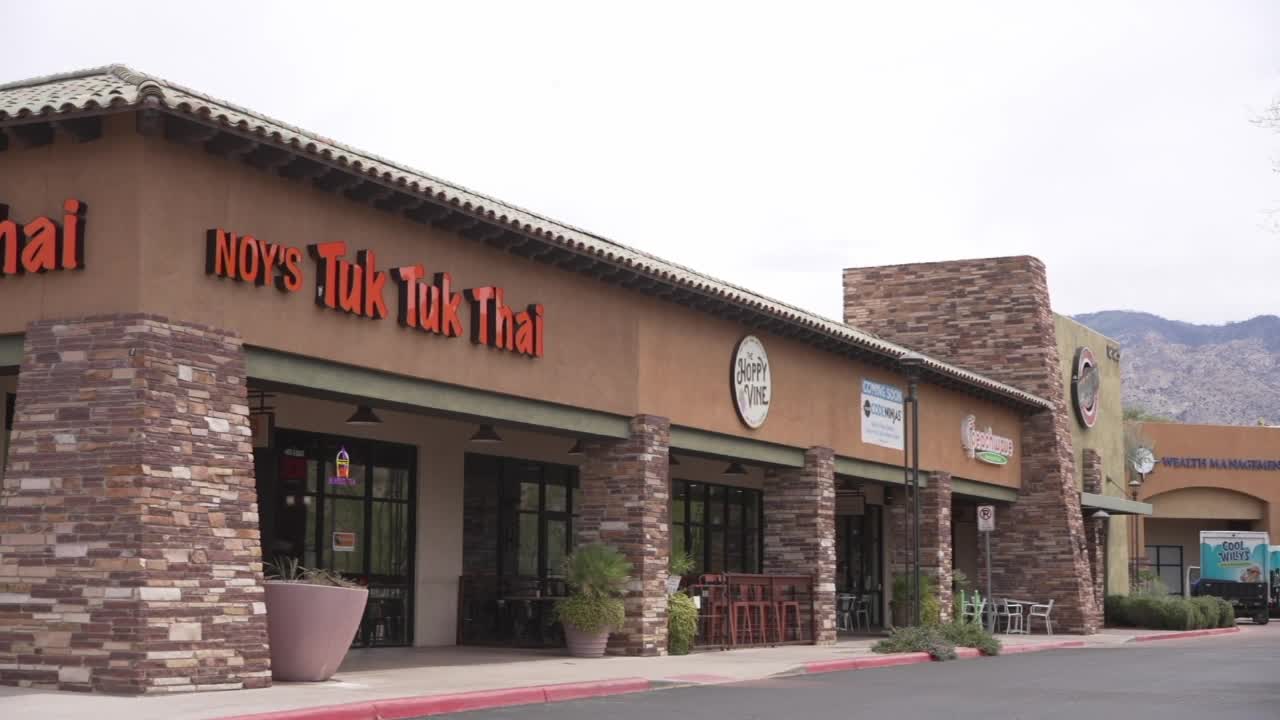


ORO VALLEY, Ariz. (KGUN) — Oro Valley has enacted its first-ever "use tax" on certain out-of-state business purchases, but it took two votes over five months to get there after a filing error at the state level erased the council's original decision.
The Town Council voted 4-3 on June 17 to approve the 2.5% tax, matching the outcome of an earlier vote in January. That first approval was voided after the Arizona Department of Revenue failed to update the town's tax code with the state within the required window, according to Oro Valley Chief Financial Officer Dave Gephart, who presented the item to council both times.
Mayor Joe Winfield, along with council members Dr. Harry "Mo" Greene II, Joyce Jones-Ivey and Elizabeth Robb, voted in favor. Vice Mayor Melanie Barrett and council members Mary Murphy and Josh Nicolson voted against it, the same lineup as the January vote.
Why the town says it needs the money
Gephart told council the tax addresses a widening budget gap between what it costs to maintain Oro Valley's roads and what the town collects in gas tax revenue to pay for it.
"The growth in pavement preservation costs have risen 316 percent," Gephart said at the June 17 meeting. "During that same period of time, gas tax revenues have only increased 20 percent."
That gap now runs about $1.7 million a year, according to figures Gephart presented, forcing the town to pull money from its general fund to cover road maintenance the gas tax alone can no longer support.
Gephart also framed the tax as a matter of fairness for local businesses, since companies could previously avoid paying local sales tax by ordering equipment or inventory from vendors in states that don't charge it. The new tax closes that gap.
The tax applies to purchases such as computers, equipment, inventory or furniture bought from vendors in states without a sales tax, including Oregon and Montana. Town officials expect it to generate between $375,000 and $600,000 a year, with revenue earmarked mainly for public safety and road maintenance.
Additional financial pressure
Beyond the pavement gap, town staff pointed to other strains on Oro Valley's budget. Sales tax collections have declined since fiscal year 2022 — a trend staff described as the weakest performance in more than 15 years. Public safety costs have also climbed sharply in recent years, a shift that's absorbed the bulk of the town's general fund growth. The town's new police headquarters, which added significant space to its building inventory, currently has no dedicated funding to outfit it.
Oro Valley had been the only municipality in the region without a use tax. Gephart noted that the nearby town of Sahuarita adopted one roughly two and a half years ago, and that most Arizona municipalities already have similar taxes on the books.
The dissent
Murphy, who also voted against the tax in January, told council her opposition isn't about the town's spending habits.
"It's not because I'm accusing the staff of not operating efficiently," Murphy said at the meeting. "It's just because we have not had an operational efficiency audit yet, and until which time we do that, I feel that our residents and our businesses deserve us to do that before I could ever vote for a new tax."
Winfield, who made the motion to approve the tax, called it standard practice for municipalities in the region and said it supports local businesses without raising other taxes.
The use tax took effect July 1, the start of Oro Valley's 2026-27 fiscal year.
----
STAY IN TOUCH WITH US ANYTIME, ANYWHERE


