

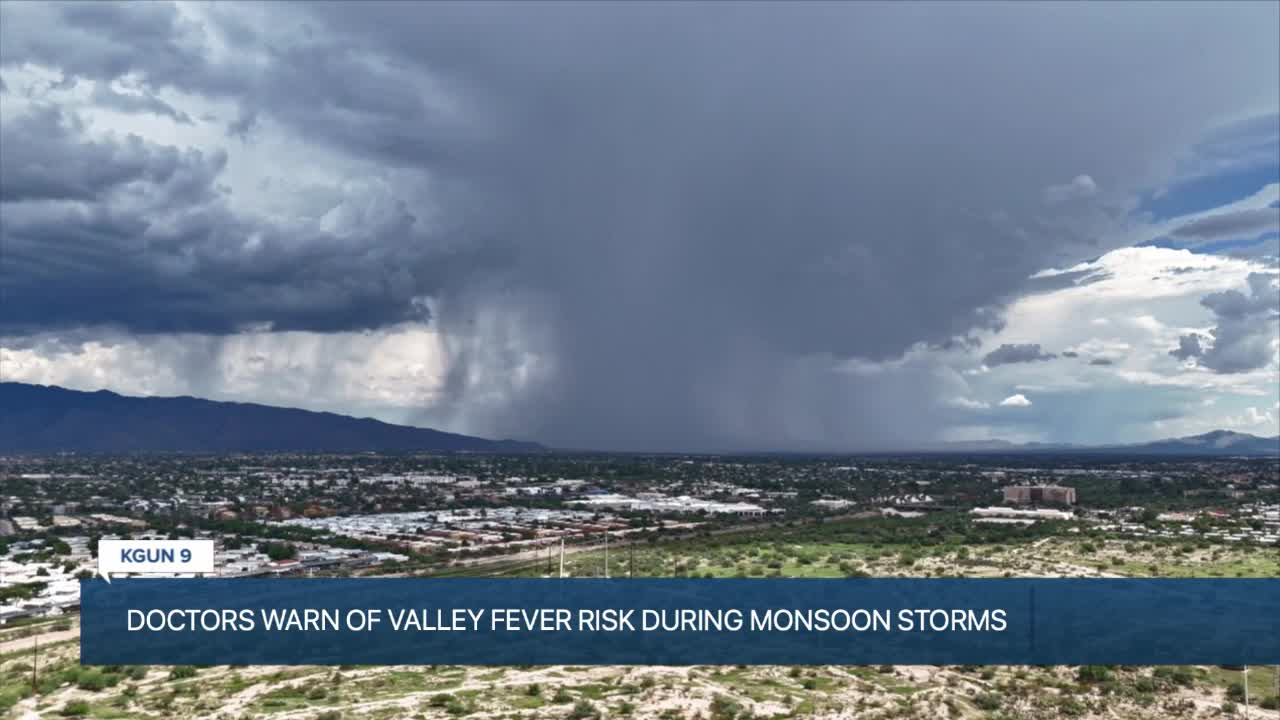


TUCSON, Ariz. (KGUN) — Banner University Medicine is warning Tucsonans about the risk of valley fever as monsoon storms kick up more dust across the state.
With monsoon season underway, doctors want valley fever to be top of mind. Dr. Fariba Donovan, a clinician, infectious disease expert with Banner University Medicine and researcher at the Valley Fever Center for Excellence at the University of Arizona College of Medicine – Tucson, says valley fever is caused by a fungus that lives in the soil. Infection happens when microscopic spores become airborne and are breathed in.
"It's really anybody who is in the community could get valley fever, could get exposed to spores," Donovan said.
She says knowing you have valley fever isn't always easy. Symptoms include fever, chills, severe fatigue, headaches, rash, joint pain and loss of appetite. They can show up two to four weeks after exposure and can look a lot like the flu, COVID and pneumonia.
"If you have a simple bacterial pneumonia or a flu, it takes about a week to get over the acute symptoms and you slowly get better. This one takes longer," Donovan said.
Donovan says about 60% of people exposed may never develop symptoms, but for a small percentage, the disease can become severe, including meningitis or infections in the bones or other parts of the body.
People at higher risk of valley fever include immunocompromised patients, cancer and chemotherapy patients, transplant patients and pregnant women.
Donovan adds that patients who get diagnosed sooner can avoid unnecessary antibiotics for an infection that isn't bacterial.
"If they see something that is lingering, and it's weird and an atypical presentation of a simple cold, please ask your doctors to test you for valley fever," Donovan said.
The infectious disease expert tells me that a valley fever vaccine has proven effective in dogs, but it still has to go through regulatory steps before approval. Researchers hope the work could eventually lead to a vaccine for people.
"We are talking to companies to see if they can sponsor us for moving it up to human vaccine. And I think this will be the first antifungal vaccine, it gets approved, which is amazing," Donovan said.
This story was reported on-air by a journalist and has been converted to this platform with the assistance of AI. Our editorial team verifies all reporting on all platforms for fairness and accuracy.
——
Jacqueline Aguilar is a multimedia journalist at KGUN 9. Born and raised in Yuma, AZ., she is no stranger to the unforgiving Arizona heat. Now this U of A wildcat is excited to be back in Tucson and is looking forward to involving herself in the community. Share your story ideas with Jacqueline by emailing jacqueline.aguilar@kgun9.com or connecting on Facebook, Instagram or X.


