



TUCSON, Ariz. (KGUN) — After two and a half years of construction, Reid Park Zoo officially opened its long-awaited Pathway to Asia expansion Friday, introducing visitors to dozens of new animal species, including one of the largest reptiles on Earth.
The 4.5-acre addition expands the zoo's footprint by nearly 20% and features new habitats designed to transport visitors into the landscapes and architecture of Southeast Asia.
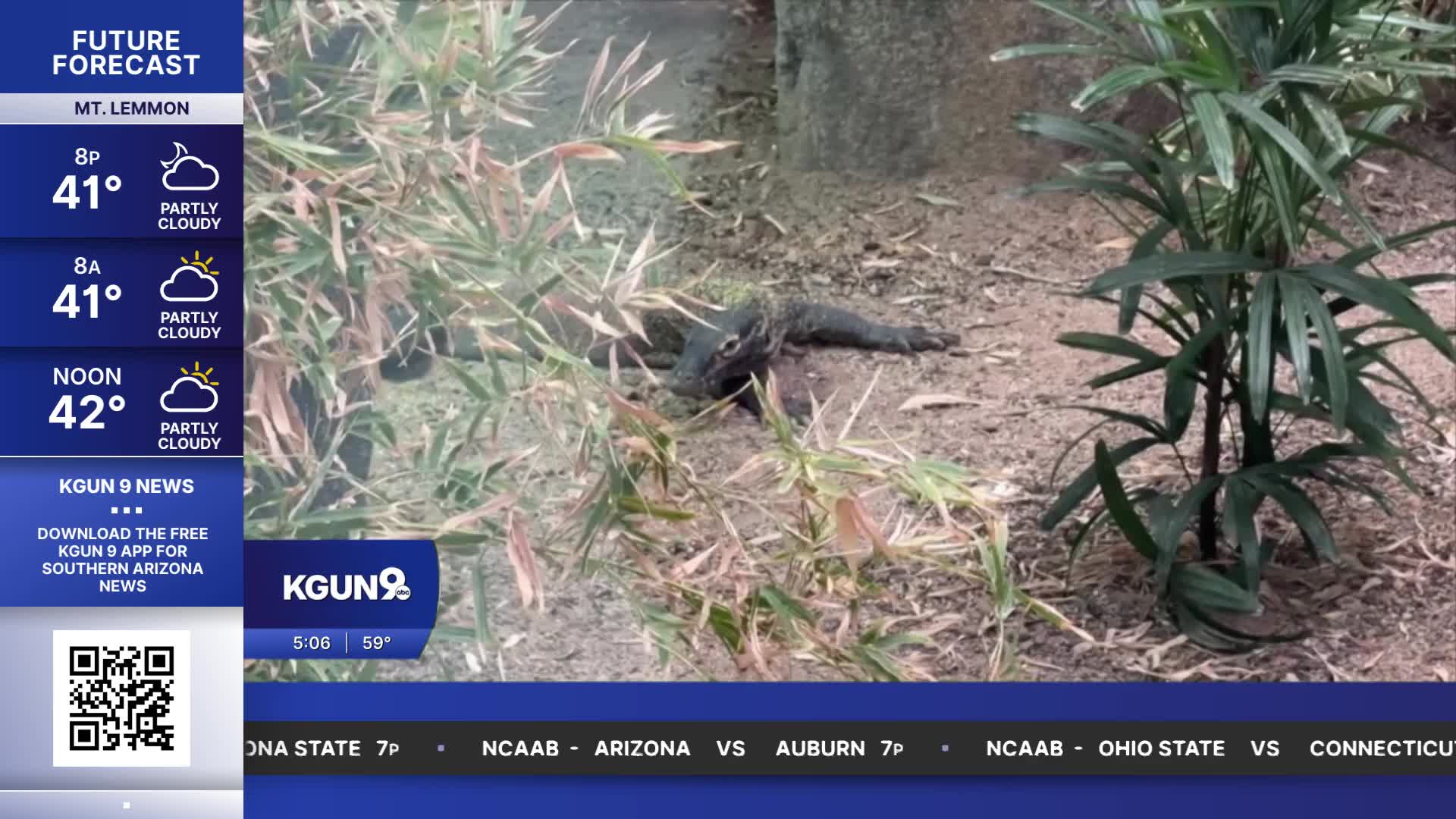
Among the newest residents is the Komodo dragon, the world's largest living lizard, now on display inside the zoo's Robert H. Hamilton Tropical Discovery Center.
"Right now we're standing in front of our tropical discovery center," said Adam Ramsey, director of animal care at Reid Park Zoo. "And more importantly, our Komodo dragon."
The new expansion brings approximately 70 additional animals to the zoo, according to Ramsey, including Malayan tigers, Asian small-clawed otters, straw-colored fruit bats and reticulated pythons.
"It's a huge expansion, lots of new animals," Ramsey said. "About 70 new animals that we're bringing in."
The expansion, officially called Pathway to Asia, has been in development for several years. Construction began in 2024, with the project representing the largest addition to the zoo since its Expedition Tanzania exhibit opened in 2012.
Nancy Kluge, president and CEO of Reid Park Zoo, said the opening marks the culmination of an extensive construction effort.
"We just finished 2.5 years of construction," Kluge said. "And we're ready to show Tucson Malayan Tigers, Komodo Dragons, fruit bats, reticulated pythons, adorable otters and more."
The new habitats incorporate architectural elements inspired by ancient Khmer structures in Cambodia, including the historic Angkor Wat temple complex. Stone structures, archways and other design elements create the appearance of animals inhabiting ancient Southeast Asian ruins.
Kluge said the design was informed by the natural habitats and geographic origins of the animals.
"Malayan tigers are from Cambodia, Thailand area, and so we took on the Angkor Wat theming," Kluge said.
The expansion also includes the zoo's first dedicated reptile house, an aviary and the Kasser Family Lotus Pavilion, which will serve as a gathering space for visitors and conservation-related programming.
The roughly $50 million project was funded through Tucson voters' approval of a one-tenth-of-a-cent sales tax in 2017, along with private donations and foundation grants. It also represents the completion of the first phase of the zoo's 10-year master plan.
Hundreds of people gathered outside the zoo Friday to get their first look at the new exhibits.
Among them was Dalall Mohammad, who said the tigers were at the top of his list.
"Today, I'm excited to see the Tigers!" Mohammad said. "And all the fun new things, just the expansion itself."
The zoo is celebrating the opening with additional activities and cultural performances throughout the weekend. Visitors are required to reserve timed-entry tickets in advance during the initial opening weeks.
——
Eddie Celaya is a multimedia journalist at KGUN 9. Born in Tucson and raised in the Phoenix area, Eddie is a life-long Arizonan and graduate of the University of Arizona who loves the desert and mountains and hates the cold. Previously, Eddie worked in print media at the Arizona Daily Star. Share your story ideas with Eddie at edward.celaya@kgun9.com, or by connecting on Facebook or Instagram.

----
STAY IN TOUCH WITH US ANYTIME, ANYWHERE


