

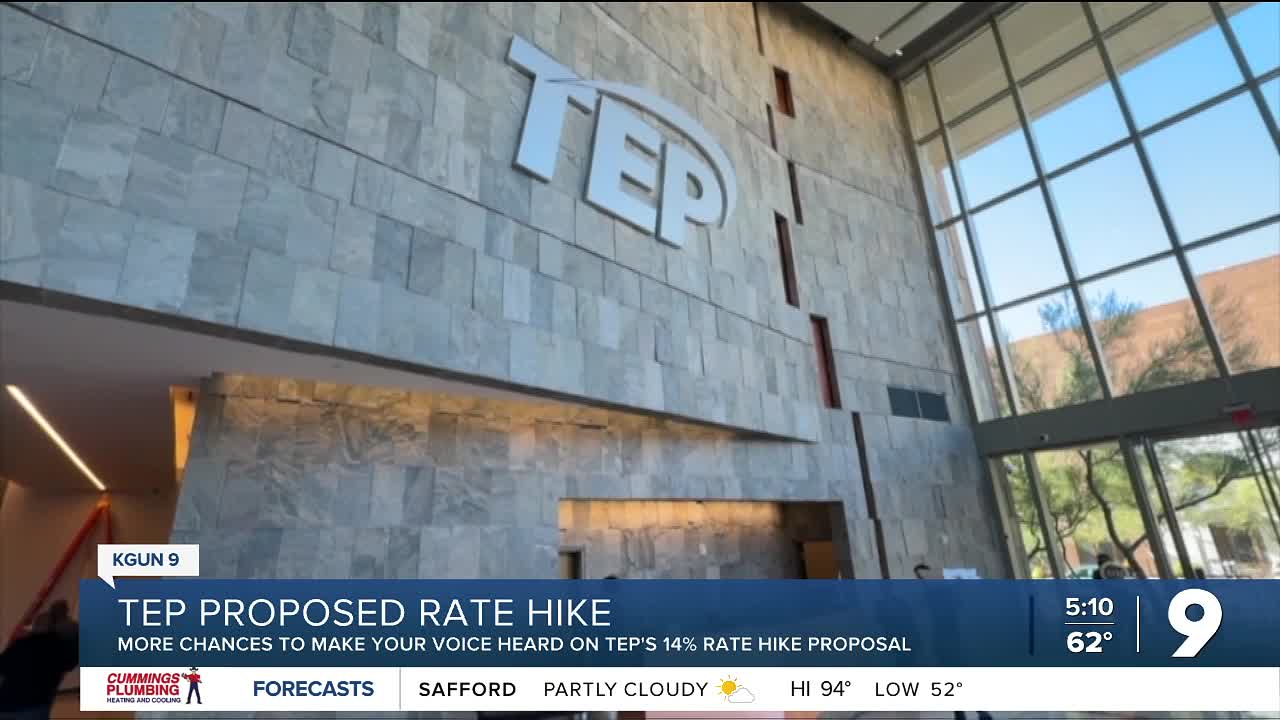


TUCSON, Ariz. (KGUN) — It’s not too late to make your voice heard on a proposed rate hike by Tucson Electric Power.
Several public comment meetings are scheduled before the formal hearing begins, giving customers a chance to weigh in.
- March 23: In-person and by phone from 10 a.m. to 12:30 p.m.
- April 1: In-person and by phone from 5:30 p.m. to 8 p.m.
- April 7: By phone only, from 5:30 p.m. to 8 p.m.
- April 22: In-person and by phone starting at 10 a.m.
The number is 1-877-309-3457 and the passcode is 801972877## and in-person meetings take place at 400 W Congress St.
TEP is asking for about a 14% base rate increase, which would raise the average residential bill by roughly $16 to $20 per month. The utility says the increase is needed to cover rising costs and major investments made to the local energy grid.
According to the company, rates are still based on 2021 costs. Since then, TEP says it has invested about $1.7 billion in infrastructure, including new and upgraded substations, transmission lines, energy storage systems and power generation improvements. The company also points to rising material costs, including sharp increases in the price of equipment like utility poles, wiring and other grid components.

TEP says the proposed increase would help maintain reliability and meet growing energy demand in southern Arizona.
The proposal has faced pushback from Arizona Attorney General Kris Mayes, who has argued the increase is too high. In January, Mayes hosted a town hall in Tucson and recommended a smaller increase of about 4% instead. Frustration over rising electric bills was a major focus of the town hall, with several residents opposing the proposal.
TEP told KGUN 9 it offers payment plans and assistance programs for those who fall behind on payments.
The company also says its proposal would expand low-income discounts, with some customers seeing up to 50% off their bills depending on income, especially during the high-cost summer months.
The case will ultimately be decided by the Arizona Corporation Commission (ACC), but first must go through a lengthy hearing process.
According to the ACC, rate cases function similarly to a trial. An administrative law judge hears testimony from the utility, state agencies and other groups, and also listens to public comment before issuing a recommendation.
The formal hearing is set to begin April 22.
———
Athena Kehoe is a reporter for KGUN 9, she joined the KGUN 9 team in July of 2024 after graduating from Arizona State University. Share your story ideas with Athena by emailing athena.kehoe@kgun9.com or by connecting on X/Twitter.

----
STAY IN TOUCH WITH US ANYTIME, ANYWHERE


