

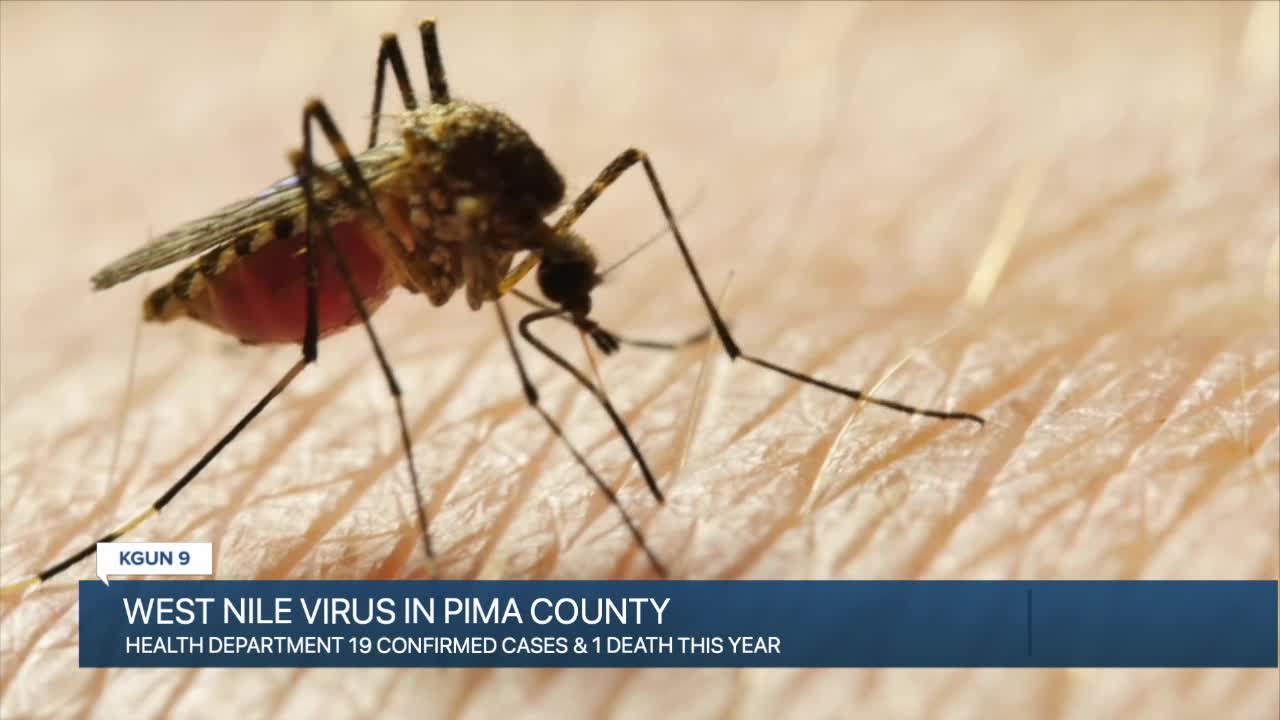


TUCSON, Ariz. (KGUN) — The Pima County Health Department has confirmed 19 cases of West Nile virus — the most since 2021 — as an active monsoon season is likely fueling a spike in infections.
West Nile virus spreads through the bite of infected mosquitoes. While the county says nearly 80% of cases show no symptoms, the disease can become severe and even deadly. Pima County has recorded one confirmed death.
Arizona has had 73 total cases of West Nile virus, according to the CDC.
Jaye Ferrone is one of those cases. At the end of June, she says it started with a fever she couldn't break and aching pain.
"I didn't really think much of it at first," Ferrone said. "However, the next day, when it continued, I went to the hospital, and they did some blood work, urine samples, and the doctor told me there was an infection," Ferrone said.
Rashes then started to break out all over her body. A couple of days later, Ferrone says she could no longer walk and was getting constant migraines. That's when she went to the back to the hospital.
"It felt very different. The pain was extreme," Ferrone said.
By July 8, her condition worsened, and she was admitted to the ICU. Doctors ran tests and discovered she had meningitis and West Nile virus.
"There were actually two moments where I did not think I'd make it, and the doctors had to have a very frank conversation with me about the possibility of not walking out of the ICU," Ferrone said.
The Pima County Health Department has been monitoring West Nile cases in the area; they said there's already been one death in the county this year.
PCHD says a very active monsoon season is what's likely causing the spike in cases.
"A lot of times it seems to be tied to different climate patterns, different precipitation and monsoons. We have had more rain this year than in some previous years, and so there could be some connections with that," Pima County Epidemiologist Dr. Ellen Santos said.
The health department says the best way to prevent West Nile virus is to wear plenty of bug spray and make sure your home has no still water.
Ferrone says the experience has given her a new lease on life, though she continues to deal with lasting effects.
"I do deal with short-term memory loss, tremors, and dizziness when standing and walking. But I'm hopeful that in the next coming months to maybe years, this can get rectified," Ferrone said.
"I've always been okay with, if it's my time, it's my time. But it was very different when this was very much in your face," Ferrone said.
—
JJ McKinney joined KGUN 9 in July of 2025 as a multimedia journalist. He graduated from Colorado State University in May of 2025 with a degree in journalism and media communications and a minor in law. With a background in investigative reporting and documentary filmmaking, JJ is dedicated to giving a platform to the voices of his community. Share your story ideas and important issues with JJ by emailing jj.mckinney@kgun9.com or by connecting on Instagram, Twitter, or Facebook.


