


TUCSON, Ariz. (KGUN) — A transportation project decades in the making is officially complete, connecting downtown and midtown Tucson with the Interstate 10 corridor while adding new pedestrian, bicycle and drainage infrastructure.
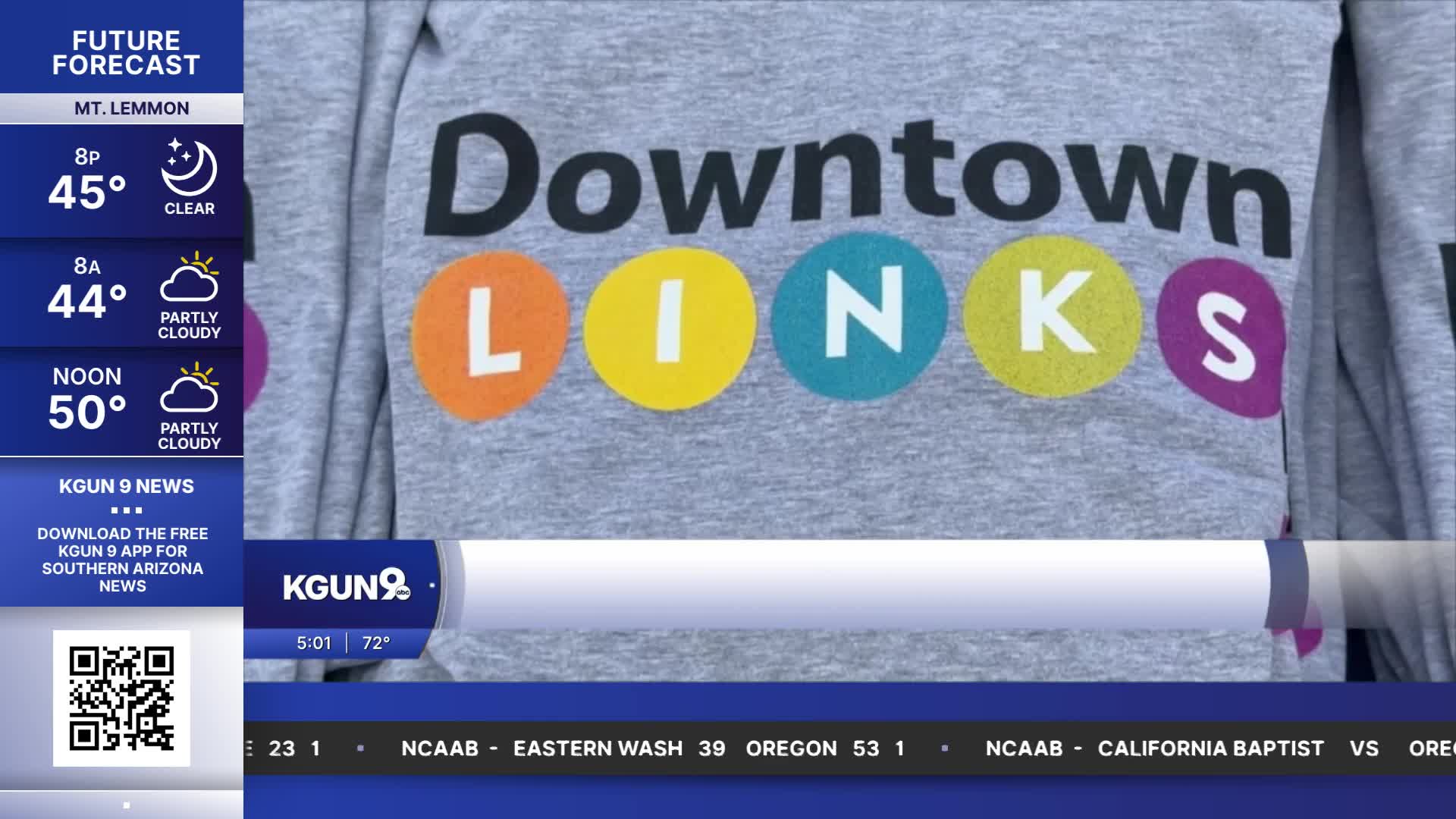
City officials celebrated the opening of the Downtown Links project Friday with a ribbon-cutting ceremony, marking the end of the city's largest transportation project since the Sun Link Streetcar.
The project, which connects Sixth Street with the I-10 corridor, has been years in the making, with its origins dating back to the 1980s. Its first section was completed in 1995, but subsequent planning, funding and construction delays stretched the timeline considerably.
"This is really an exciting project to celebrate," said Samuel Credio, director of the city's Department of Transportation and Mobility.
Tucson Mayor Regina Romero thanked residents for their patience throughout the lengthy process.
"I’m incredibly grateful to the residents who showed immense patience," Romero said. "After all of the years that it took for us to get the plans right."
Michael Ortega, executive director of the Regional Transportation Authority, described the effort to bring the project to completion as a prolonged struggle.
"Mayor Romero mentioned the fight … I would say it was a battle," Ortega said.
The project was initially envisioned as a way to move traffic through downtown and provide a connection between Interstate 10 and Broadway Boulevard.
But over time, its scope expanded to include improvements intended to address longstanding drainage problems and improve access for pedestrians and cyclists.
The finished project includes a new roadway, bicycle lanes, sidewalks, a shared-use path, an overpass and an underpass beneath the Union Pacific Railroad tracks at Sixth Street. The underpass eliminates the need for pedestrians and drivers to cross the railroad tracks at street level.
Vice Mayor and Ward 1 City Council member Lane Santa Cruz said neighborhood residents played an important role in ensuring those pedestrian and bicycle connections remained part of the final design.
"People can now walk and bike across the railroad safely," Santa Cruz said. "That crossing is the difference between a barrier and a connection."
"Downtown Links connects people, not just places," Santa Cruz said.
The project also includes a new public space known as the Ninth Avenue Deck Plaza, along with landscaping and public art.
Drainage improvements were another major component of the project. An underground box culvert was constructed to help alleviate flooding in downtown Tucson and surrounding neighborhoods, including areas affected by the Tucson Arroyo.
Ortega said those improvements were instrumental in securing financial support from Pima County.
"By the way, I need 8 million dollars from the county, because this is a drainage project," Ortega said. "It's really not a road project. It doesn't matter what it's called — it's a drainage project."
The broader Downtown Links corridor was included in the Regional Transportation Authority's 20-year transportation plan approved by voters in 2006. The project received $76.1 million in RTA funding and $8.5 million in regional Highway User Revenue Fund dollars, according to project documents.
Construction on the latest phase began in August 2020. It was divided into two segments, with the eastern portion connecting Barraza-Aviation Parkway to Sixth Street opening in February 2023.
The remaining western portion proved particularly challenging, requiring coordination with Union Pacific Railroad and a fiber-optic utility company. Those complications contributed to construction delays, according to project updates.
The project's history stretches even further back. The city took over the original roadway concept from the Arizona Department of Transportation in 1989 after concerns that an earlier highway proposal would have resulted in significant property losses in the Historic Warehouse Arts District. More than 20 alternative routes and alignments were considered before the city approved the current general alignment in 2008.
For Romero, the completion represents more than another roadway opening. She said the improvements are intended to benefit people traveling through downtown, whether by car, bicycle or on foot.
"These are major infrastructure improvements to improve the daily lives of everyone trying to reach their destination," Romero said.
With the final western segment complete, the city is marking the conclusion of a project that took decades of planning and years of construction to bring to fruition.
For residents and commuters, the opening means another connection through downtown Tucson — one that city officials say is intended to make getting around safer and help reconnect neighborhoods that have long been separated by railroad infrastructure.
——
Eddie Celaya is a multimedia journalist at KGUN 9. Born in Tucson and raised in the Phoenix area, Eddie is a life-long Arizonan and graduate of the University of Arizona who loves the desert and mountains and hates the cold. Previously, Eddie worked in print media at the Arizona Daily Star. Share your story ideas with Eddie at edward.celaya@kgun9.com, or by connecting on Facebook or Instagram.

----
STAY IN TOUCH WITH US ANYTIME, ANYWHERE


