

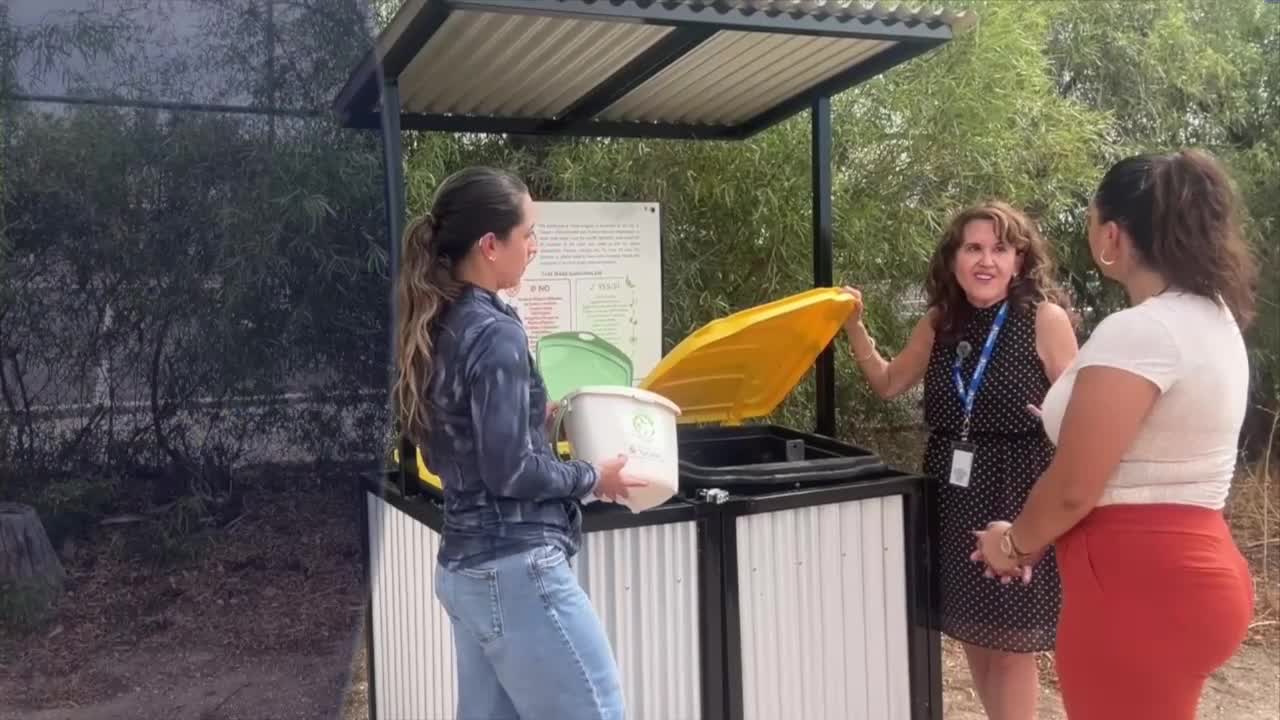


TUCSON, Ariz. (KGUN) — Egg shells, banana peels and avocado pits do not have to end up in the trash. The City of Tucson's FoodCycle at Home program accepts that kind of food waste and turns it into compost and mulch.
Lisa Rotello, principal planner for Tucson Environmental Services, says this is a way for the community to make a difference and help save their environment.
The program was created in response to Tucson Mayor and Council's Climate Action and Adaptation Plan, which sets specific waste diversion targets for the city.
"Within that resolution, we're required to divert 50% of material from the landfill by 2030 and zero waste by 2050. It's been such a success to date we have diverted over 800 tons of food waste. We have also diverted, I think, about 1,200 to 1,400 tons of green waste," Rotello said.
She says nearly 1,500 tons of mulch and compost have been returned to the community since the program began.
RELATED: Could city compost be the key to carbon neutrality?
The program launched in 2024 with six collection sites — one in each ward — and has since grown to 18 locations, with the newest sites at Palo Verde Park and Mission Garden.
Lisa Rotello, principal planner for Tucson Environmental Services, said compost can be a powerful tool for home gardeners.
"Compost is an amendment to the soil. So if you have a garden and rather than fertilizer, you can use compost. You add it to the natural soil that we have, and it helps for those produce, for the vegetables to grow even stronger," Rotello said.
Fruits, vegetables, coffee grinds, breads, nutshells, nuts, eggs, and more is accepted.
"There's many material or food waste that goes into the landfill that we all tend not to think about. You know, if we peel an orange, we throw that in the trash. That can be a product to turn into compost," Rotello said.
She said they do not want plastics because it doesn't break down in our heat.
The drop-off bins are locked. To receive the combination, residents must attend a 30-minute training session covering composting basics and food waste guidelines. The city also provides a free pail to collect food scraps at home.
Alyssa Tarpley, public information specialist for Tucson Environmental Services, says you can drop off the waste at your convenience.
"So at training people will ask us if their food's already decomposing if they can drop it off, you're already starting the process early for us. You can drop it off," Tarpley said.
Rotello says she grateful to have wonderful partners who help make this program a success.
"Of course, number one, our participants, our community members, but also Community Gardens of Tucson, where our first collection sites were established, and they continue to support our program," Rotello said. "And lastly but not least are the Compost Cats with the University of Arizona."
She says the goal is to have a collection site within two miles of anywhere within the City of Tucson.
So next time, when you're in the kitchen, don't throw those scraps away. Instead FoodCycle. Check out the material list of what is accepted and unaccepted.
This story was reported on-air by a journalist and has been converted to this platform with the assistance of AI. Our editorial team verifies all reporting on all platforms for fairness and accuracy.
——
Vanessa Gongora is KGUN 9's Westside reporter.. Vanessa fell in love with storytelling by growing up in sports. She was fascinated by how sports reporters go beyond the x's & o's to tell players' stories, and how sports bring people together, inspiring Vanessa to provide the same impact as a journalist. Share your story ideas and important issues with Vanessa by emailing vanessa.gongora@kgun9.com or by connecting on Facebook, Instagram, and X.

----
STAY IN TOUCH WITH US ANYTIME, ANYWHERE


