

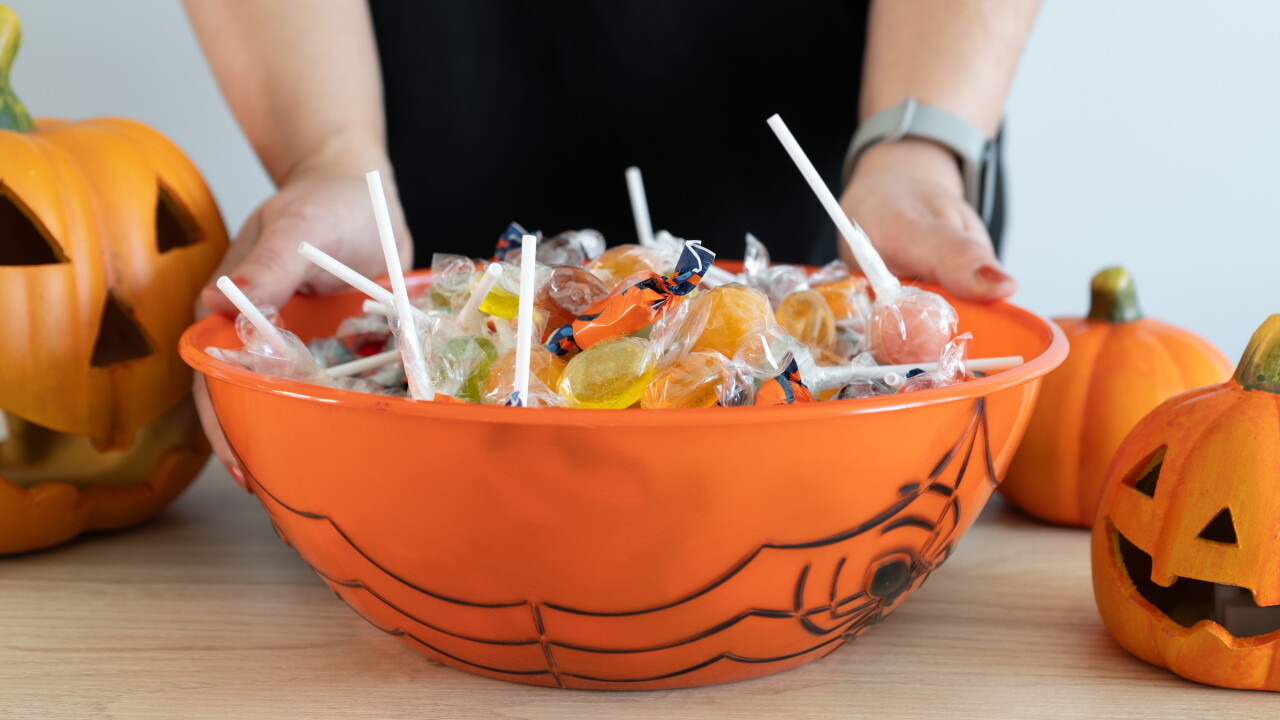

Candy prices are up 15% from last year — four times overall inflation. Raw ingredients got cheaper. So why are your trick-or-treat bags getting more expensive?
This Halloween, the candy bowl is going to cost you. A new economic analysis finds candy prices have jumped an average of 15% compared to last fall — even as the raw ingredients that go into making chocolate bars and gummy candies actually got cheaper this year.
Economists and policy researchers say the gap between falling input costs and rising shelf prices points to one thing: corporate profit margins. Here's how much more you're paying, and who's benefiting.
- 15% — Average candy price increase
- 4x — Times faster than overall inflation
- 33% — Mondelez gross profit margin increase
The math behind this year's Halloween sticker shock is surprisingly straightforward — and surprisingly frustrating. Cocoa prices have fallen substantially from their 2024 peak. Wholesale sugar is down 10% this year. Corn syrup prices are off 4%. In a competitive market, those savings would flow to the checkout line. Instead, they're flowing to quarterly earnings reports.
That's the central finding of the new analysis by Groundwork Collaborative and The Century Foundation, shared first with Scripps News. When raw input costs fall but retail prices keep rising, the difference lands somewhere — and researchers say it's landing in corporate profit margins.
- 39% — Sour Gummy Variety Pack price increase — $3.02 to $4.20 — Mondelez, fall 2026
- 23% — Seasonal Peanut Butter Cups price increase — Now $8.23 avg — Hershey, fall 2026
- 10% — Wholesale sugar price decrease — Year-over-year 2026
- 4% — Corn syrup wholesale price decrease — Year-over-year 2026
Input Costs Down. Shelf Prices Up. Profits Up More.
| Raw Input | Price Change 2026 | Shelf Price Change | |
|---|---|---|---|
| Cocoa | Fallen from 2024 peak | Down substantially | Chocolate up 23%+ |
| Sugar | Wholesale down | Down 10% | Candy up avg 15% |
| Corn Syrup | Wholesale down | Down 4% | Gummies up 39% |
| Hershey Gross Profit Margin | Q2 2026 | Up 30% vs. 2025 | $9M tariff refund received |
| Mondelez Gross Profit Margin | Q2 2026 | Up 33% vs. 2025 | $6M tariff refund received |
What makes this year's candy price story stand out from typical holiday inflation is the refund angle. After the U.S. Supreme Court limited President Trump's emergency tariff authority, several of America's largest candy companies received multi-million dollar refunds on tariffs they had previously paid. Hershey got $9 million back. Mondelez received $6 million. Neither company responded by lowering prices.
Researchers at Groundwork and TCF say this is the clearest evidence yet of what they're calling corporate profiteering: companies using global disruptions — trade policy, foreign conflicts, supply chain shocks — as cover to raise prices beyond what costs alone would justify, then declining to bring prices back down when those disruptions ease.
Do You Know What's Really Driving Up Your Candy Costs?
Four questions. The answers might surprise you.
Cocoa, sugar, and corn syrup prices all changed in 2026. Which direction did they move?
- All three went up sharply — Actually, all three fell. Cocoa dropped from its 2024 peak, wholesale sugar fell 10%, and corn syrup was down 4%. The raw materials got cheaper — which makes the 15% candy price increase harder for companies to justify.
- All three went down — Correct — and that's the core tension in this story. When the ingredients get cheaper but the candy gets more expensive, economists say the difference is going straight to profit margins.
- Cocoa up, sugar and corn syrup down — Cocoa actually fell from its 2024 peak, along with sugar (down 10%) and corn syrup (down 4%). All three key ingredients got cheaper this year — which is exactly why researchers are questioning the 15% price hike.
- They stayed roughly flat — They moved meaningfully — downward. Sugar fell 10%, corn syrup 4%, and cocoa came off its 2024 highs. The ingredients got cheaper even as Halloween candy on the shelf got 15% more expensive.
After the Supreme Court limited Trump's emergency tariff authority, Hershey received a multi-million dollar tariff refund. How much was it?
- $2 million — Hershey's refund was actually $9 million — significantly larger. Mondelez received $6 million. Neither company reduced retail prices following the refunds.
- $9 million — Correct. Hershey received $9 million back in tariff refunds, and Mondelez got $6 million. The new analysis specifically calls out both companies for continuing to raise prices after receiving those refunds.
- $25 million — The actual figure was $9 million for Hershey and $6 million for Mondelez. Still substantial — and neither company passed the savings on to consumers.
- Nothing — Hershey didn't get a refund — Hershey did receive a $9 million tariff refund after the Supreme Court ruling. Researchers cite this fact specifically as evidence that price increases weren't purely cost-driven.
Why does individually-wrapped Halloween candy cost more to produce this year than standard candy bars?
- Labor costs for wrapping machines have surged — Labor isn't the factor researchers highlighted. The packaging cost driver is materials: aluminum prices are up because of tariffs on foreign metals, and petroleum-based plastics are more expensive due to disruptions at the Strait of Hormuz.
- Aluminum and plastic packaging costs rose due to tariffs and Iran war disruptions — Correct. Tariffs on foreign metals pushed up aluminum costs, while the Iran war's disruption of Strait of Hormuz traffic drove up petroleum-based plastic prices. For Halloween candy — where everything is individually wrapped — those packaging costs add up quickly.
- Seasonal demand lets companies charge holiday markups — Seasonal demand is a real factor, but the specific cost driver researchers named is packaging materials — aluminum hit by metal tariffs, and plastic hit by petroleum disruptions tied to the Iran war and Strait of Hormuz traffic.
- New FDA labeling requirements added packaging layers — No new labeling rules are cited in the analysis. The packaging cost driver is materials: aluminum prices elevated by tariffs on foreign metals, and petroleum-based plastics pushed up by disruptions at the Strait of Hormuz.
Candy prices are up 15% year-over-year. How does that compare to overall inflation?
- About the same as overall inflation — Candy prices are running at four times the overall inflation rate, not in line with it. That gap is what makes the candy surge unusual — and what researchers say points to margin expansion rather than pure cost pass-through.
- Twice the overall inflation rate — The gap is even larger. Candy is up four times the rate of overall inflation — a difference large enough that economists say it cannot be explained by input costs or transportation alone.
- Four times the overall inflation rate — Correct. A 15% candy price increase against a broader inflation rate makes the candy surge four times the overall rate. That disparity, combined with falling ingredient costs, is the analytical foundation for researchers' corporate profiteering claim.
- Below overall inflation — candy is actually a relative bargain — Candy is outpacing inflation significantly, not running below it. At four times the overall inflation rate, the candy price surge is one of the sharpest consumer price increases heading into the holiday season.
The Hershey Company pushed back on the profiteering characterization in a statement to Scripps News. A spokesperson said the company faced significant increases across ingredients, packaging, manufacturing, and transportation — including what they called unprecedented cocoa costs over the past several years — and argued the company was measured in how it responded, not passing the full impact of higher costs on to consumers.
The company also noted that more than 75% of its U.S. confection portfolio is available for less than $4, and that it offers products across a range of sizes and price points. Even when consumers are more selective with their spending, Hershey said, they continue to prioritize small, joyful moments and traditions.
Halloween Candy Claims — Checked
Candy ingredient costs fell in 2026, so rising candy prices are purely a supply-chain problem.
Verdict: false
Cocoa prices fell from their 2024 peak. Wholesale sugar dropped 10%. Corn syrup fell 4%. If the supply-chain argument fully explained the price increases, ingredient cost reductions would have moderated shelf prices — not allowed them to rise 15% above last fall.
Candy companies received tariff refunds and used them to hold prices steady.
Verdict: false
Hershey received a $9 million tariff refund and Mondelez received $6 million after the Supreme Court limited emergency tariff authority. Both companies continued raising prices. Hershey's gross profit margin rose 30% in Q2 2026; Mondelez's rose 33%.
Halloween packaging costs are a meaningful driver of price increases.
Verdict: true
Packaging is not the largest cost in candy production, but for Halloween specifically — where every piece is individually wrapped — elevated aluminum prices from tariffs on foreign metals and higher petroleum-based plastic costs from Strait of Hormuz disruptions add up quickly, according to the Groundwork/TCF analysis.
Candy price inflation is running at roughly the same rate as overall price increases.
Verdict: false
Candy prices are up 15% year-over-year — four times the rate of overall inflation. That gap is the analytical basis for researchers' claim that corporate margin expansion, not cost pass-through, is driving the Halloween price surge.
Kyle Moore, chief economist for The Century Foundation, described the dynamic as a kind of vicious cycle. Global disruptions — trade policy, foreign conflicts, supply chain events — give companies a reason to raise prices. Consumers keep paying. Companies learn that prices can stay elevated even after the disruption passes. The next disruption starts the cycle again.
For Halloween 2026, that cycle means American families are absorbing price increases that don't fully reflect underlying costs — and that the candy companies taking in those higher revenues are doing so in a year when their own input bills went down.
What's Happening at the Strait of Hormuz — and Why It's in Your Candy Bar
The Strait of Hormuz is a narrow waterway between Iran and Oman through which roughly 20% of global oil traffic passes. The Iran war's disruption of traffic through the strait has increased the cost of petroleum-based products worldwide — including the plastic used in candy wrappers.
Combined with tariffs on foreign metals that have pushed up aluminum prices, the packaging side of candy production has become meaningfully more expensive in 2026. Researchers note that while packaging is not the dominant cost in making candy, the individually-wrapped format that defines Halloween treats makes it a more significant factor for the holiday category than for year-round bars.
Diesel prices also recently hit a record high, according to Scripps News reporting. Since nearly every product that reaches a store shelf arrives on a diesel truck, transportation cost increases pass through to virtually every consumer product — candy included.
How to Manage Your Halloween Candy Budget This Year
- Compare per-unit cost, not per-bag price — Bigger bags often deliver a lower cost per piece. Divide the total price by the number of pieces to find the real value — especially important when price-per-bag comparisons are misleading.
- Check store brands and non-name options — The 30–39% gross margin increases reported by Hershey and Mondelez are specific to those national brands. Store-label alternatives don't carry the same margin premium baked into their pricing.
- Buy earlier in the season when possible — The analysis used data from the week of October 3, 2026. Prices can shift week to week as Halloween approaches and retailers adjust remaining stock.
- Consider non-candy alternatives for high-traffic nights — For households expecting 100+ trick-or-treaters, small non-candy items — stickers, temporary tattoos, mini play-dough — can stretch the budget while keeping the tradition alive.
Sources for this analysis
Track Prices Before You Shop
- Use store apps to compare weekly deals: Most major grocery and big-box retailers post weekly circular prices in their apps. Checking two or three before your candy run can surface meaningful differences.
- The full candy price analysis is publicly available: The Groundwork Collaborative and The Century Foundation report with full NielsenIQ price data was shared first with Scripps News and is available at TCF's website.
- Cocoa prices fell — look for companies that reflect it: Not every confectionery company has the same margin story. Smaller or regional candy brands may reflect ingredient cost reductions more directly in their pricing.
Sources & References
- Primary source: Scripps News — Jacob Gardenswartz
- Groundwork Collaborative & The Century Foundation — Halloween candy price analysis, NielsenIQ data week ending Oct. 3, 2026 vs. Oct. 4, 2025
- Hershey Company Q2 2026 Earnings — Gross profit margin increase (30% year-over-year) and $9 million tariff refund
- Mondelez International Q2 2026 SEC Filing — Gross profit margin increase (33% year-over-year) and $6 million tariff refund
- U.S. Bureau of Labor Statistics — Wholesale sugar price series (WPU0253)
- Federal Reserve Bank of St. Louis (FRED) — Cocoa price index, showing decline from 2024 peak
