

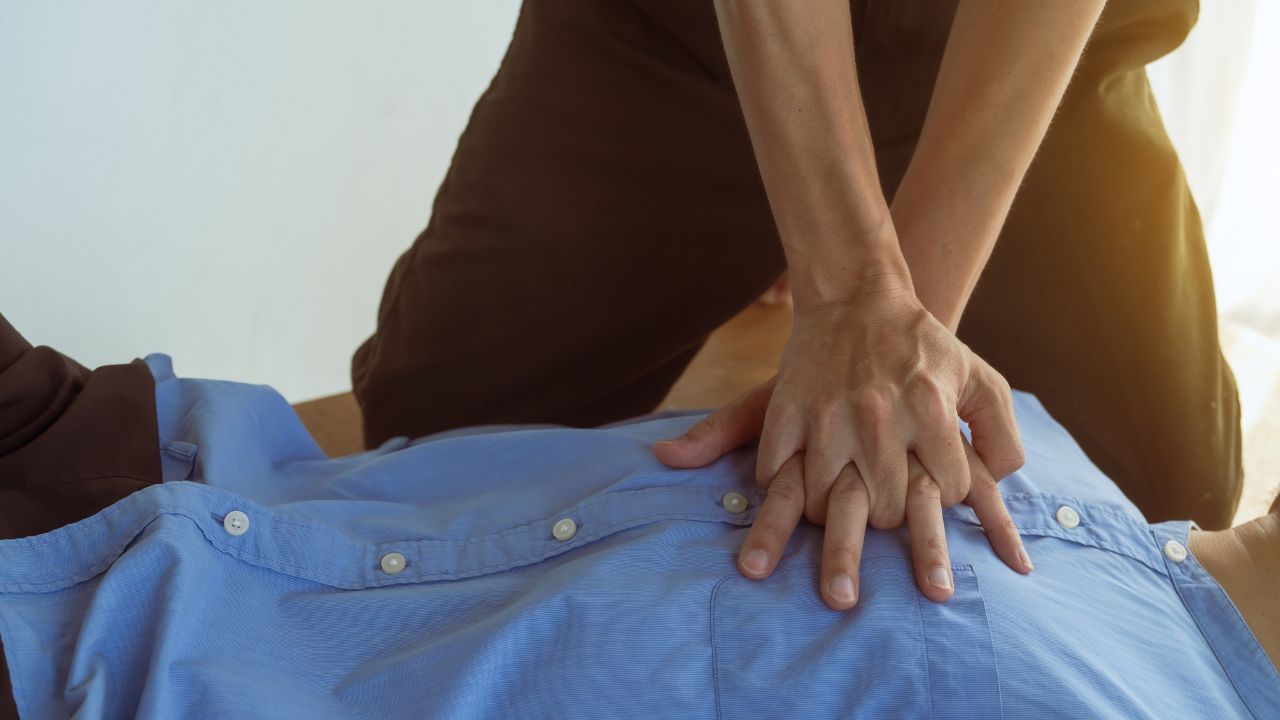


According to the American Heart Association, nearly 6 in 10 Americans believe that only those with special training should perform Hands-Only CPR.
Wallis Marsh, an inaugural member of the Nation of Lifesavers class, says that many individuals worry they may do something incorrectly or hurt someone, which is why they may be nervous to learn CPR.
He noted that going through the training itself can help build the confidence needed to act if you're ever in a position where someone around you needs assistance.
Because most cardiac emergencies happen outside a hospital setting, the American Heart Association says the first responder is often the person closest to the individual in need.
"The fastest way for anyone to be a 'first responder until help arrives' and save a life is to call 9-1-1 and immediately take action with Hands-Only CPR," they noted.
“People tell us they’re afraid they’ll ‘do it wrong’ or think CPR requires having a certification or taking a class before they can help,” said Stacey E. Rosen, M.D., FAHA, volunteer president of the American Heart Association and senior vice president of women’s health and executive director of the Katz Institute for Women’s Health at Northwell Health in New York City. “Here’s what matters: If a teen or adult collapses, call 911, then push hard and fast in the center of the chest. Your hands can keep blood flowing until professionals arrive.”
Learning CPR is something nearly everyone can do, and the Heart Association says there are training options to fit almost any lifestyle.
- Watch and learn the basics of Hands-Only CPR.
- Take a class to build confidence and learn when to add breaths, how to use an AED and how to help children and infants.
- Bring CPR to your circles by asking your school, workplace, faith community or gym to develop cardiac emergency response plans (CERPs), host CPR awareness activities and secure an AED.
Here are some quick life-saving tips to keep in mind if someone around you needs emergency care:
- Call 911
- Push hard and fast in the center of the chest at 100–120 beats per minute, about the tempo of “Stayin’ Alive” or “Uptown Funk.”
“CPR is a civic duty. Heroism is not limited to uniforms; it is everyday people stepping up for others,” said Rosen.
