



As President Donald Trump hosts Chinese President Xi Jinping in Washington, a sensitive question hangs over the visit: whether Chinese companies are helping arm two of America’s adversaries.
Recent reporting and trade data reviewed by weapons analysts point to a continuing flow of Chinese-made dual-use components — parts that can be used in both civilian products and weapons systems — into Iran and Russia. The parts include GPS equipment, motors, aircraft engine components, batteries, fiber-optic cables, computer chips and other electronics used in drones and missile guidance systems.
The Wall Street Journal reported that Chinese suppliers sent roughly 1,300 shipments of dual-use components to Iran’s defense ministry in the first half of 2026, citing Iranian customs records. The shipments reportedly included parts usable in drone and missile programs, including GPS devices, electric motors and aircraft engine components.
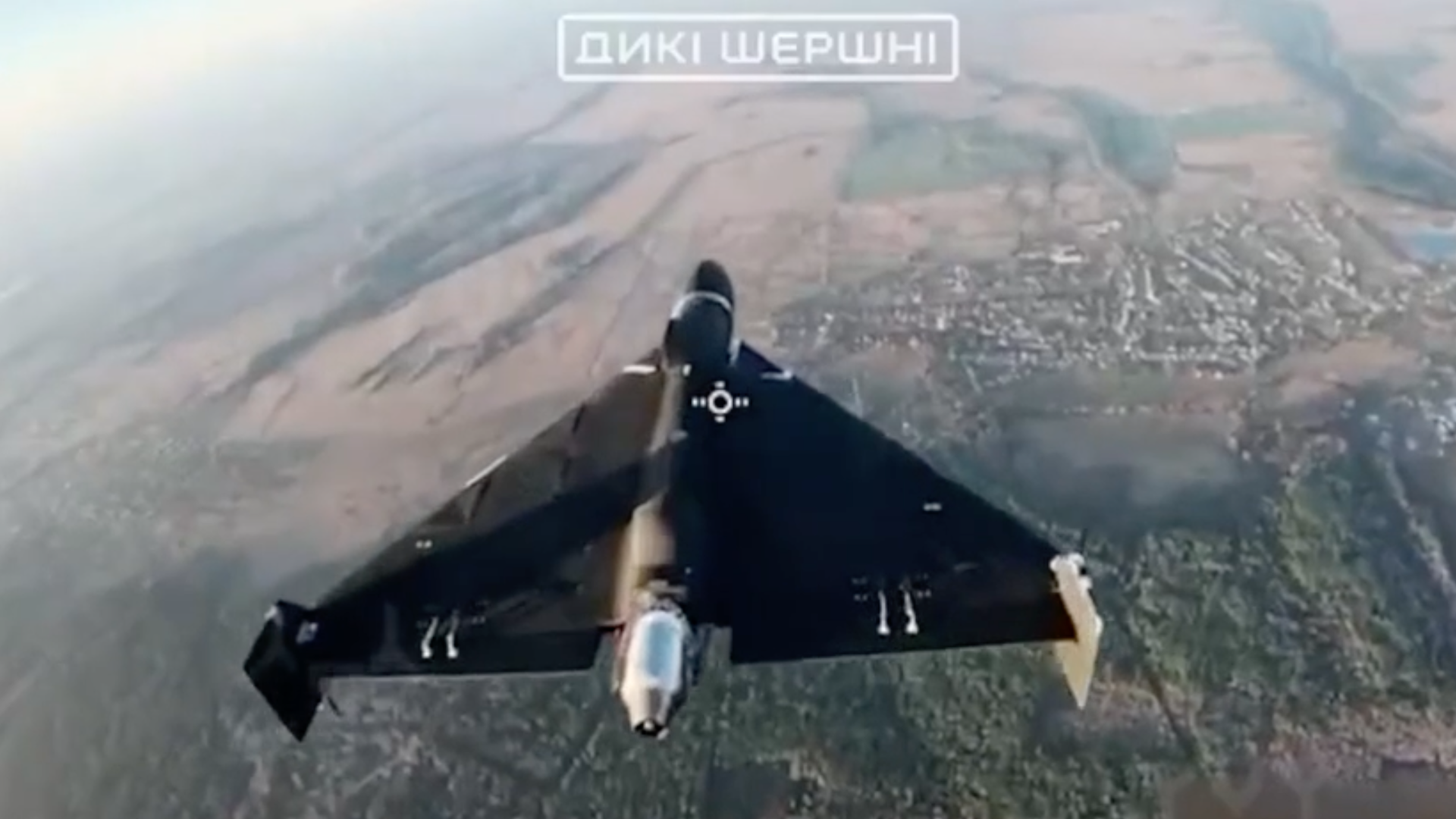
The issue is not limited to Iran. Ukrainian officials say they have found Chinese-linked components in Russian drones recovered after attacks on Kyiv and other cities. In particular, Ukraine has reported that Russia is using newer jet-powered drones that are harder to intercept because they fly much faster than propeller-driven models.
Those drones have become a growing concern for Ukraine’s air defenses. Ukrainian researchers examining wreckage have pointed to Chinese-made turbojet engines, carbon-fiber materials, guidance systems and communications equipment as key inputs in Russia’s expanding drone program.
RELATED STORY | Zelenskyy urges world leaders to cut off Russia's money and war machine at UN General Assembly
China has repeatedly said it does not provide weapons to Russia or Iran and says it regulates exports of dual-use goods under Chinese law. But U.S. and Ukrainian officials have argued that Chinese firms are exploiting the gray area around commercial products that can be repurposed for military use.
The Trump administration has sanctioned a number of Chinese companies accused of supporting Iranian or Russian weapons programs. But publicly, the administration has offered few details about whether Trump is pressing Xi directly on the issue during this week’s visit.
The stakes are visible on two battlefields. In the Middle East, U.S. officials have blamed Iranian-backed militias for attacks on American forces, including a January strike in Jordan that killed three U.S. service members. In Ukraine, Russia’s expanding drone campaign has battered cities far from the front lines and forced Kyiv to adapt to faster, more difficult targets.
RELATED STORY | DOJ shuts down China-sponsored hacking tools that targeted federal agencies
For Washington, the problem is increasingly difficult to police. Many of the parts are small, commercially available and made by companies with limited exposure to U.S. sanctions. That makes it harder to stop the flow without more aggressive pressure on Beijing.
Whether that pressure is happening behind closed doors is unclear. But weapons analysts say the connection between Chinese-made components and casualties in Ukraine, the Middle East and among U.S. forces is now increasingly difficult to dismiss.
