

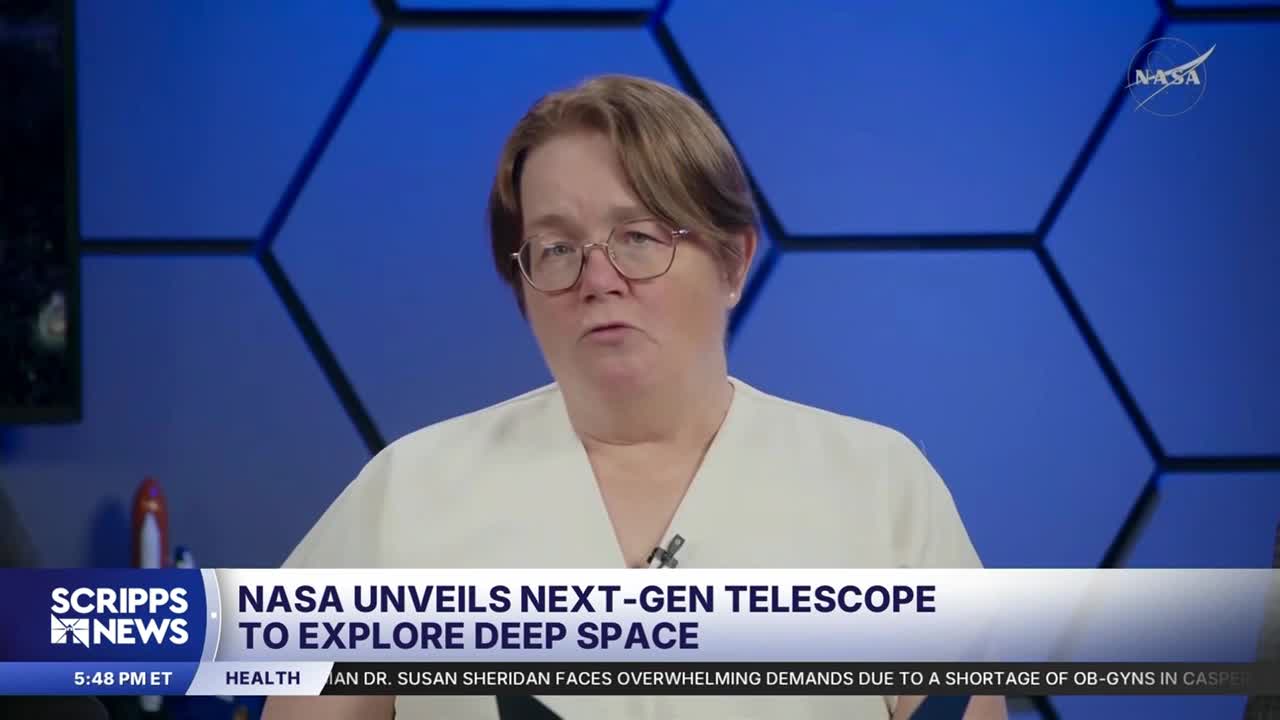


NASA's Nancy Grace Roman Telescope is now ready for a late-August launch.
The orbiting observatory is considered NASA's next landmark tool in a quest to unlock the fundamental nature of the universe, with scientists saying its scope and reach goes far beyond any exploration device the space agency has previously created..
The Roman Telescope mission is expected to revolutionize astrophysics, allowing scientists to unravel the mysteries of dark energy and dark matter,theorized to drive the expansion of the universe.
For the first time ever, it will provide a view of billions of stars, millions of galaxies, and more than 100,000 new exoplanets outside our solar system — in a search for environments that could support life.
According to Roman Space Telescope Project Scientist Julie Mcenery, "Roman's vast reach will allow us to find the weird, the rare, and the unusual. Discovery of things like exoplanets with discs, isolated black holes, and neutron stars in our galaxy and runaway super massive blackholes will become routine. We will redefine what it means to find a needle in a haystack."
RELATED STORY | A US-Russian space crew lands safely in Kazakhstan after an 8-month stint on the ISS
In a rare achievement for a government project, NASA finished construction of the next-generation orbital telescope early and under budget.
The Roman telescope is over 42 feet long and weighs about 18,000 pounds. After a late August launch, it should reach its orbit point — nearly a million miles from Earth — in December, and immediately begin transmitting images and data unlike anything the world has ever seen.
