



A new United Nations report says the world will unavoidably blow past the Paris Agreement's goal of limiting global warming to 1.5 degrees Celsius, and it singles out the United States as a major part of the problem.
The UN Environment Programme's Emissions Gap Report 2026: The Point of Return, released Wednesday, finds that if countries stick with current policies, warming could reach 2.8 degrees Celsius, or about 5 degrees Fahrenheit, this century. The report says that outlook is worse than last year's, in part because of the U.S. withdrawal from the Paris Agreement.
"Yes, it presents a difficult truth. The chance of holding global warming below 1.5 is now gone," UNEP Executive Director Inger Andersen said at the report's launch in London. "It does not mean that we are giving up on Paris."
Global greenhouse gas emissions held roughly steady last year. Dr. Anne Olhoff, the report's lead author, said emissions reached 58.4 gigatons of carbon dioxide equivalent in 2025, similar to 2024 levels.
The U.S. went the other way, as the report indicates it’s the only major economy where planet-warming pollution increased dramatically last year. The U.S. also tied Russia for the highest per-person emissions among G20 countries.
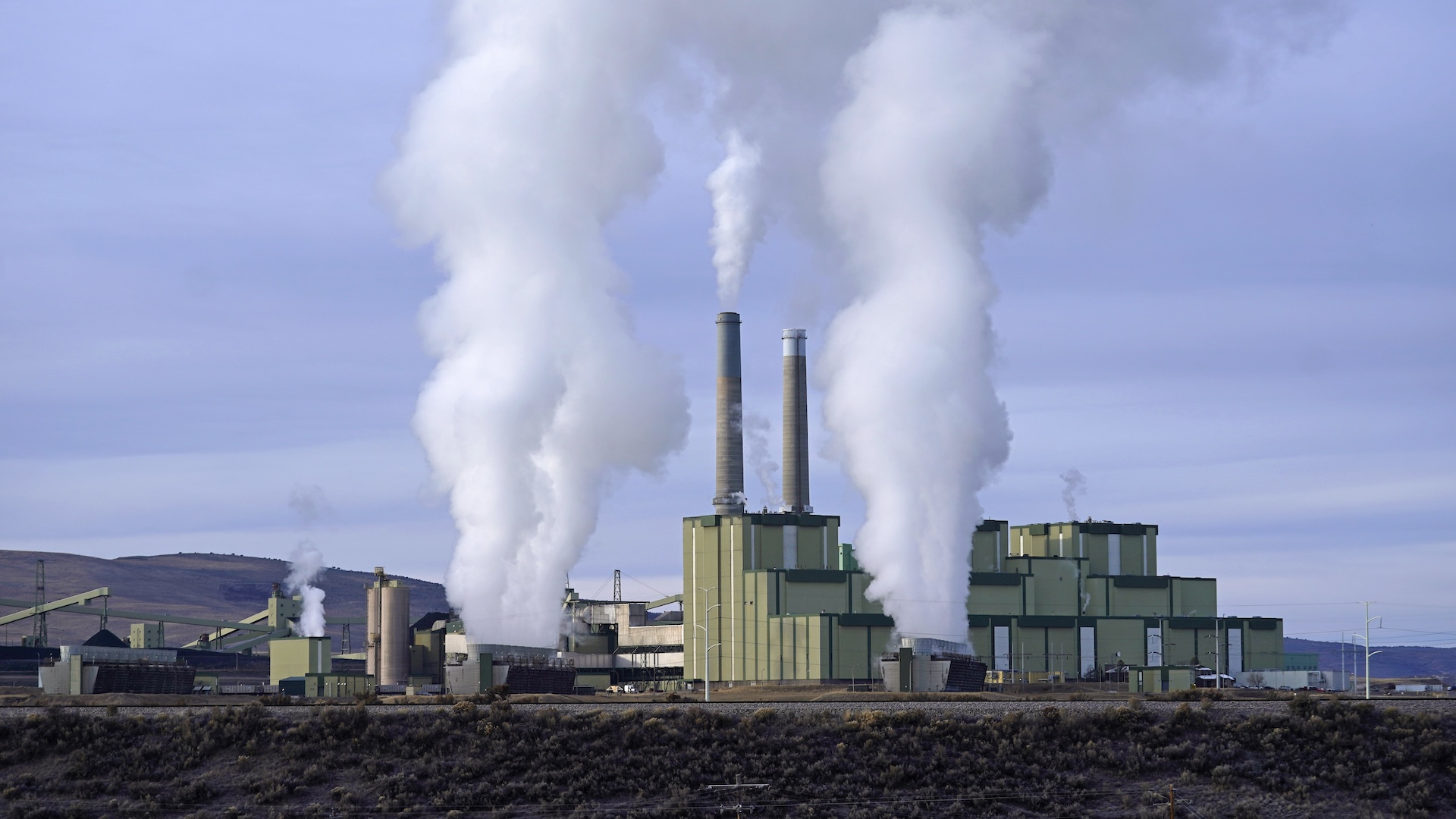
The UN points to rising electricity demand and Trump administration policies that support burning fossil fuels. The administration has ordered coal-fired power plants to stay open longer than planned, rolled back vehicle fuel-efficiency standards and ended tax credits for solar and wind projects. The Environmental Protection Agency has also reversed its finding that greenhouse gases threaten human health and welfare.
The administration has withdrawn from the Paris Agreement and is working to remove the U.S. from UN climate work, arguing the international system puts unfair burdens on Americans.
The report includes a statement from the U.S. government saying it "does not endorse or agree with its analysis or conclusions, and has not provided comments to this report."
RELATED STORY | El Niño is expected to shape this winter’s weather, and it could hit your budget too
In a pre-recorded message played at the launch, UN Secretary-General António Guterres called on the world's largest polluters to act.
"The emissions gap is now a leadership gap. And the world is running out of time and excuses to close it," Guterres said. "All countries, especially the big emitters, must do more."
This year's report shifts its focus from avoiding 1.5 degrees to recovering from overshooting it. It lays out a "lowest possible" overshoot scenario, in which warming peaks at 1.7 to 1.8 degrees Celsius around mid-century and returns to 1.5 degrees by 2100.
Getting there would require cutting global greenhouse gas emissions 18% by 2030, 45% by 2035 and 69% by 2040, compared with 2025 levels, according to the UNEP report. Countries' current climate pledges would deliver only a 5% to 8% cut by 2030 and an 11% to 15% cut by 2035. That would leave the world on track for about 2.6 degrees Celsius of warming.
By 2035, the report says, the world would need to triple renewable electricity capacity, cut coal-fired electricity generation by at least 75%, and effectively phase it out by 2040, reduce methane emissions by at least 25%.
The pathway also depends on pulling roughly 320 gigatons of carbon dioxide out of the atmosphere over the rest of the century. The report says it is uncertain whether that can be achieved.
Delay carries a price. Olhoff said every five years of emissions at current levels pushes peak warming up by about 0.1 degrees.
RELATED STORY | Study: Super-sized El Niño could cause more than 450,000 heat deaths by February
The report also points to progress. Since the Paris Agreement was adopted, global renewable electricity capacity has grown three times faster than expected, and solar power seven times faster. The report reviewed more than 220 climate policies and found many have delivered real emissions cuts.
The report is released each year to inform global climate negotiations. This year's talks, known as COP31, open next month in Antalya, Turkey. World leaders are expected to discuss how to speed up clean energy investment and how to pay for the costs of climate change. The Trump administration will not participate.
"Overshoot is not surrender," Guterres said. "We can still keep it as small and as short as possible."
Andersen acknowledged that energy shocks from the wars in Ukraine and the Middle East have many governments leaning back on fossil fuels for energy security. She said that leaves an open question.
"If you're leaning back, re-commissioning old coal, et cetera, if you're prolonging oil fields that were scheduled to be closed, what's the plan on renewable?" Andersen said. "The long-term security lies in renewable investments."
For American travelers, the energy crunch is showing up at the airport. Hopper's 2026 Holiday Travel Index, released in late September, says months of elevated jet fuel costs from the conflict with Iran have pushed Thanksgiving and Christmas airfares to 10-year highs.
Fuel prices remain high. Jet-A fuel averaged a record $7.99 a gallon nationally in September, according to price tracker GlobalAir. That figure reflects prices at private and business aviation terminals, not airlines' contract rates.
