

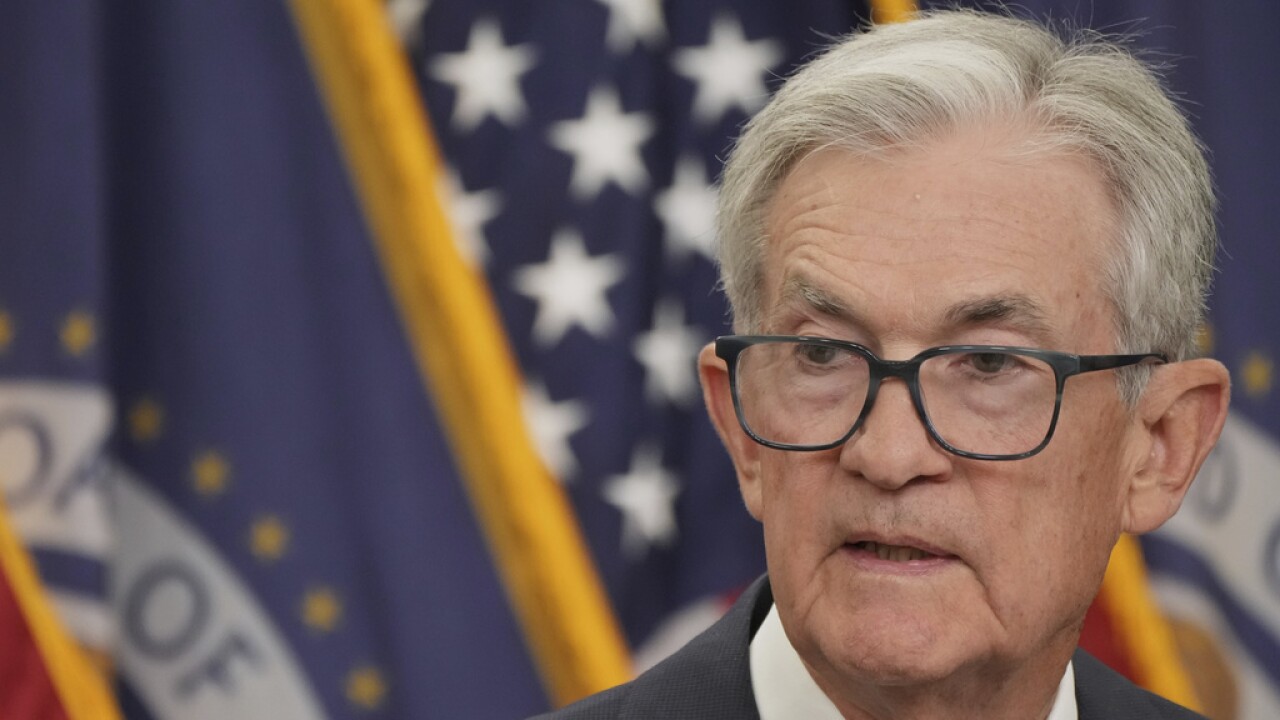


The Federal Reserve faces an unusually contentious meeting this week that will test Chair Jerome Powell's ability to corral the necessary support from fellow policymakers for a third straight interest rate cut.
The Fed's 19-member rate-setting committee is sharply divided over whether to lower borrowing costs again. The divisions have been exacerbated by the convoluted nature of the economy: Inflation remains elevated, which would typically lead the Fed to keep its key rate unchanged, while hiring is weak and the unemployment rate has risen, which often leads to rate cuts.
Some economists expect three Fed officials could vote against the quarter-point cut that Powell is likely to support at the Dec. 9-10 meeting, which would be the most dissenting votes in six years. Just 12 of the 19 members vote on rate decisions. Several of the non-voting officials have also said they oppose another rate cut.
“It's just a really tricky time. Perfectly sensible people can reach different answers,” said William English, an economist at the Yale School of Management and a former top Fed staff member. “And the committee kind of likes to work by consensus, but this is a situation where that consensus is hard to reach.”
The debate, which has also been fueled by a lack of official federal data on employment and inflation during the government shutdown, could be a preview of where the Fed is headed after Powell's term as chair ends in May. His successor will be appointed by President Donald Trump and is widely expected to be Kevin Hassett, the top White House economic adviser. Hassett may push for faster cuts than other officials would be willing to support.
English said the potential for greater disagreement could be seen as a sign of healthy debate between different views. The Fed’s tradition of reaching unanimous or nearly-unanimous decisions has often been criticized as evidence of “groupthink.” Yet some Fed officials warn that there are downsides to sharp splits. If the committee votes end up as 8-4 or even 7-5, then financial markets could lose confidence in where the central bank is headed next.
Fed Governor Christopher Waller, for example, has said that in the case of a 7-5 vote, if just one official changed their view, it could bring about a significant shift in Fed policy.
For now, however, most economists expect what's called a “hawkish cut” — the Fed will reduce rates, while also signaling that it may stand pat for some time to assess the economy's health. ("Hawks" refer to officials who generally support higher rates to combat inflation, while “doves” more often support lower rates to boost hiring).
RELATED STORY | What the federal interest rate cut means for you and the US economy
The president of the Kansas City Federal Reserve Bank, Jeffrey Schmid, is expected to dissent for a second straight meeting in favor of keeping rates unchanged. He may be joined by St. Louis Fed president Alberto Musalem. Fed governor Stephen Miran, who was hurriedly appointed to the Fed's board by Trump in September, will likely dissent for a third straight meeting in favor of a larger, half-point reduction in the Fed's key rate.
After the Fed's last meeting Oct. 28-29, several policymakers said they would prefer to keep rates unchanged at the December meeting, leading Wall Street investors to briefly downgrade the odds of a third rate cut to less than 30%. But then John Williams, president of the New York Fed, said that this year's uptick in inflation appears to be a temporary blip driven by Trump's tariffs that would likely fade by the middle of 2026.
As a result, “I still see room for a further adjustment” in the Fed's short-term rate, Williams said. As president of the New York Fed and vice chair of the rate-setting committee, Williams gets to vote on every interest rate decision and is close to Powell. Analysts said it was unlikely Williams would have made such a statement without Powell's support. Investors rapidly lifted the odds of a cut, which now are at 89%, according to CME Fedwatch.
“You're seeing the power of the chair,” said Nathan Sheets, chief global economist at Citi and also a former top Fed staffer. “Members of the committee, my instinct is, are wanting to underscore their support for Powell.”
Powell has come under relentless attack from Trump, who just last month said he would “love to fire his ass” and called Powell “this clown.”
The Fed is required by Congress to seek low inflation and maximum employment, two goals that are potentially in conflict.
IN RELATED NEWS | How higher interest rates can earn you money
For now, Powell and many other Fed officials are more concerned about hiring and unemployment rather than inflation. While the official government jobs reports have been delayed, in September the unemployment rate ticked up to 4.4%, the third straight increase and the highest in four years.
Payroll provider ADP, meanwhile, reported that in November, its data showed companies shed 32,000 jobs. And many large firms have announced sweeping layoffs.
Worries that the job market could get worse are a key reason a rate cut in December is likely — but not necessarily beyond that. Fed officials will have up to three months of backlogged jobs and inflation data to consider when they meet in late January. Those figures could show inflation remains stubbornly high or that hiring has rebounded, which would suggest further cuts aren't needed.
“What they may end up agreeing to do is cut rates now, but give some guidance ... that signals that they’re on pause for a while after that,” Kathy Bostjancic, chief economist at Nationwide, said.
