

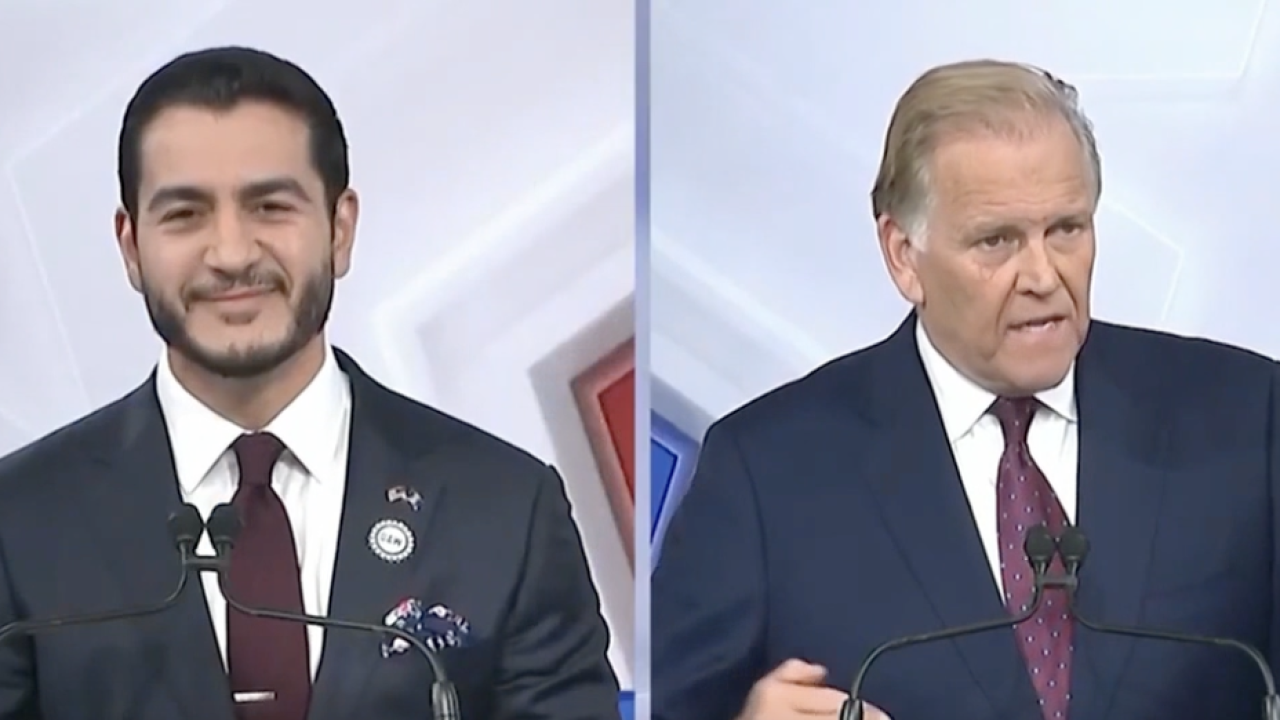


Voters in Michigan and Kansas saw their Senate candidates square off in high-stakes debates, with control of the Senate potentially hanging in the balance.
In Michigan, Democrat Abdul El-Sayed and Republican Mike Rogers traded sharp attacks in one of the country’s most competitive Senate races.
El-Sayed sought to tie Rogers closely to President Donald Trump, repeatedly arguing that a vote for Rogers would effectively be a vote for Trump. Rogers, meanwhile, portrayed El-Sayed as too extreme for Michigan.
The candidates also clashed over several major policy issues.
RELATED STORY | El-Sayed, Rogers debate in closely watched Michigan Senate race
El-Sayed said he supports changes to the U.S. Supreme Court and Medicare for All. On Social Security, he has called for raising the cap on income subject to Social Security taxes.
Rogers opposes Medicare for All and previously voted against the Affordable Care Act, though he has said he wants to reform the law. On Social Security, Rogers said he wants lawmakers to work together on a solution but did not outline a specific plan during the debate.
The debate also featured a heated exchange over foreign policy, campaign funding and national security, with Rogers questioning El-Sayed’s positions and El-Sayed criticizing Rogers’ ties to Trump.
Meanwhile, Republican Sen. Roger Marshall and Democratic challenger Adam Hamilton also faced off in Kansas, a state that has become more competitive than many observers expected earlier in the election cycle.
RELATED STORY | All eyes on Maine as critical Senate race draws closer
Hamilton sought to distance himself from national Democratic leadership, saying he would not support Sen. Chuck Schumer as majority leader if elected. Marshall emphasized his relationship with Trump, arguing that he would be able to work with the president to deliver results for Kansas.
The candidates also sparred over tariffs and the economy. Marshall argued that tariffs are helping bring manufacturing jobs back to the United States, while Hamilton said uncertainty surrounding tariffs is making it harder for businesses to operate and increasing costs.
With Election Day approaching, both Michigan and Kansas remain closely watched Senate contests.
