

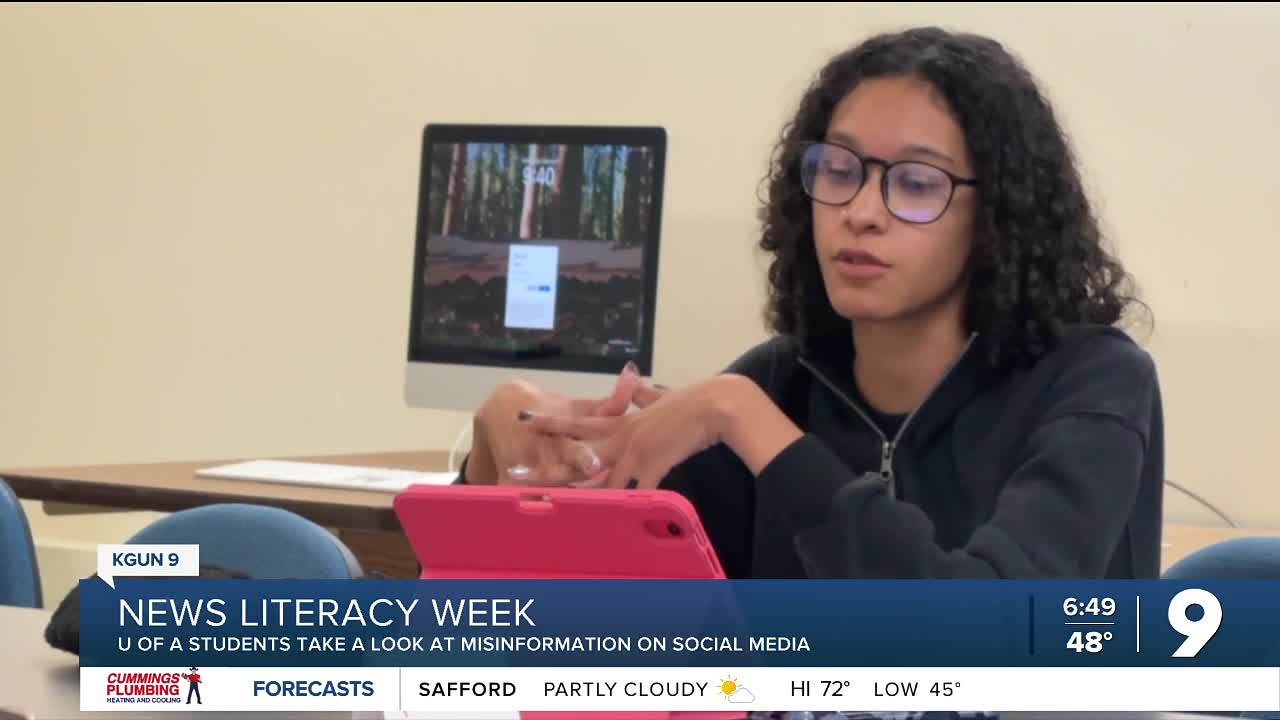


TUCSON, Ariz. (KGUN) — It's News Literacy Week, and with so much information coming at us every day, figuring out what's real can be tough.
When you see a headline online, do you stop to check who posted it? In this journalism class at the U of A, students are learning why that question matters and how to slow down before hitting share.
"People headline watch a lot, like, they only read the headline, and they make their opinion based on that," one student said.
Students say that habits of doom-scrolling can make misinformation hard to spot.
"We as the people have a duty to check our sources, whether that's, you know, it seems like it's hard because you drown in all of this potential misinformation on social media, but I think that's why it's so important to be checking," another student said.
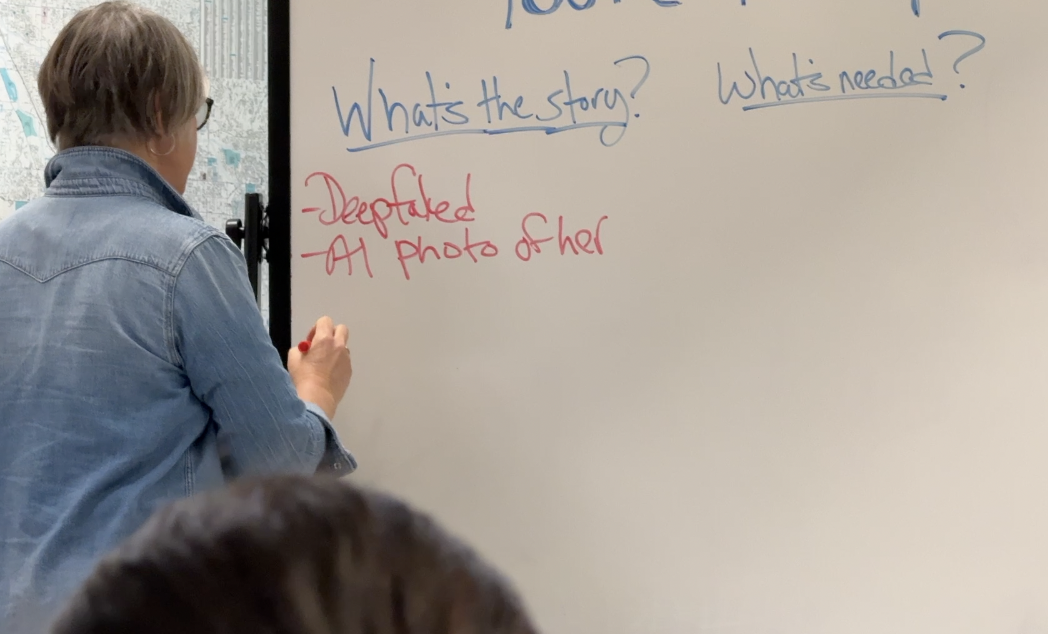
They say as news consumers, we need to learn to ask better questions.
"Technical things that you should look out for, like who's publishing it, what website, just kind of like the web page design sometimes can just give it away," a student said.
Some posts can be just for entertainment, and students say it's crucial to understand that.
"I think the way that people consume media should not be the same way that they consume news, and unfortunately, it's blending together. I think there has to be a difference in those consumptions," a student said.
With so much on your feed, figuring out what's real matters.
———
Athena Kehoe is a reporter for KGUN 9, she joined the KGUN 9 team in July of 2024 after graduating from Arizona State University. Share your story ideas with Athena by emailing athena.kehoe@kgun9.com or by connecting on X/Twitter.

This story was reported on-air by a journalist and has been converted to this platform with the assistance of AI. Our editorial team verifies all reporting on all platforms for fairness and accuracy.
----
STAY IN TOUCH WITH US ANYTIME, ANYWHERE
