

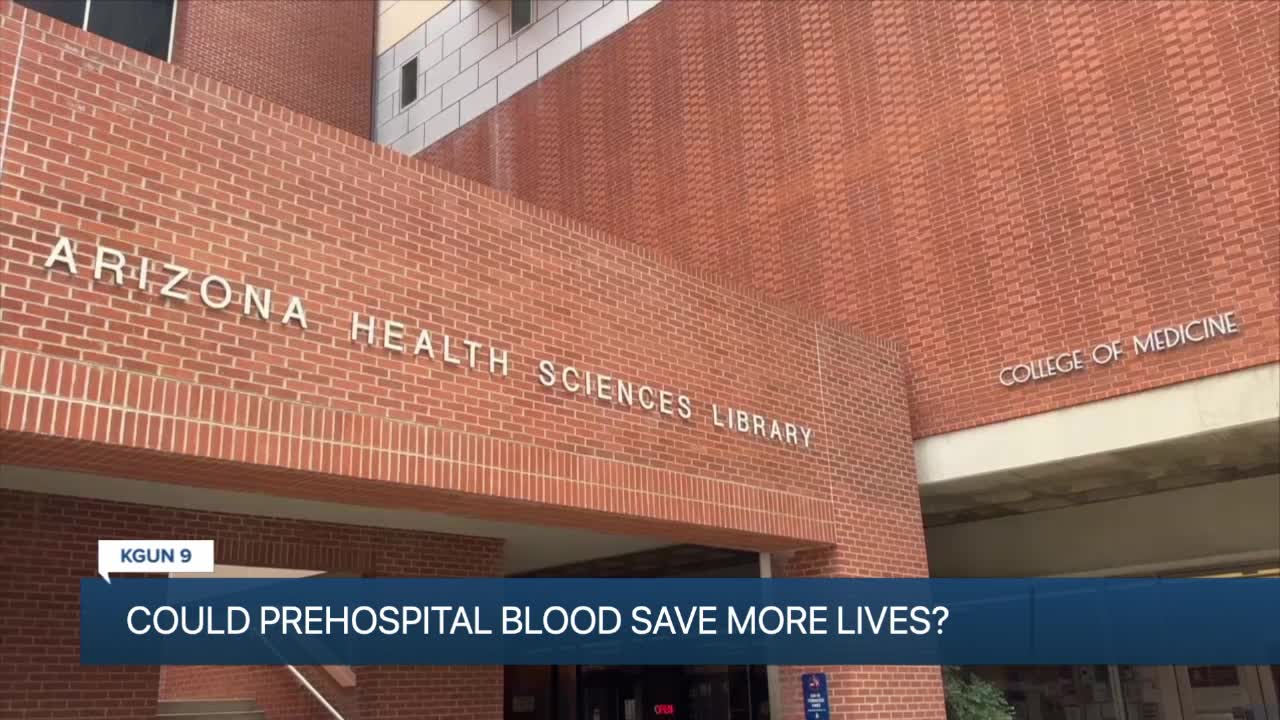


TUCSON, Ariz. (KGUN) — Researchers at the University of Arizona are leading a new effort to find out whether giving blood to trauma patients before they reach the hospital can save more lives.
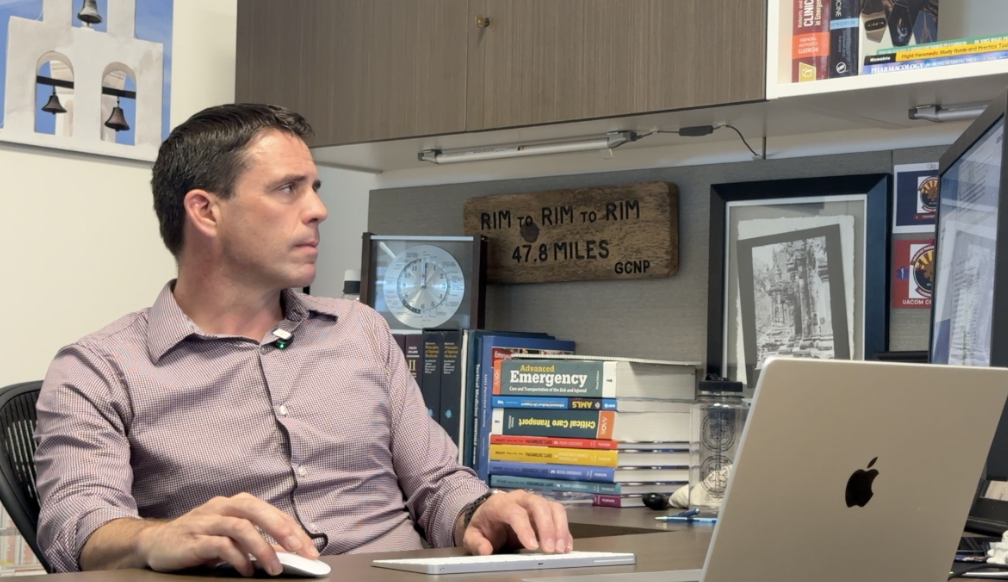
Dr. Josh Gaither, a professor of emergency medicine at the University of Arizona, is one of the researchers leading the effort.
“For this project, we will be partnering with the Arizona Department of Health Services to do a pilot project that allows participating paramedics to do advanced training and then give blood products. So this is a new addition for paramedics in the state of Arizona that hasn't ever been done before," Gaither explains.
According to the University of Arizona, the school has been approved for $30.6 million in research funding from the Patient-Centered Outcomes Research Institute, or PCORI. The nonprofit organization funds research designed to help patients and their caregivers make informed health care decisions.
Prehospital blood transfusions are already used in multiple settings, including some ground-based emergency medical systems, air emergency medical services, and military emergency medical care, according to the University of Arizona press release.
Some rural patients already receive blood before reaching the hospital, usually by helicopter, Gaither says. But the benefit of giving blood before arriving at the hospital is less clear in urban areas, where patients may be only minutes away from a hospital.
Gaither says researchers want to know whether those few minutes could make a difference.
“What we don't know is if in our urban settings, where you may only be five minutes from the hospital. Does it help if you give blood to those patients, who will get it anyway, five minutes later? So does that five minutes of time saving result in lives saved?”
The researchers also have to consider how to use a limited supply of blood.
“Blood is a limited commodity. There's not a ton of it around. So if we put blood on every ambulance across the entire state of Arizona, we'd run out of blood," Gaither explains.
The University of Arizona press release says the project will compare pre-hospital blood transfusions with standard treatment using crystalloid fluids such as saline. Researchers ultimately want to determine whether giving blood before a patient reaches the hospital can reduce deaths associated with traumatic hemorrhagic shock, a life-threatening emergency involving rapid and massive blood loss.
More than a dozen EMS agencies are expected to participate, with nearly 2,000 patients treated during the study, according to the University of Arizona. The project is expected to last around six years.
Gaither says getting blood to patients sooner could help reverse the effects of severe blood loss.
“Once someone loses a lot of blood, they go down this kind of spiral and their physiology changes. They stop having blood flow to their body, and slowly their organs start to, of course, die," Gaither explains, "so by giving that blood sooner to something as simple as a scalp plaque, we can reverse that pathophysiology, make them warmer, better perfusion to the organs, less organ damage, and of course hopefully make that patient survive.”
The $30.6 million funding award has been approved pending completion of PCORI's business and programmatic review and issuance of a formal award contract, according to the University of Arizona press release.
———
Athena Kehoe is a reporter for KGUN 9, she joined the KGUN 9 team in July of 2024 after graduating from Arizona State University. Share your story ideas with Athena by emailing athena.kehoe@kgun9.com or by connecting on X/Twitter.

----
STAY IN TOUCH WITH US ANYTIME, ANYWHERE

