

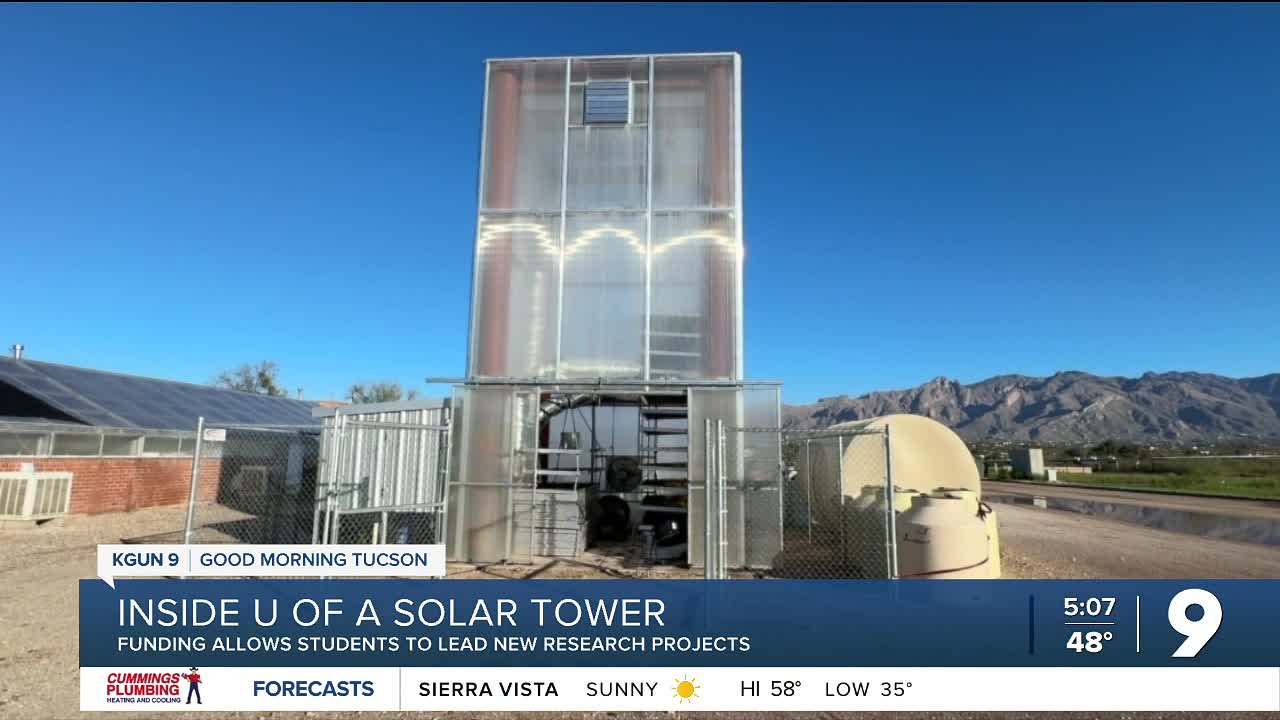


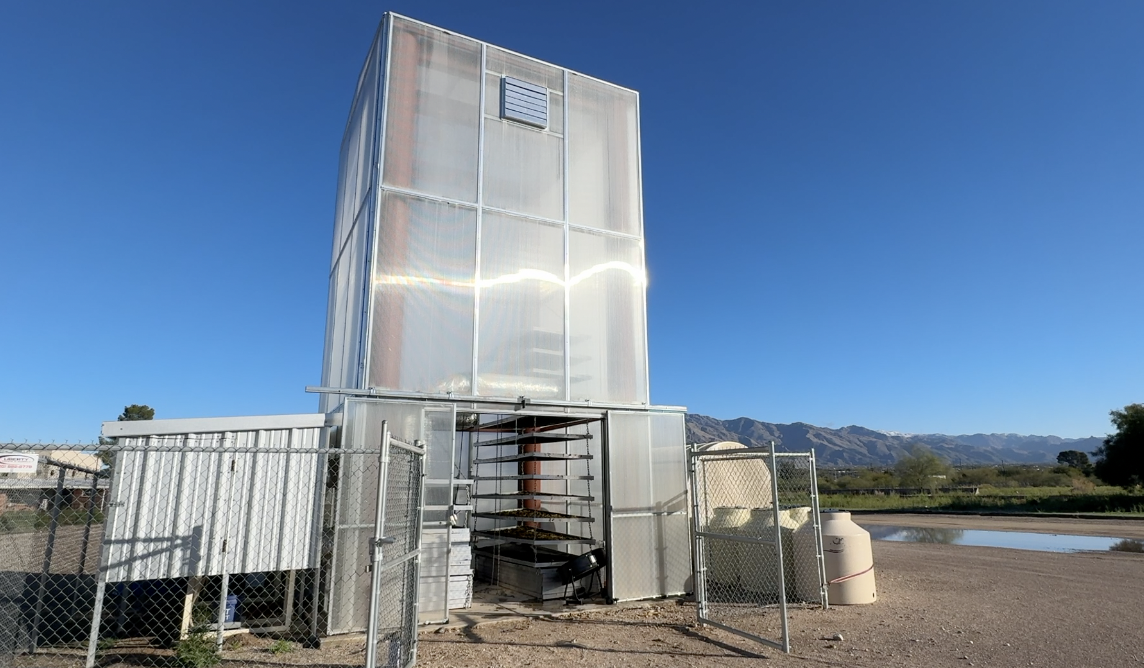
TUCSON, Ariz. (KGUN) — A 25-foot solar drying tower at the University of Arizona is helping researchers tackle food waste and create new opportunities for students.
The tower was developed by a University of Arizona team and is operated through Kuairu, a startup co-founded by U of A professor Goggy Davidowitz. The system is designed to dry fruits and vegetables in hours instead of days, using only energy from the sun and producing no carbon emissions. The tower helps preserve produce that might otherwise end up in landfills.
"When we started it, we didn't know how tall to build it," Davodiwitz explains, "you don't want it to get too hot inside because then you denature the proteins, and the nutritional value of what you're drying down goes down."
Now, the tower is being used for a new research project involving an unexpected ingredient: Alaskan kelp.
Davidowitz says this project is funded by the Alaska Fisheries Development Foundation of the Alaska Mariculture Cluster.

University of Arizona graduate student Hunter Clark is working on the project alongside other students. The research aims to determine whether kelp can be used as a sustainable option for livestock feed.
"The seaweed is going to be used as an additive ingredient to layer poultry in their diets, and that changes the color of the yolk," Davidowitz explains, "which makes it more desirable and more profitable, hopefully."
Once thawed, the kelp is placed on tables inside the tower, where it is dried using solar heat and airflow rather than automated machines.
“We have 22 tables in here that we can raise up to the ceiling, and the main goal is just to increase surface area so we can get more airflow going over the tables all around in between whatever we're drying on them,” Clark said.
After the kelp is fully dried and pulverized, it will be shipped to chicken farms to complete the testing.
Clark said his involvement in the project came after spending several years working in Davidowitz’s lab. Davidowitz said the tower was originally created to reduce food waste.
“The purpose of the solar tower is to dry fruits, excess fruits and vegetables that normally would go to the landfill,” Davidowitz says.
“Here requires no energy because we get it all from the sun. It's free, and we actually recapture the water that's evaporated off the fruits and vegetables, so we're actually producing water,” Davidowitz explains.
The project is supported through grant funding, giving students hands-on research experience while contributing to new sustainability solutions.
———
Athena Kehoe is a reporter for KGUN 9, she joined the KGUN 9 team in July of 2024 after graduating from Arizona State University. Share your story ideas with Athena by emailing athena.kehoe@kgun9.com or by connecting on X/Twitter.

----
STAY IN TOUCH WITH US ANYTIME, ANYWHERE

