

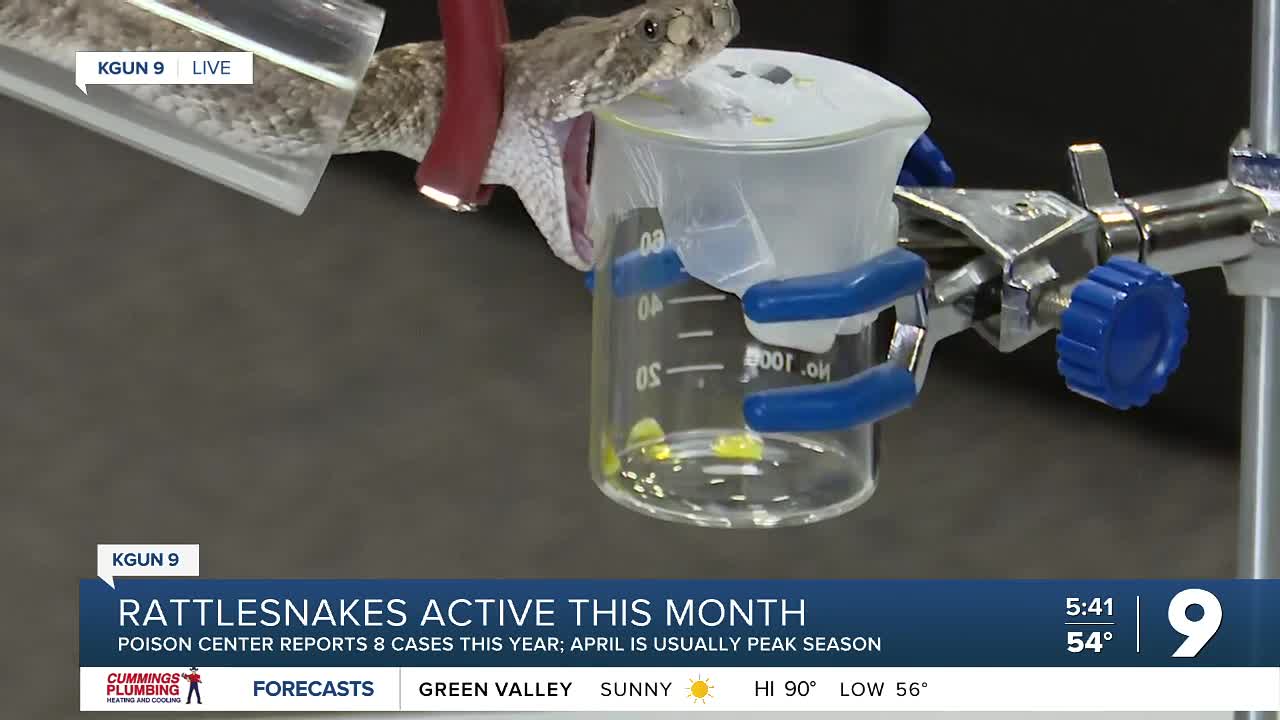


TUCSON, Ariz (KGUN) — Snake season is getting an extra early start in Arizona.
The Arizona Poison and Drug Information Center says eight people have already been treated for rattlesnake bites this year. This data includes every county in Arizona except for Maricopa County.

The center typically reports about one to five rattlesnake bite cases in March. With two weeks still left in the month, this year’s total has already surpassed that range.
At least four of the reported bites have happened near Oro Valley.
The increase comes as snakes start coming out of hibernation across the state. Activity tends to ramp up through the spring, with April usually marking the peak period when the risk of encounters and bites is highest.
Geoffrey Smelski, clinical education director at the Arizona Poison and Drug Information Center, says most rattlesnake bites are not life-threatening, though anyone who is bitten should seek medical attention right away.
“Anything other than just go to the hospital, I would label as a mistake. So there's a bunch of stuff that people have done in the past that Hollywood likes to kind of portray as potentially a good idea, but it really isn't. So things like tourniquets or this cut and suck type of a strategy that the Boy Scouts used to do, um, probably just worsened the local injury. It definitely isn't going to treat the snake bite,” Smelski says.
If someone is bitten by a rattlesnake, Smelski says to call 911 and seek medical help right away. People should avoid driving themselves to the hospital because symptoms such as low blood pressure or loss of consciousness could make it dangerous.
Smelski explains that symptoms can develop right after being bit or can be delayed for multiple hours, which is why he stresses getting to the hospital immediately because antivenom works by preventing injury. Essentially, it can't fix something that's already been broken.
Researchers at the poison center are also continuing to study rattlesnake venom to better understand how it changes over time and between species.

“There's 15 species of rattlesnakes in Arizona. There's 24 different toxins that we know of that are kind of found across the 15, and there's kind of this variability in which snakes have which toxins. Even the same snake throughout the course of its life, the toxin composition will change," Smelski explains.
Rattlesnake Solutions keeps tabs online of recent calls they have responded to so people can see if there's been any recent calls near them.
———
Athena Kehoe is a reporter for KGUN 9, she joined the KGUN 9 team in July of 2024 after graduating from Arizona State University. Share your story ideas with Athena by emailing athena.kehoe@kgun9.com or by connecting on X/Twitter.


