
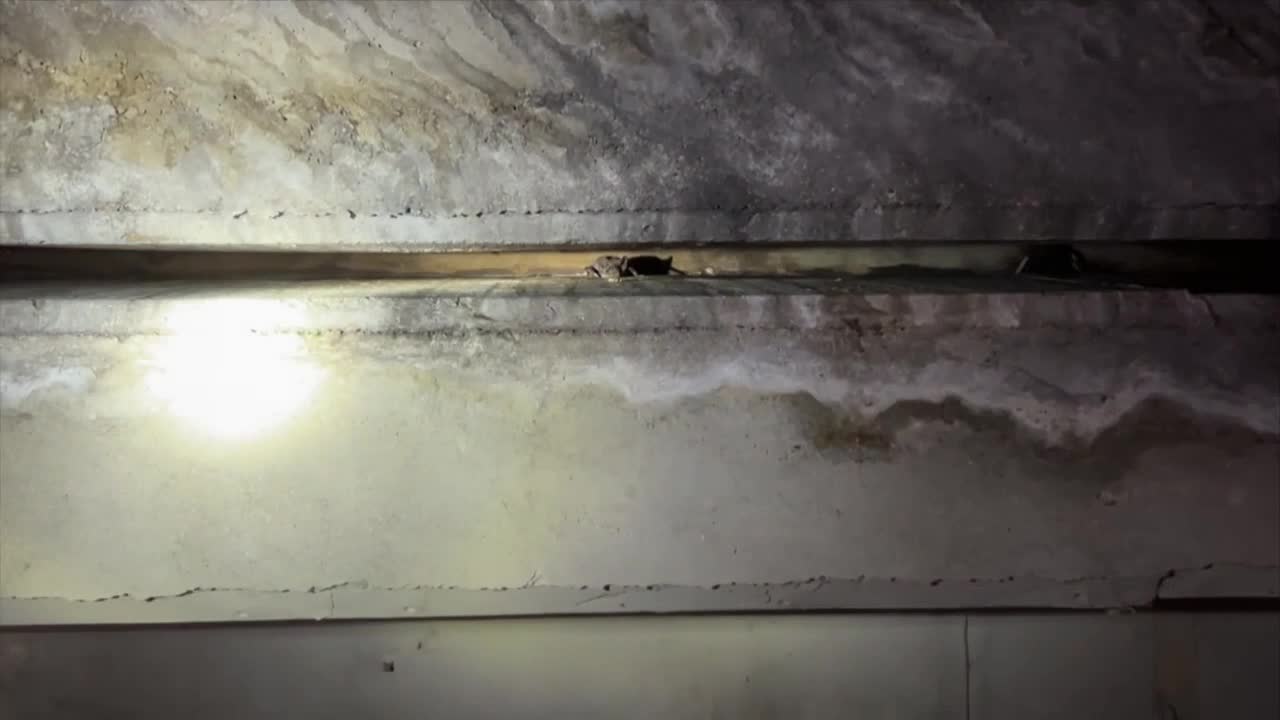


TUCSON, Ariz. — It’s the time of year when bats are seen throughout Pima County, and it is a fascinating experience where many people go to nearby bridges and wait for them to come out at sunset. You always want to make sure you keep your distance.
Tucson Medical Center's (TMC) emergency department has seen a significant spike in patients seeking treatment for bat exposure, and Pima County health officials say the number of bat-related animal exposures has already surpassed 2025's peak on record.
TMC's Pediatric Emergency Department Manager Hannah Gerbracht said the hospital has treated about 20 patients in the last week alone, administering rabies vaccines as a precaution.
"We obviously do an assessment. Ask what the bats looked like, were they awake, were they acting weird, and then we do prophylactically treat everybody who comes into the ER with rabies vaccines and immunoglobulin," Gerbracht said.
Gerbracht said bat exposures don't always mean you were necessarily bitten, but you were close in proximity.
"Whether that means bats in their house or in a pool that they've been in, but we've seen a great deal over the last probably three weeks, coming in for bats in their houses," Gerbracht said.
The Pima County Health Department (PCHD) has dealt with194 bats exposed to people so far this year. Dr. Ellen Santos, PCHD's Epidemiology Program Manager, said July's numbers are already skyrocketing.

"So this black dotted line here, this is the number of animal exposures in people that we dealt with last year, so in 2025. And so we peaked in August, but you can see for July, and the month's not even over yet, we are above any peak that we've seen," Dr. Santos said.
Health officials urge the public never to touch a bat, whether it is dead or alive. If a pet has a bat in its mouth, Santos said, stay protected when trying to remove it.
"If your dog brings in a bat from outside, you know, try to get it away from your dog with like, you know, a plastic, some sort of barrier or gloves or something," Dr. Santos said. "And then call your veterinarian to do an assessment for your animal," Dr. Santos said.
If a bat is found inside a home, residents can call Pima Animal Care Center (PACC) to retrieve it. The bat will then be tested for rabies, and the results will determine whether the people in the home need to seek medical care.
"What usually happens is if someone encounters a bat or a wild animal, they will call us, or it'll get reported to us somehow, and we will reach out to that person, and we'll ask them a whole bunch of questions about what happened and all that is to help us determine, is this a low risk situation, is this a high risk situation? And for anything that is kind of moderate or high risk, we might recommend seeking healthcare," Dr. Santos said.
She said there are visible signs that a bat may be infected with rabies.
"Some symptoms you might see if the bat does have rabies and is symptomatic, they might be kind of flying around during the day when we don't expect to see them. They might appear kind of sick," Santos said. "You might find them on the ground, kind of flopping around. You might find them kind of moving around in a way that you wouldn't expect them to be flying. So, any kind of unusual-looking behavior is usually suspicious."
One patient treated at TMC found a bat in their pool. Dr. Santos said residents in that situation do not need to drain the pool.
"Even if that bat has rabies, the rabies virus is very fragile in the environment, so exposure to things like sun, sunlight, UV light outside of a warm-blooded animal, a mammal, that rabies virus is not going to survive," Santos said. "But if anyone encountered that bat, like physically touched it, or, you know, if the bat flew at them and they notice a bite or a scratch, that's when we would want to do an assessment, and we'd be a little more concerned."
She says one thing to remember about bats is that they are really tiny, as well as their teeth, so if a bat bites you, you don't always see it or know that it's there.
"So that's why if you wake up at home and you notice that a bat has been flying around, that we consider a high-risk situation because while you're asleep or not aware of what's going on, we don't know if that bat came up to you or bit because those bites are so tiny," Dr. Santos said.
Bats are a protected species, and there are several popular locations in the area to observe them.
RELATED: Tucson's "Bat Bridges" offer sunset spectacle
This story was reported on-air by a journalist and has been converted to this platform with the assistance of AI. Our editorial team verifies all reporting on all platforms for fairness and accuracy.
——
Vanessa Gongora is KGUN 9's Westside reporter.. Vanessa fell in love with storytelling by growing up in sports. She was fascinated by how sports reporters go beyond the x's & o's to tell players' stories, and how sports bring people together, inspiring Vanessa to provide the same impact as a journalist. Share your story ideas and important issues with Vanessa by emailing vanessa.gongora@kgun9.com or by connecting on Facebook, Instagram, and X.