


TUCSON, Ariz. (KGUN) — The Pima County Health Department (PCHD) has confirmed its first probable West Nile virus case of the season, as monsoon rains create ideal breeding conditions for mosquitoes.
The West Nile virus spreads to people through the bite of an infected mosquito.
The county detected the virus in mosquitoes through routine surveillance activities, according to a news release.
Enrique Zarate, program manager for the PCHD Consumer Health and Food Safety Division, says the Vector Control Program set traps around the area to actively catch mosquitoes.
"So anytime there's an increase in number, we'll take those mosquitoes and we'll test those mosquitoes for West Nile virus. Currently right now, there's been a few positive tests for mosquitoes specifically across Pima County," said Zarate.
According to Dr. Ellen Santos, PCHD epidemiology program manager, the first human detection is believed to be locally acquired.
She said they don't know exactly where this person was exposed to it and she cannot share where this person is located in the county.
"We try to detect it in mosquitoes before we detect it in humans, so that we can start more of our prevention, messaging and prevention activities at the right time," said Dr. Santos.
Symptoms can take days to appear after a bite.
"Most symptoms are gonna show up as flu-like, so fever, headache, muscle aches, and fatigue. Occasionally, it can turn into really severe illness and unfortunately, occasionally, it can be fatal," Dr. Santos said.
She says typically older people who are immunocompromised or have other health complications, are the populations that are more at risk for severe illness if they get infected.
Dr. Santos said a minor case typically resolves within one to two weeks, but more severe cases can take longer. Anyone who is bitten by mosquitoes and begins to feel sick, particularly during monsoon, is encouraged to seek healthcare.
PCHD says it anticipates an active mosquito season. The best way to prevent mosquito bites starts with eliminating standing water around your property.
"Mosquitoes just need a bottle cap of water to be able to breed, so that can be found anywhere. I know I had a canopy once that was just holding water, unused tires, bike tires or flat tires, planters. Anything that is holding water in the yard should be removed," Zarate said. "Even if you just have ground that is uneven and then you see water sitting there. If it's sitting there longer than three to four days, it's probably water that needs to be manually or, you know, shoveled out or spread out."
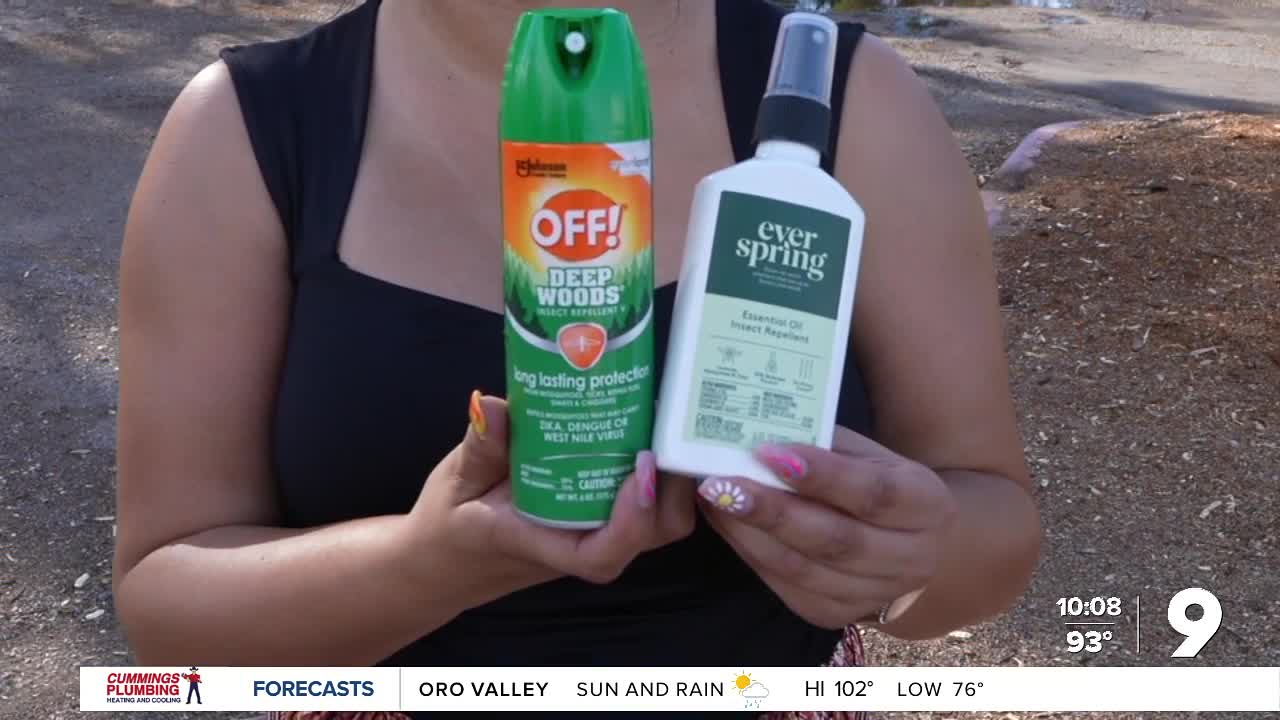
Health officials also recommend using mosquito repellent that contains DEET, picaridin, or lemon eucalyptus oil. Those heading out for a hike should wear light-colored, loose clothing and cover up all body parts as much as possible.
For those who want to open doors and windows at home and enjoy the monsoon weather, Zarate offered a simple precaution.
"Just try to keep the mosquitoes and the insects out by making sure all of your screens are in place and there are no holes in them that need to be repaired," Zarate said.
He says in times where there's a large amount of water near your home and it's not as easy to remove, there are larvicides that exist to kill the mosquito in its larval state.
"That can be purchased from local stores that may have summer or yard maintenance supplies, um, but those larvicides come in the form of dunks, tablets, spits, pellets, granular granules that can be added to the water if the water cannot be removed," Zarate explained.
The West Nile virus is not contagious through person-to-person contact, but the PCHD notes that cases have been transmitted through blood transfusions and organ donations in the past.
——
Vanessa Gongora is KGUN 9's Westside reporter.. Vanessa fell in love with storytelling by growing up in sports. She was fascinated by how sports reporters go beyond the x's & o's to tell players' stories, and how sports bring people together, inspiring Vanessa to provide the same impact as a journalist. Share your story ideas and important issues with Vanessa by emailing vanessa.gongora@kgun9.com or by connecting on Facebook, Instagram, and X.