

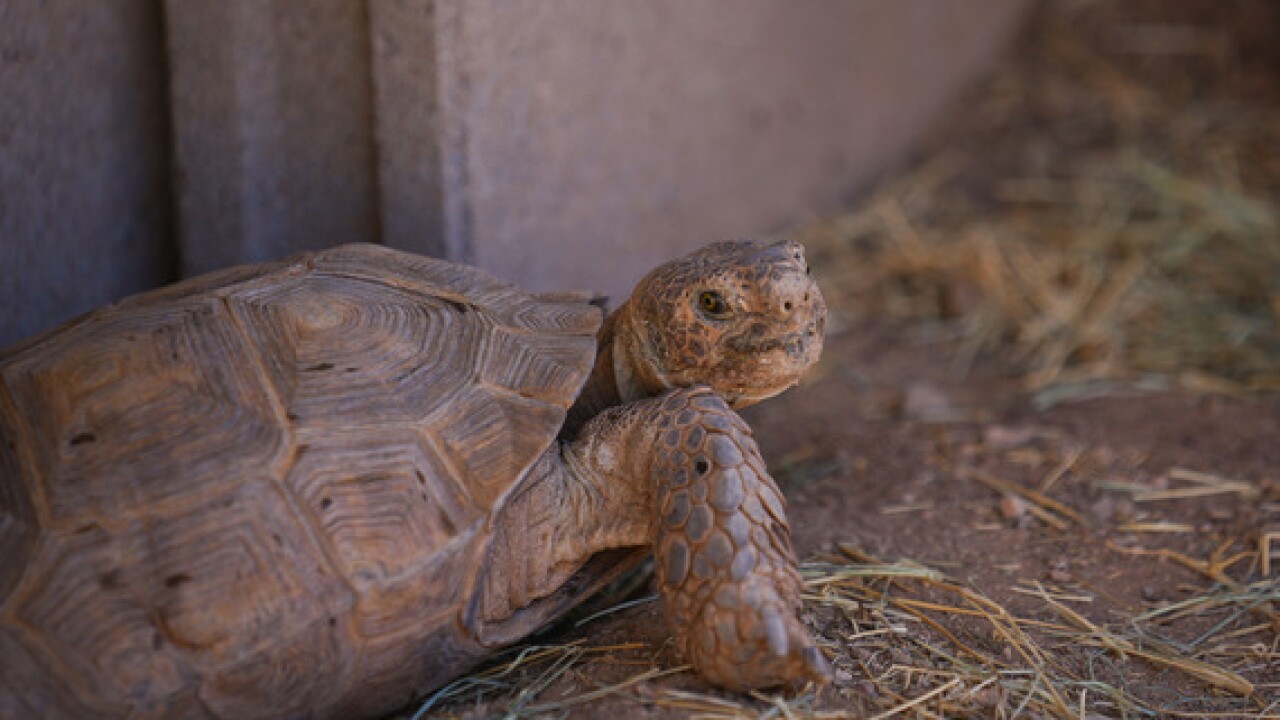


Looking for a new family pet this fall? Arizona Game and Fish Department officials say more than 100 desert tortoises are currently waiting for forever homes.
The Arizona Game and Fish Department's Tortoise Adoption Program is looking for people willing to adopt non-releasable Sonoran desert tortoises and give them a permanent home.
The tortoises often come from illegal captive breeding operations and cannot be returned to the wild. Captive tortoises can carry respiratory infections that could pose a serious threat to wild desert tortoise populations, which already face challenges including habitat loss and drought.
“Many people don’t even consider opening up their homes to desert tortoises, but they make fantastic and personable pets,” said Tegan Wolf, desert tortoise adoption specialist for AZGFD.
Wolf said adopted tortoises can become part of families for generations.
“It’s rewarding to hear stories from those who have adopted a captive tortoise and made them part of the family,” Wolf said. “They’re a unique alternative to traditional family pets.”
Before you adopt, you need a burrow
There is one major requirement for prospective tortoise owners: Build the burrow first.
Because desert tortoises live outdoors and Arizona's temperatures can become extreme, they need a burrow where they can escape the heat and protect themselves.
AZGFD requires applicants to have a burrow ready for their tortoise before submitting an adoption application.
The department provides instructions and videos to help prospective owners create an appropriate burrow.
And unlike a typical pet, a desert tortoise can be a commitment that lasts for generations.
Sonoran desert tortoises can live 80 to 100 years, according to AZGFD. Some families may even have the same tortoise as a companion for multiple generations, with tortoises sometimes included in estate planning and wills.
They're herbivores — and very Arizona
Desert tortoises are completely herbivorous. In captivity, they should ideally be able to graze throughout the day on grasses, leafy plants and flowers.
The Sonoran desert tortoise is also a state-protected species. The tortoises cannot be taken out of Arizona.
While the species is not currently listed as endangered, AZGFD says habitat loss and development remain threats to wild populations.
Anyone interested in adopting can learn more about the adoption process, burrow requirements and tortoise care through AZGFD's Tortoise Adoption Program.
Those who aren't able to adopt can still help by donating to the Tortoise Program, which helps support the animals' care while they wait for permanent homes.
With more than 100 tortoises currently at the department's care facility, AZGFD says there is no shortage of shelled companions waiting for someone to take them home.
For more information, click here to visit Arizona Game and Fish's Tortoise Adotion Program.

