

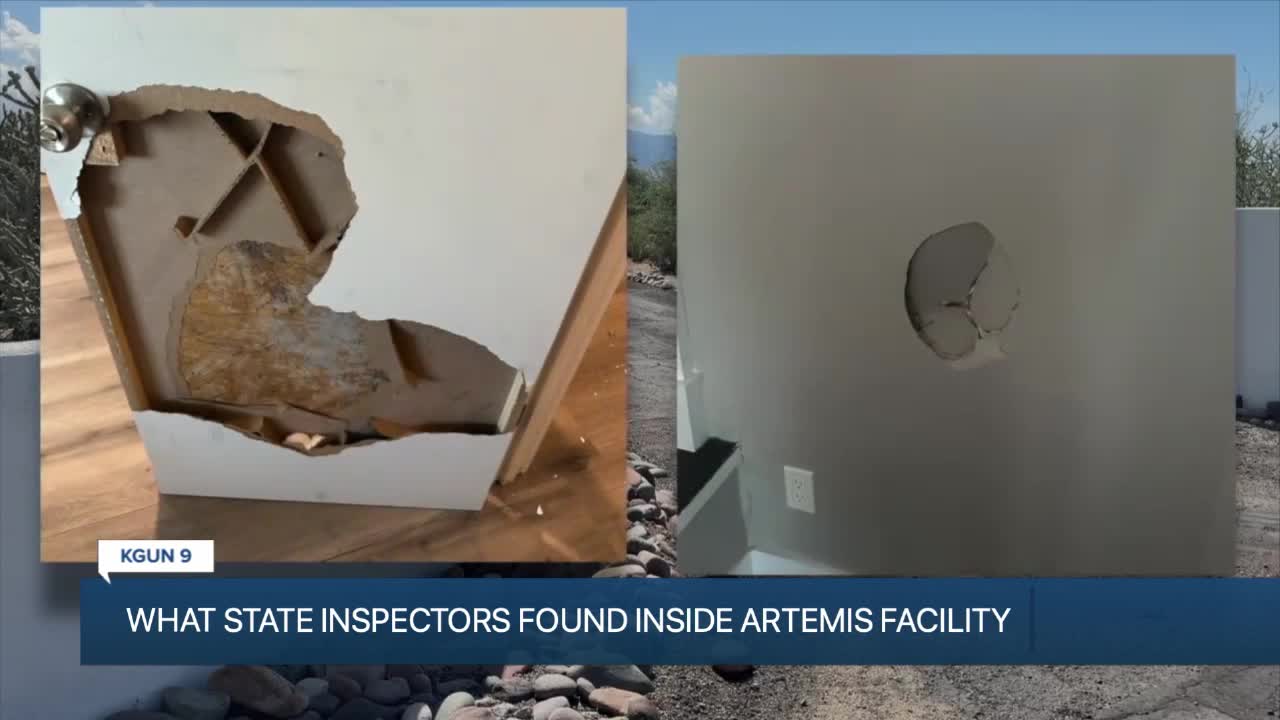


TUCSON, Ariz. (KGUN) — On May 7 and May 8 of this year, state inspectors visited an Artemis Adolescent Healing Center near Marana. They left with 11 documented deficiencies, including findings that the facility was providing an environment outside the scope of its license, incidents were not always reported, and walls and doors throughout the home had been damaged.
Artemis Adolescent Healing Center operates four residential facilities across the state. The facility is licensed to house up to 10 adolescents with behavioral health needs.
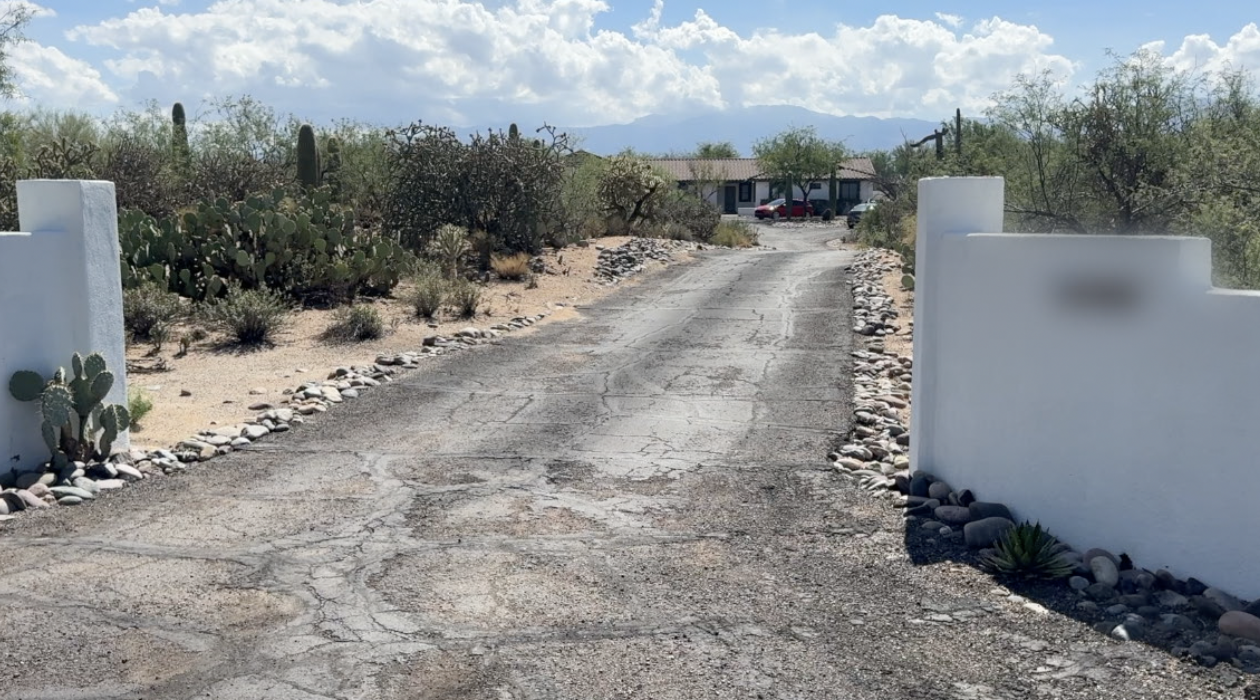
A former employee speaks out
Tyra Johnson worked at the home for a few months as a care coordinator before saying she quit earlier this year.
“I decided to leave like late February. I was just feeling really bad, like really, really bad. I was crying all the time. I was drained,” Johnson said.
Johnson said the experience continued to affect her after she left.
“I don’t feel like the same person anymore,” Johnson said.
Johnson described a chaotic environment from her first day on the job.
“It really scared me at first just seeing the fights and everything. I got used to it as I started working there more, but my first day it was just like too much,” Johnson said.
Questions about the level of care
According to the inspection report, the facility was providing an environment outside the scope of its license, as it is not authorized to provide continuous treatment to individuals experiencing a behavioral health issue that causes the individual to suffer harm that significantly impairs the individual's judgment, reason, behavior, or capacity to recognize reality, be a danger to self, or be a danger to others.
Artemis is licensed as a Behavioral Health Residential Facility, not an inpatient facility.
Under Arizona regulations, a behavioral health residential facility provides treatment to individuals whose behavioral health issues limit their ability to be independent or require treatment to maintain or enhance independence.
A behavioral health inpatient facility, by contrast, provides continuous treatment to individuals whose behavioral health issues cause them to be a danger to themselves or others, suffer harm that significantly impairs their judgment, reason, behavior or capacity to recognize reality, have a limited or reduced ability to meet their basic physical needs, be persistently or acutely disabled, or be gravely disabled.
Shawna Beckman is the chief clinical officer at Artemis.
“Most of our kiddos come from level one psych hospitals, so that's a higher level of care than we are. They've been stabilized, and they're ready for the next level, which would be us,” Beckman said.
When asked about the state's finding that residents required a higher level of care, Beckman said the inspection did not reflect a typical day at the facility.
“I think it's important that it ebbs and flows on where they're at depending on their day. That particular report is not a typical day,” Beckman said.
Johnson disagreed.
“Those kids should have been in a lockdown facility. They shouldn't have had access to like glass windows. They shouldn't have had access to anything in a house,” Johnson said.
Damage documented throughout the home
The inspection report details extensive physical conditions throughout the facility. Compliance officers observed 10 resident beds containing mattress covers, bedspreads, and pillows, but no mattress pads, sheets, or pillowcases. According to the report, staff said the sheets and pillowcases were removed due to safety concerns, including residents using them to self-harm and as whips to hurt each other. Staff also told inspectors the facility could not have curtains because they are dangerous for the residents.
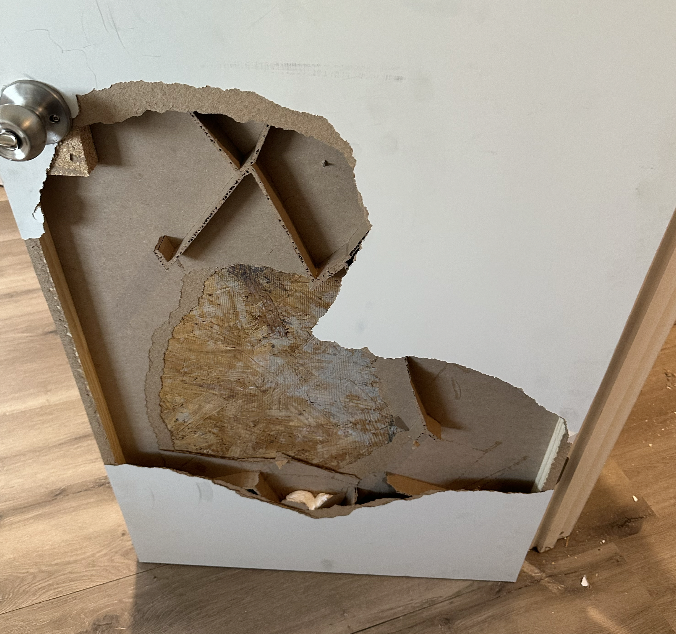
The inspection report also documents extensive damage throughout the facility. Compliance officers observed walls throughout the home, including in resident bedrooms, that had been patched with drywall plaster. Multiple doors were boarded over with plywood affixed using screws or nails. The door to the primary bedroom, which housed four residents, had been removed entirely. Resident bedrooms did not contain individual storage space, and several bathroom drawers under the vanity and sink were missing.
Compliance officers also found a locked garage containing plastic bins filled with clothing labeled with each resident's name, along with several dressers and nightstands. According to the inspection report, staff said the facility had removed the residents' dressers and nightstands the previous night and locked them in the garage because residents were attempting to throw them out of windows and at each other. Staff told inspectors the facility keeps residents' belongings locked in the garage but will provide access to them upon request.
Beckman acknowledged the destructive behavior but described it as a symptom of adolescent development.
“They're impulsive, and when they get upset, their response is to hit the walls or, oh, this is sitting here. I'm going to throw it across the room. And so their brains are still developing, so what we're doing is finding a way to reduce that risk so that you know we're not worrying about patching a hole in the wall. We're working on taking care of that kid and why they escalated in that moment,” Beckman said.
Questions about incident reporting
Inspectors also found that incidents of self-harm and property damage were not always reported.
“Actually, we do document every incident, and we do thorough investigations. Artemis is very dedicated to safety,” Beckman said.
The inspection report describes an incident from March in which a resident reported having swallowed screws.
According to inspectors, the resident was observed overnight at the home. The next day, hospital imaging confirmed the resident had ingested five screws, including one in the colon, requiring surgical intervention.
When asked why the resident was not taken to the hospital that night, Beckman declined to address the specific case.
“I can't discuss client information with you, and that's something I'm going to stand behind,” Beckman said.
What Artemis says it's changing
When a state inspector uncovers a deficiency, the facility has 10 days to provide a plan of correction, according to the Arizona Department of Health Services.
Among the measures Beckman said Artemis is taking:
- Clarifying when incident reports are needed
- Creating a compliance department
- Holding daily staff meetings
- Revising admission and exclusion criteria
- Revamping the treatment plan process
After the May inspection, Artemis agreed to pay $1,500 in civil fines.
Why the former employee spoke out
Johnson said she hopes her decision to speak out draws attention to an industry she believes too often fails vulnerable young people.
“These kids are like underrepresented, and they need people to be their voice,” Johnson said.
This specific facility opened last fall.
A follow-up report will examine concerns from neighbors and what it takes to operate residential health facilities within Pima County neighborhoods.
———
Athena Kehoe is a reporter for KGUN 9, she joined the KGUN 9 team in July of 2024 after graduating from Arizona State University. Share your story ideas with Athena by emailing athena.kehoe@kgun9.com or by connecting on X/Twitter.


